

ReservationSearch and reserve rooms
Click here to confirm, change or cancel your reservation
View Flight-Inclusive Packages
Reservation
- HOTEL RESOL TRINITY SAPPORO
- HOTEL RESOL SAPPORO NAKAJIMAKOUEN
- HOTEL RESOL HAKODATE
- HOTEL RESOL UENO
- HOTEL RESOL IKEBUKURO
- HOTEL RESOL AKIHABARA
- HOTEL RESOL MACHIDA
- HOTEL RESOL YOKOHAMA SAKURAGI-CHO
- HOTEL POSHTEL TOKYO ASAKUSA
- HOTEL RESOL STAY AKIHABARA
- HOTEL TRINITY SHOSAI
- HOTEL RESOL NAGOYA
- HOTEL RESOL GIFU
- HOTEL RESOL TRINITY KANAZAWA
- HOTEL RESOL KYOTO KAWARAMACHI SANJO
- HOTEL RESOL KYOTO SHIJO MUROMACHI
- HOTEL RESOL TRINITY KYOTO
- HOTEL RESOL TRINITY OSAKA
- HOTEL RESOL TRINITY HAKATA
- HOTEL RESOL SASEBO
- HOTEL RESOL TRINITY NAHA
2026.05.10
A tradition passed down in Nihonbashi. Discover your own unique color through a dyeing experience at "somenova".
NEIGHBORS
- RESOL HOTELS
- HOTEL RESOL AKIHABARA
- HOTEL RESOL STAY AKIHABARA
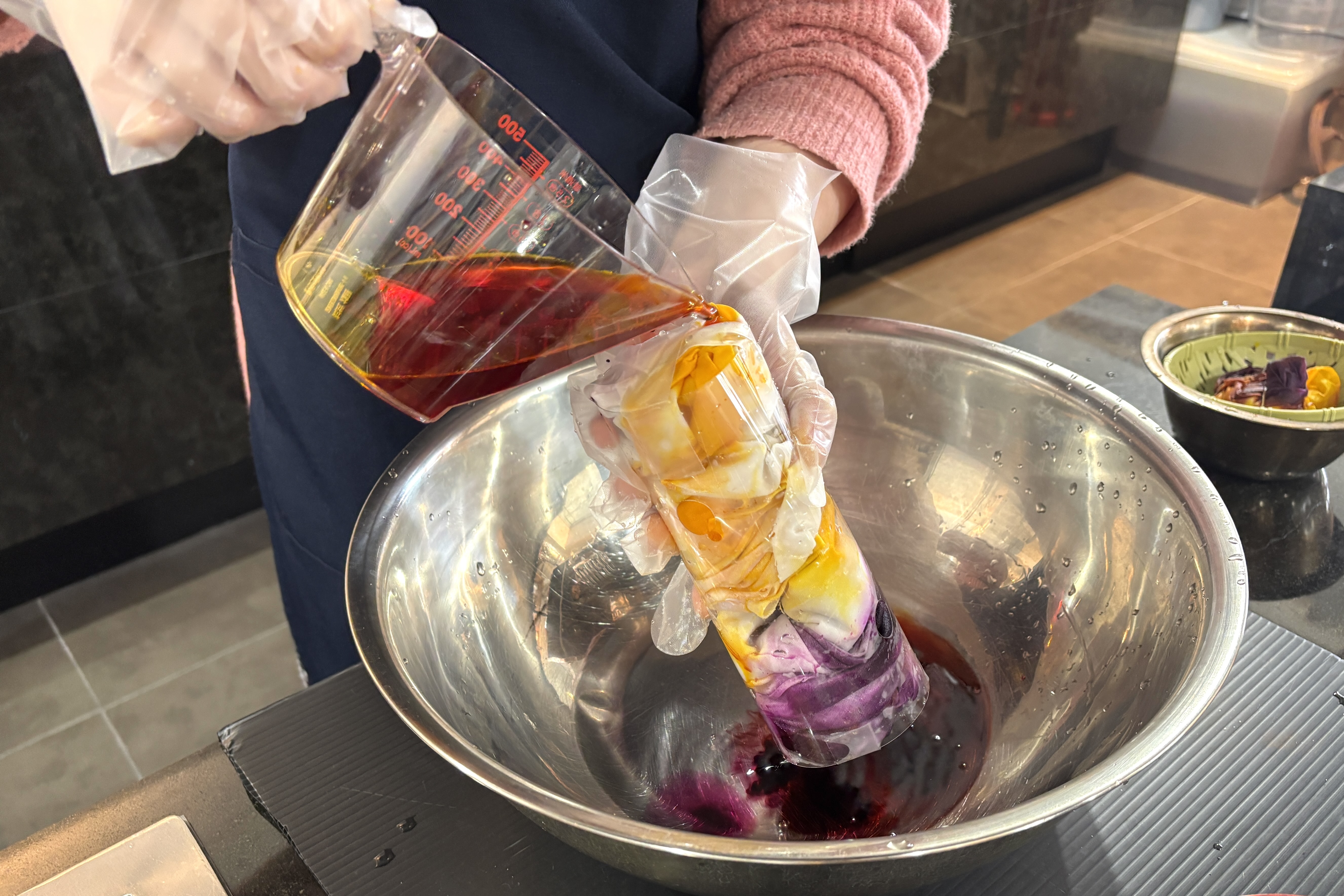
Nihonbashi flourished as a commercial center during the Edo period. Surrounded by rivers and waterways and abundant water resources, this area is also a town of artisans where handicrafts such as dyeing have developed. We visited "somenova," a dyeing experience workspace run by "Katsuraya Fine Goods," a long-established dye manufacturer that has been operating in this historic town for generations.
An experience facility operated by a long-established dye manufacturer.
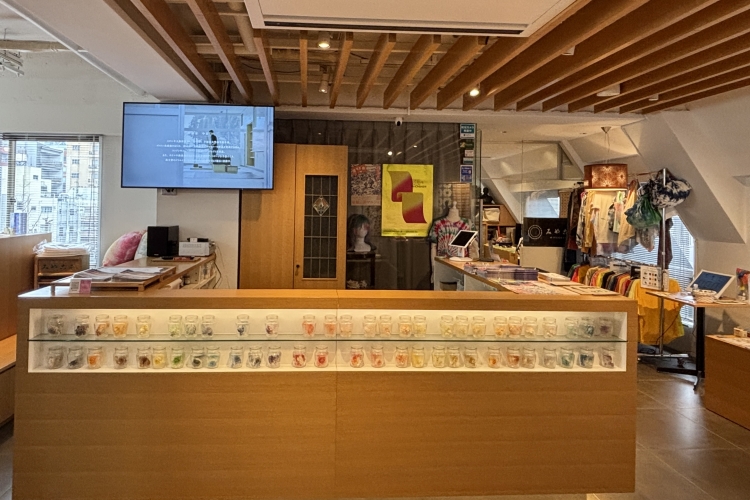
A look inside the "somenova" dyeing experience workspace store.
Near Nihonbashi lies Kanda Konyamachi, the birthplace of dyeing in Tokyo, which flourished as a center for dyers during the Edo period. At that time, the area around Nihonbashi had numerous waterways and was a bustling place used not only as a source of water for dyeing but also as a fish market and commercial hub. In 1890 (Meiji 23), the dye manufacturer "Katsuraya Fine Goods" was founded in this area.
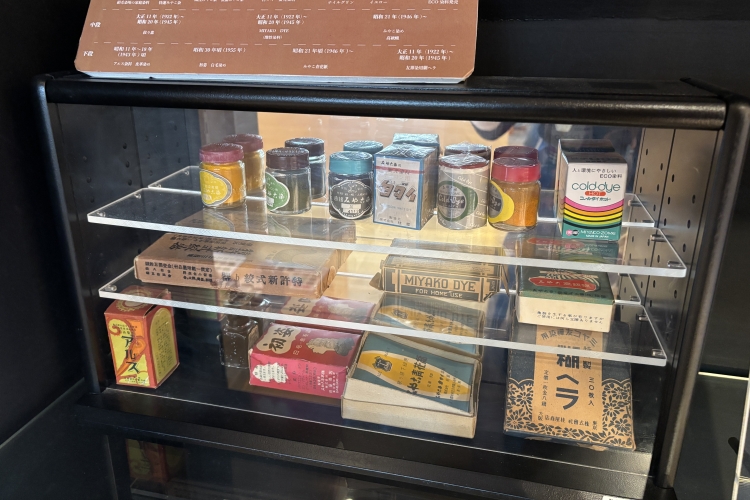
The exhibition features glass bottles of "Miyako-zome" dye, which were sold at the time of the company's founding.
"At that time, Japan's textile industry was thriving, and there were many companies supplying industrial dyes to factories. However, I've heard that 'Miyako-zome,' the brand we handle, was the first to supply dyes to ordinary households. Before the war, there was a great demand for dyeing kimonos and military uniforms, and after the war, there was a boom in handicrafts, mainly among housewives, for hobby dyeing. Household dyes were in high demand," says President and CEO Shinichi Aoyama.
While fewer people wear kimonos these days, and opportunities to dye fabrics in ordinary households have decreased, we opened the dyeing experience workspace "somenova" in 2017 with the desire to let people rediscover the beauty and enjoyment of dyes.
Perfect for beginners. An experience to discover the charm of dyeing.
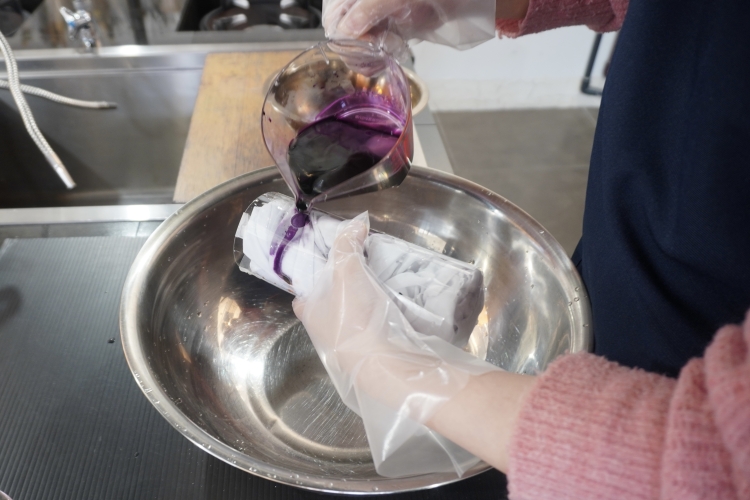
"Furoshiki no Yume Shibori Dyeing Experience" - Easy to try even for beginners.
"somenova" offers workshops where you can experience various dyeing techniques. Among the available workshops, the "Dream Shibori Dyeing Experience for Furoshiki (Wrapping Cloth)" is especially recommended for beginners.
"Yume Shibori dyeing is an original dyeing technique devised in our store. You place a furoshiki cloth inside a plastic tube, dissolve two colors of dye of your choice in lukewarm water, and pour it into the tube. By placing the cloth inside the tube, random wrinkles are created, resulting in a beautiful, even dyeing process," explained staff member Megumi Saito regarding the procedure.
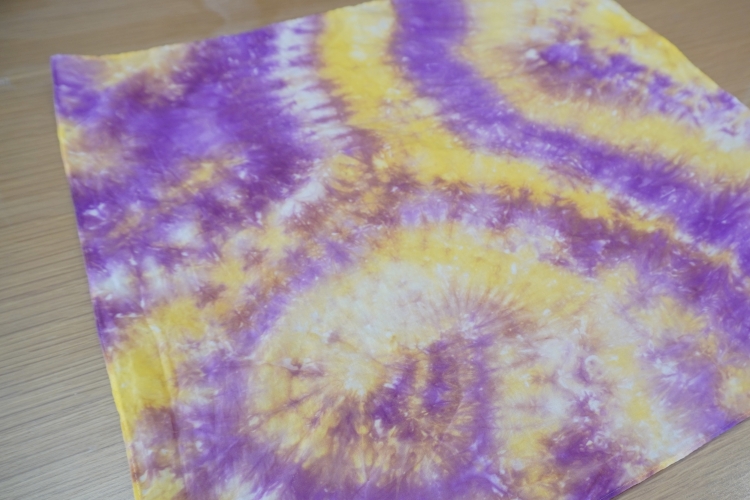
A furoshiki (wrapping cloth) finished with purple and yellow dyes.
After placing the furoshiki (wrapping cloth) in a tube and pouring in the dye, you leave it for 20 minutes, then wash it thoroughly with lukewarm water and detergent to complete your original furoshiki. The experience takes about an hour, but you will feel the joy and sense of accomplishment of having dyed it with your own hands.
We sell dyes that are easy to use at home.
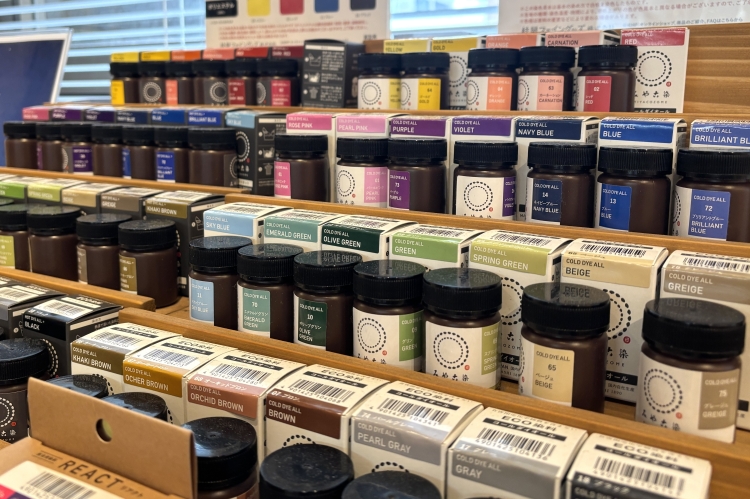
Muted color dyes, which have a calming atmosphere, are gaining popularity.
The dyes sold in stores by "Miyako Dye" include a series that can be used with lukewarm water above 30℃, making them very easy to use. With a wide variety of colors available, deciding which color to use and how to dye is a fun experience in itself.
"We sell dyes suitable for synthetic fibers, as well as dyeing experience kits that are easy for beginners to enjoy, so you can choose according to your needs. We have also obtained the Eco Passport, an international safety certification that reduces the burden on the environment and human health, so you can use our products with peace of mind."
Passing on the joy of dyeing to the next generation
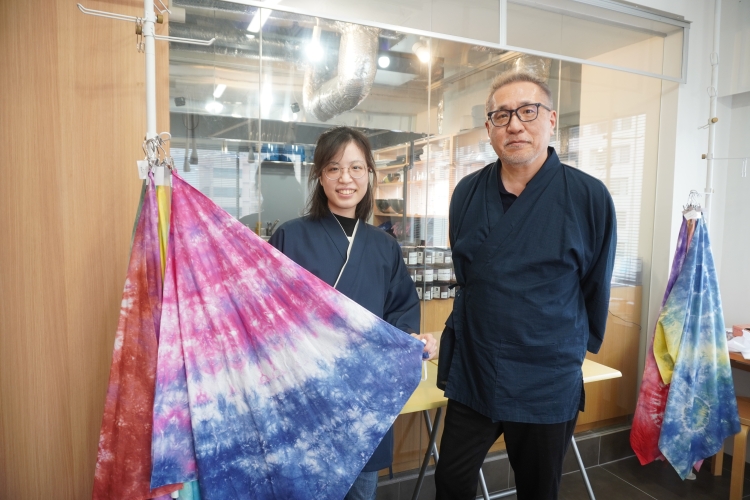
Staff member Megumi Saito (left), President and CEO Shinichi Aoyama (right)
In recent years, with the rise of handmade crafts and increased interest in SDGs, dyed fabrics have once again gained attention among younger generations. Their applications are expanding significantly, from creating unique stage costumes by experimenting with dyeing techniques to expressing art by dyeing materials such as wood and plastic.
"Going forward, we plan to offer experiences for overseas customers that combine the charm of Japanese dyeing with Japanese culture, such as tsumami zaiku (traditional Japanese fabric flower making). We want them to experience the beauty of handcrafted goods through these experiences, and we will continue to spread that wonderfulness from Nihonbashi."
For 130 years since its founding, this dye has been loved by many people, and while adapting to the changing times, it continues to be enjoyed today as a new way to appreciate it through "somenova".
dyeing experience workspace somenova
電話:03-3662-5612
住所:東京都中央区日本橋小舟町14-7 SOIL Nihonbashi 5階
アクセス:東京メトロ人形町駅から徒歩8分
HP:https://www.katsuraya-fg.com/somenova/
SNS:https://www.instagram.com/miyacozome/
https://www.facebook.com/MIYACOZOME/
*Please check the link above for details on business hours, closing days, and workshops.