



ReservationSearch and reserve rooms
Click here to confirm, change or cancel your reservation
Flight-Inclusive Packages
Shinkansen-Inclusive Hotel Packages
Corporate Partner Reservations
2026.05.20
A calming and healing kana calligraphy experience at Kyoto's "Sho Gallery Kiyora".
"Sho Gallery Kiyora" is located near the Kyoto Imperial Palace, blending seamlessly into the quiet streetscape.
Here, you can experience the world of "kana calligraphy," a uniquely Japanese writing system that was perfected as an art form by the Heian period aristocracy alongside waka poetry and narrative literature.
Take a step back from the hustle and bustle of everyday life and quietly reflect on your own heart. In a sophisticated, modern space, surrounded by the scent of ink, this "kana calligraphy" workshop experience, where you put the brush to work with your own hands, will make you forget the noise of the outside world and bring you a moment of tranquility.
A spatial beauty that has continued since the Heian period. The art of "Kana calligraphy."
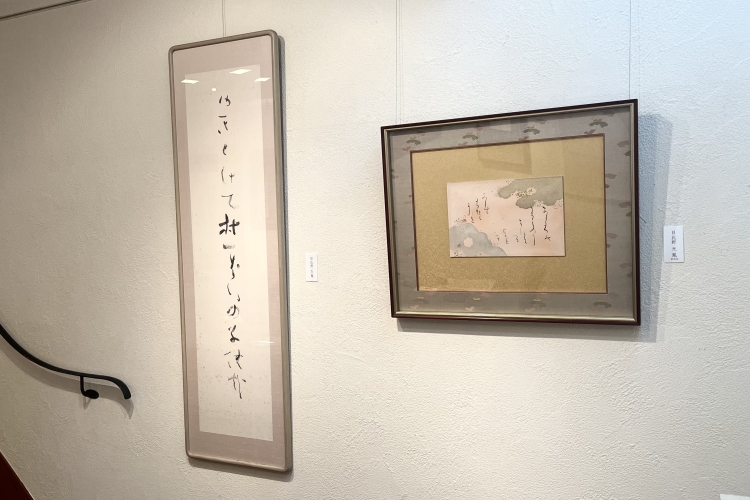
Originally, Japan did not have its own writing system and used Chinese characters that were introduced from China. Eventually, people began to write Japanese by borrowing the sounds of Chinese characters, and during the Heian period, this writing system gradually deteriorated.
In particular, the women of the imperial court, who had few opportunities to learn kanji, wrote waka poems and letters with a free and expressive style, which, combined with the aesthetic sensibilities of the time, gave rise to the uniquely Japanese "kana" script.
As waka poetry became more elegant, kana calligraphy was also refined into an art form.
"The world of kana calligraphy is fascinating because the combination of characters and white space can create completely different expressions," says Yuka Hibino, representative of the calligraphy gallery "Kiyora."
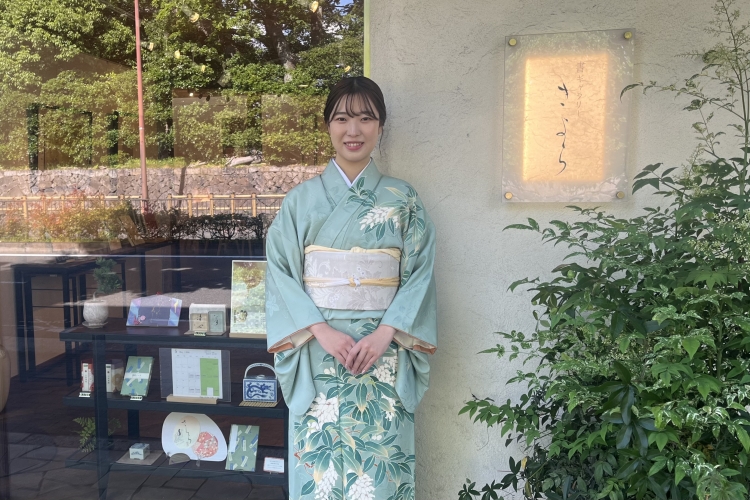
Ms. Hibino, representative of "Kiyora Calligraphy Gallery"
"For example, the hiragana character 'ha' used today is a corrupted form of the kanji character 'wave,' but in the past, a variety of characters were used, such as corrupted forms of 'person' or 'eight.' Even if the sound is the same, using different characters can significantly change the overall spacing and balance of a work."
The process of writing with flowing lines while searching for a harmonious arrangement is said to create the unique spatial beauty of "kana calligraphy."
"People tend to think that 'kana calligraphy is difficult because I can't read it,' but I hope that people will first enjoy the overall atmosphere of the work, like a single painting," Hibino says with a smile.
The vision of the fourth generation, opening up the world of prestigious calligraphy.
Mr. Hibino is the fourth generation of a family of calligraphers, directly descended from the first generation Hibino Gohō, who was known as one of the "Three Great Calligraphers of the Showa Era." The idea to create a space open to the general public came about at the suggestion of his father, Hibino Hakuhō.
When Mr. Hakuhō first encountered the current gallery, he thought, "Let's take advantage of its location right in front of the Imperial Palace and create a place where people from overseas and the general public can easily experience art."
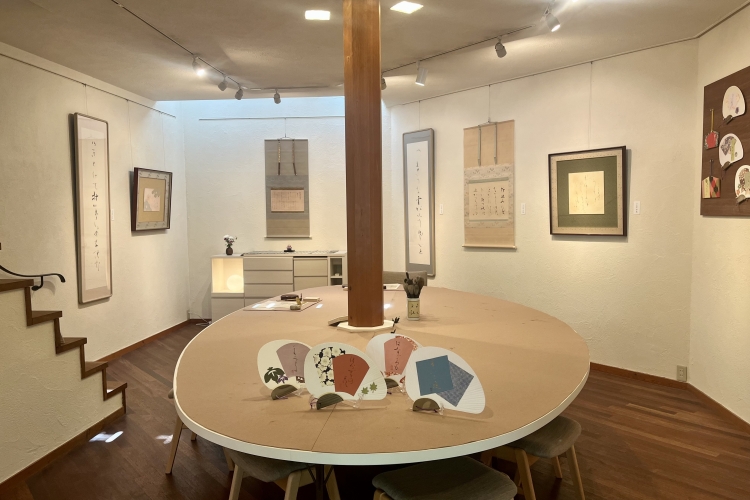
In today's world, where opportunities to hold a brush in daily life are decreasing, how can we get people interested in "kana calligraphy"? Ms. Hibino has created a gallery space that is easy to enter and has devised a "kana calligraphy workshop" where visitors can take home a piece of artwork as a memento of their trip. Behind her trial and error was a strong desire.
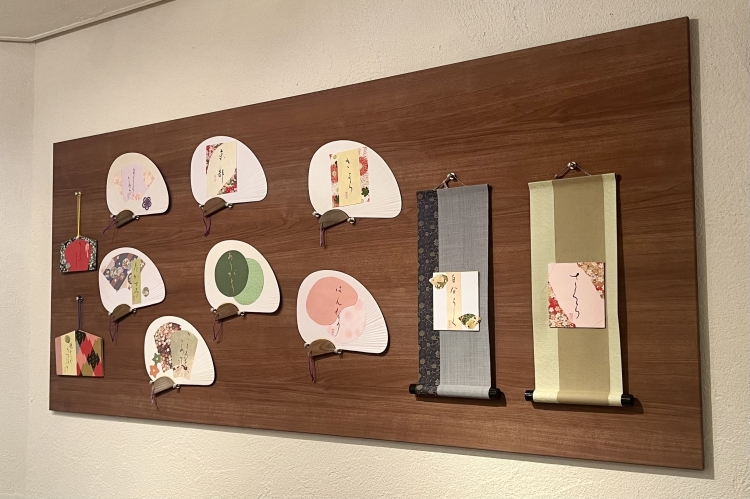
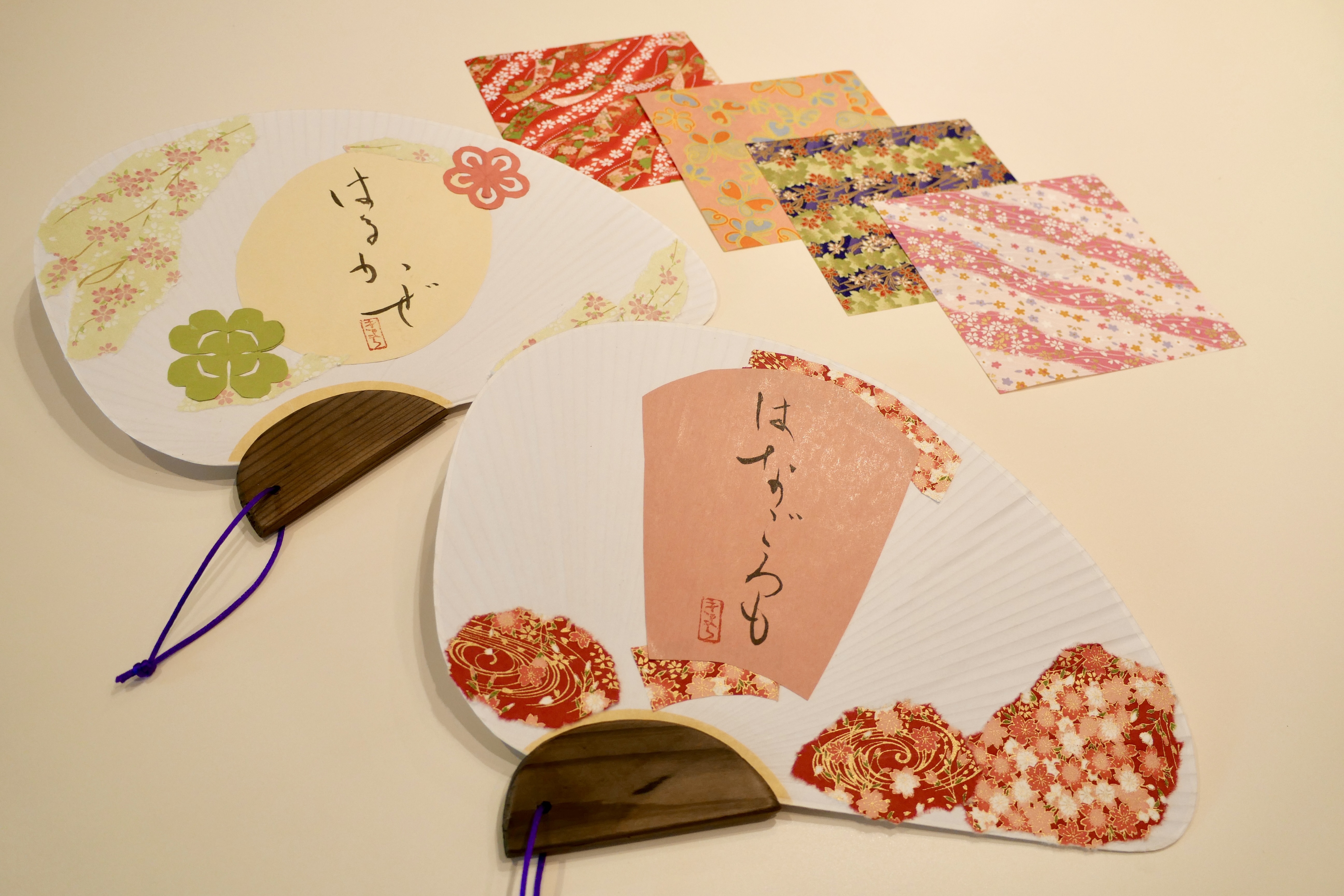
Examples of works that can be created in workshops and events
"Until recently, there were many people who enjoyed 'kana calligraphy,' but now that number is gradually decreasing. If no one passes it on, the culture will disappear."
That's why Ms. Hibino emphasizes that she wants as many people as possible to know about the beauty of "kana calligraphy."
"I hope that by experiencing it once, you'll feel a little closer to kana calligraphy."
A time to calm the mind, enveloped in the scent of ink.
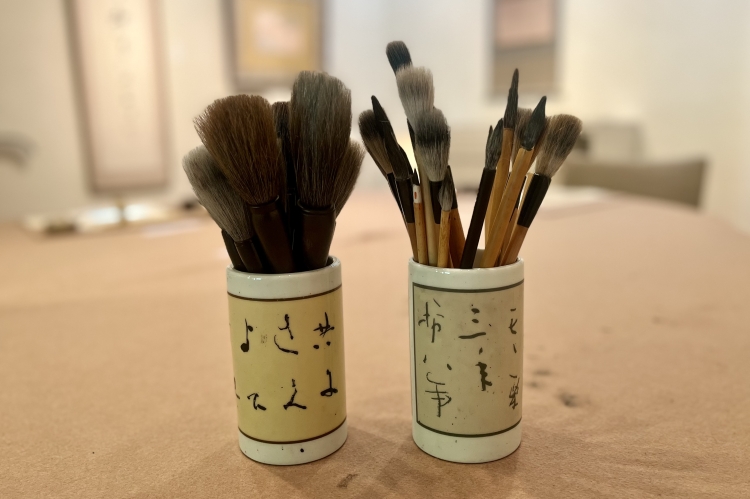
The workshop begins with quietly grinding ink. A small amount of water is dropped onto the inkstone, and as you slowly move your hand in a circular motion, the scent of ink gradually begins to fill the space.
Once the ink is ready, you will be taught the basic way to hold a fine brush and then begin practicing drawing lines.
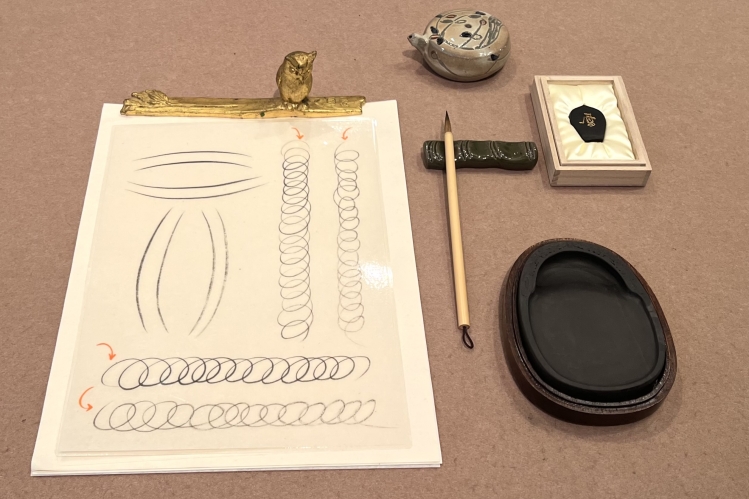
Sample for practicing drawing lines with a fine brush.
Unlike the calligraphy taught in school, which emphasizes the importance of stopping, flicking, and sweeping strokes, kana calligraphy is characterized by its delicate, thin lines, yet with variations in thickness within them.
"It starts thinly, becomes thicker in the middle, and then thins out again. It's like an airplane landing in the distance and then taking off again," Hibino's gentle description guides the brush tip as it glides across the washi paper.
If you focus solely on the movement of the brush tip, you will be enveloped in a strange stillness, as if your mind has become empty.
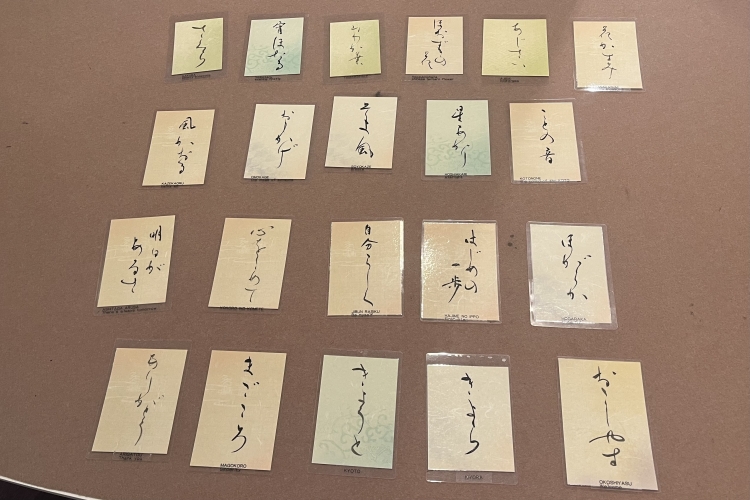
Choose the characters to be finalized from a variety of subjects.
Once you've grasped the feel of using the brush, it's time to start creating your artwork. Choose a theme that resonates with you from the provided samples, such as seasonal words like "sakura" (cherry blossom) and "ajisai" (hydrangea), or distinctly Japanese words like "kyoto" (Kyoto) and "okoshiyasu" (welcome).
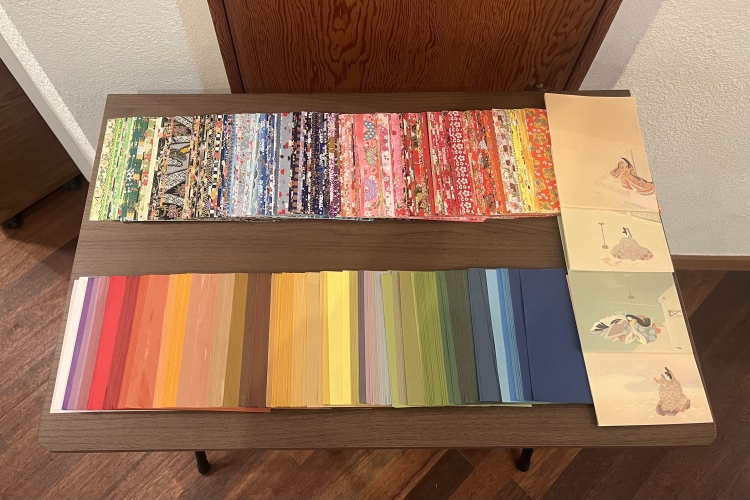
Choose two pieces of chiyogami paper in your favorite colors and patterns, and collage them onto a fan base.
Next, you choose the color of the fan that will serve as the base, and the decorative paper to collage the fan onto. The time spent exploring countless combinations to find your preferred style is exhilarating, much like creating a work of art.
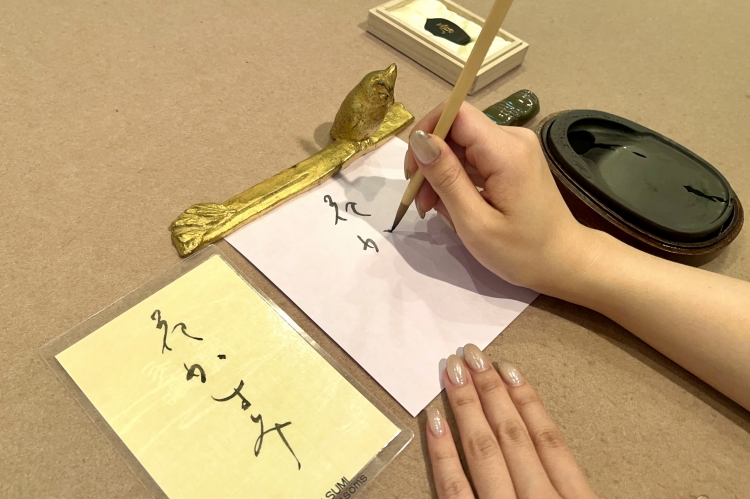
The words of the chosen subject are written in a neat copy.
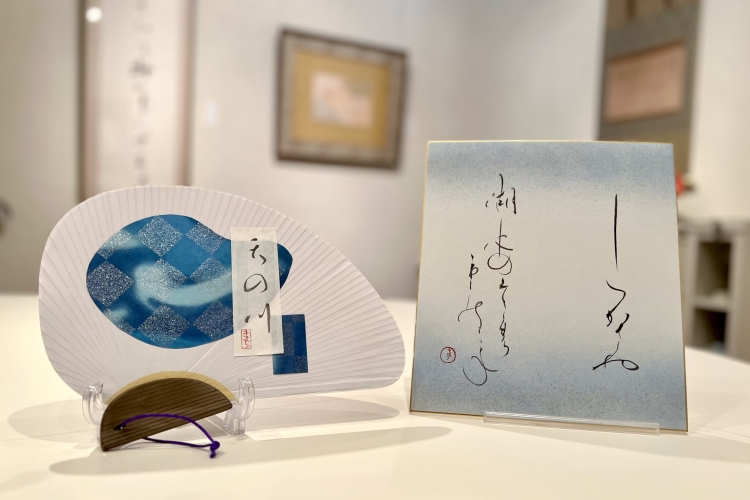
After composing a final draft and taking a deep breath, the artist signs the piece with the "Kiyora" seal, completing the work. On the washi paper, the aesthetic sensibilities that have continued since the Heian period and the individuality of the calligrapher come together.
"Many participants say they enjoy having time to concentrate and immerse themselves in something," Hibino says. "I think that holding a brush becomes a time for them to calm their minds."
Adding a touch of refined color to everyday life
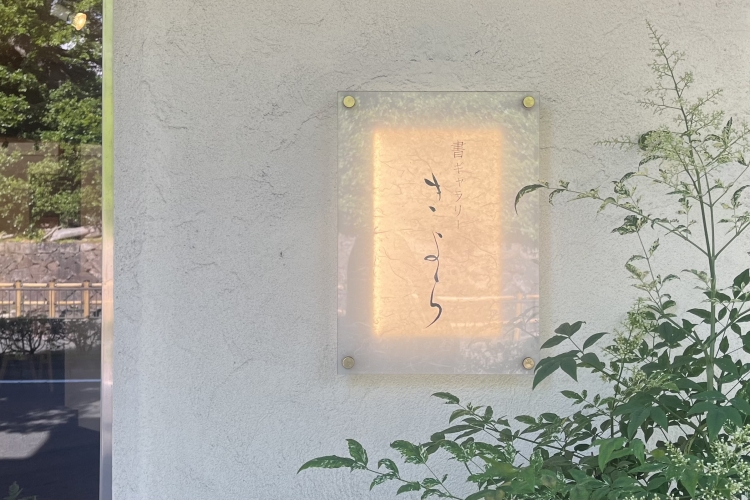
The gallery's name, "Kiyora," refers to the purity of the writer's own spirit, a clear and unblemished quality. It originates from the teachings of the first generation Goho, who valued this principle as something essential when engaging with calligraphy. Hibino's wish that visitors also enjoy the space with a pure heart is evident throughout.
The memory of calmly cleansing my mind and letting the brush move with a clear heart comes vividly back to me every time I look at the finished work.
This one-of-a-kind artwork embodies the "beauty of negative space" that has been appreciated since the Heian period. Its pure beauty is sure to continue to add a dignified touch to your daily life even after you return from your trip.
書ギャラリー きよら
電話:075-791-1005
住所:京都府京都市上京区烏丸通丸太町上ル春日町425
アクセス:地下鉄烏丸線「丸太町駅」2番出口より徒歩1分
HP: https://kiyorajapan.official.ec/
SNS: https://www.instagram.com/gallerykiyora/
*営業時間や定休日についての詳細は、上記のリンク先からご確認ください。

HOTEL RESOL KYOTO KAWARAMACHI SANJOHOTEL RESOL KYOTO KAWARAMACHI SANJO
59-1 Kawaramachi-dori, Sanjo-sagaru, Daikokucho, Nagagyo-ku, Kyoto-shi, Kyoto 604-8031
TEL.075-255-9269
Only a 4-minute walk from Kyoto Shiyakusho-mae Station. Just a 1-minute walk to the Pontocho and Kiyamachi areas, where you can experience the atmosphere of Kyoto's traditional geisha district (Hanamachi).