



ReservationSearch and reserve rooms
Click here to confirm, change or cancel your reservation
Flight-Inclusive Packages
Corporate Partner Reservations
2026.04.25
Passing on the traditional craft of "Sasebo Komagome," beloved as a lucky charm, to the next generation
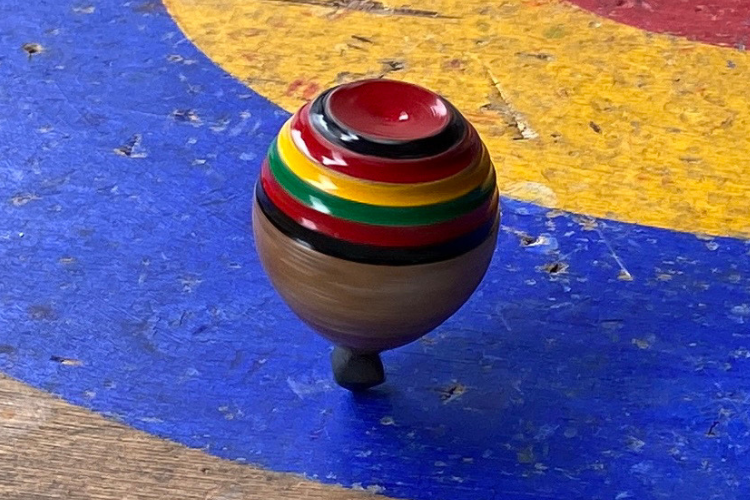
Sasebo Koma, a traditional craft of Nagasaki Prefecture, is made in Sasebo City. Sasebo Koma Honpo is a shop that has been producing these spinning tops for many years, with a workshop and sales space.
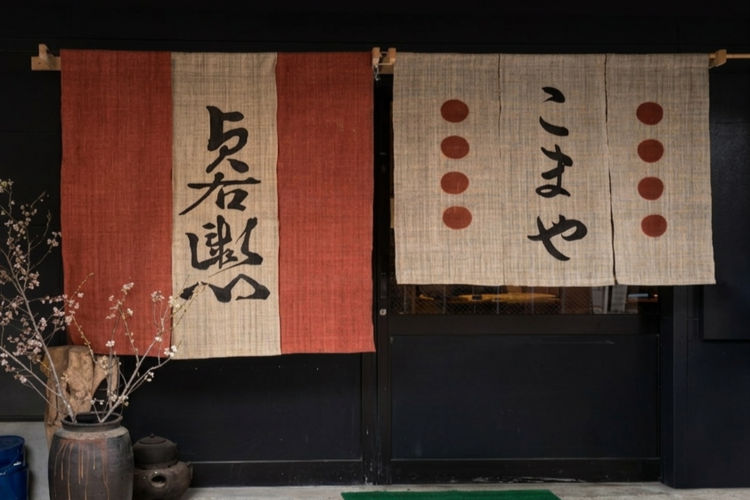
HOTEL RESOL SASEBO is about a 10-minute walk from JR Sasebo Station, the nearest station. It is located beyond the shopping and entertainment district, slightly up a hill, and is easily recognizable by its exterior with a noren (traditional Japanese curtain) hanging over it.
We spoke with Yukiko Yamamoto, the wife of the third-generation Sadaemon Yamamoto and a certified spinning top instructor, about the appeal of Sasebo spinning tops and the future of this traditional craft.
The history of how Sasebo spinning tops became popular as a traditional craft.
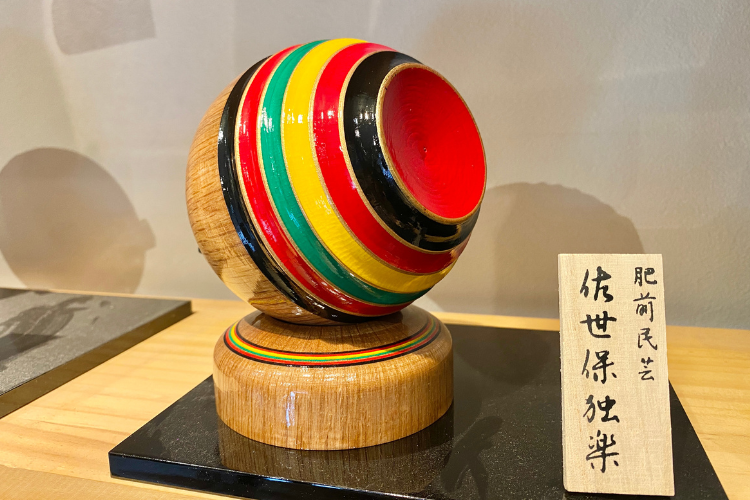
Sasebo spinning tops have a long history of approximately 300 years. It is said that children have been making and playing with them by hand since the early Edo period, and as the potter's wheel developed, woodworkers began to make them to order for children.
The creation of this traditional craft began in 1949. Since then, it has been exhibited at the National Folk Toy Exhibition held in Tokyo and at exhibitions in New York. Through continued exhibitions both domestically and internationally, it has become widely known, and in 1993, it was designated a traditional craft of Nagasaki Prefecture.
One reason for its popularity is its history as a beloved local game known as "fighting top." It's a game where players spin tops and bump them together, with the last one remaining spinning winning. It's said to have been influenced by Portugal, with whom the team had trade at the time. The chant, "Ikinagashomonsho kurabe" (Let's compete with all our might and determination), expresses the spirit of fighting with all one's heart and soul.
Sasebo spinning tops are characterized by their unique shape and color.
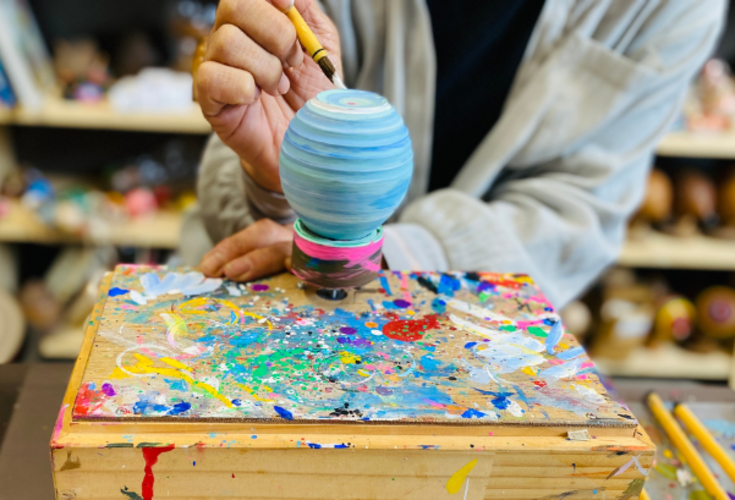
The painting process
Sasebo spinning tops are unique in that they are thrown upside down, unlike typical spinning tops. This causes the top to right itself and continue spinning, which is why they are considered auspicious.
This unique spinning technique is made possible by its distinctive shape, known as the "pickled onion shape." Furthermore, a sharp piece of iron called a "sword" is embedded at the tip. The colors are also distinctive; traditional Sasebo spinning tops are composed of five colors—black, red, yellow, blue/green, and white—based on the "Yin-Yang Five Elements Theory."
The spinning tops are made from Japanese evergreen oak (Lithocarpus edulis), a broad-leaved tree belonging to the beech family. The wood requires a year of drying, which is time-consuming, and despite the challenges of rising material costs in recent years, they continue to produce the tops while maintaining their long-standing commitment to quality.
Attracting more attention from foreign tourists! Sasebo spinning tops: a diverse lineup.
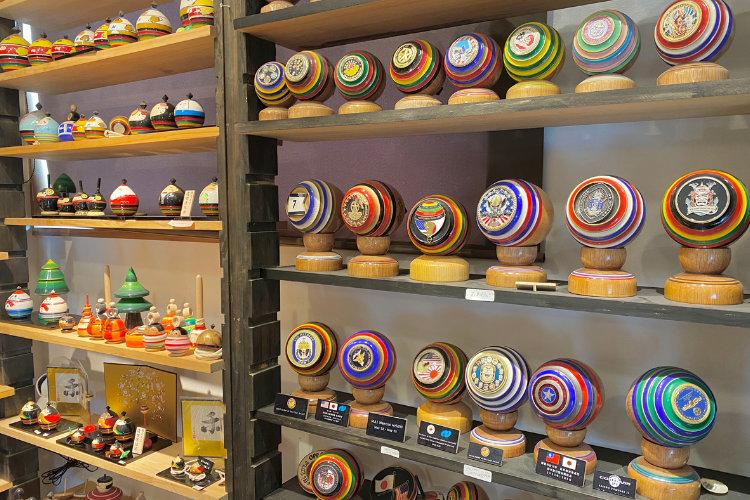
Inside the "Sasebo Komagome Honpo" store (exhibition and sales space)
At the "Sasebo Komagoma Honpo" exhibition and sales space, in addition to traditional Sasebo spinning tops, you'll find a variety of tops on display, including lucky charms shaped like the Chinese zodiac, tops inspired by seasonal events such as the Doll Festival and Boys' Festival, and tops with medals embedded in the center.
Yamamoto says, "Recently, we've been seeing a lot of foreign visitors, especially those who dock at Sasebo Port, coming in and buying our products for themselves or as souvenirs for their families." Regarding the spinning tops shaped like the Chinese zodiac animals, orders are taken a year in advance and they are made to order. They also sell spinning tops in more common shapes, and apparently, some people buy those as well.
Focusing on the future of traditional crafts from the perspective of education.
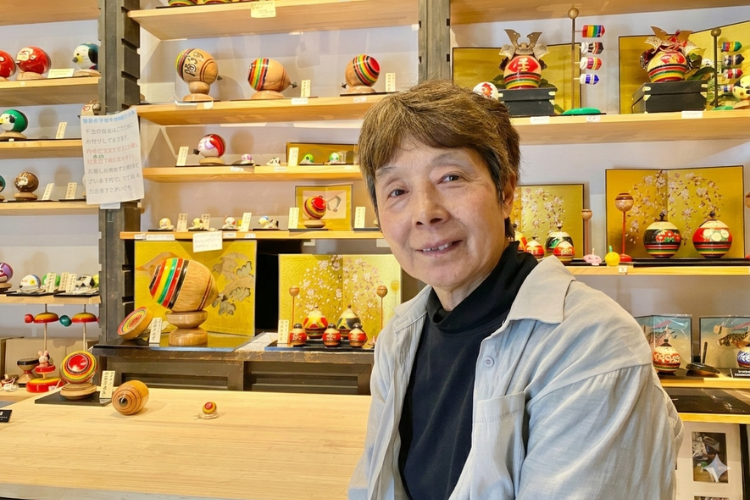
Yukiko, the wife of the third-generation Sadaemon Yamamoto, is a spinning top instructor.
When asked why he continues to make Sasebo spinning tops in this area, Mr. Yamamoto said, "I want to continue this traditional craft for the next 10 or 20 years. To that end, I want to put more effort into traditional crafts from the field of education."
The key element is the presence of children. Ms. Yamamoto feels that since home video game consoles became widespread, there are hardly any children who play with spinning tops anymore. Therefore, she is passing on the culture of spinning tops to children through events and workshops (*).
Sasebo spinning tops have been cherished for many years and are now attracting attention from foreign tourists. In order to preserve this traditional craft, the "Sasebo Spinning Top Main Store" continues its efforts today.
Sasebo Komagoma Honpo
電話:0956-22-7934
住所:長崎県佐世保市島地町9-13
アクセス: JR佐世保駅から徒歩10分
HP:https://sasebokoma.jp/
SNS:https://www.instagram.com/sasebo_top_/
*For details regarding business hours and regular closing days, please check the link above.
*The workshops are also open to the general public with prior registration. However, we may not be able to accommodate registrations made just before the event, so please be sure to check with the store.

HOTEL RESOL SASEBOHOTEL RESOL SASEBO
8-17 Shirahaecho, Sasebo-shi, Nagasaki 857-0862
TEL.0956-24-9269
2-minute walk from JR Sasebo Station. On the first floor of the hotel is the bus center with services bound for Fukuoka City, Fukuoka Airport, Nagasaki City, and Nagasaki Airport.