


ReservationSearch and reserve rooms
Click here to confirm, change or cancel your reservation
Flight-Inclusive Packages
Shinkansen-Inclusive Hotel Packages
Corporate Partner Reservations
2026.08.15
Ohi ware boasts a history spanning over 360 years. Experience its charm by seeing and touching it at the Ohi Museum.
NEIGHBORS
Ohi-yaki is one of Kanazawa's representative traditional crafts. Born from the tea ceremony culture nurtured by the Kaga Domain in the early Edo period, this tradition of tea ceramics has been passed down through generations of Ohi Chozaemon for over 360 years, and is now highly regarded both domestically and internationally.
The Ohi Museum of Art in Hashiba-cho, Kanazawa City, offers a glimpse into the history and aesthetic sensibilities of Ohi ware. Inside the museum, you can admire works by successive heads of the family, and in the adjoining gallery, you can enjoy a "tea ceremony experience" where you can savor matcha tea in an Ohi ware tea bowl. By not only "seeing" the works but also "touching and tasting" them, you can experience the charm of Ohi ware more deeply.
Ohi ware, which has been passed down along with the tea ceremony culture of the Kaga Domain.
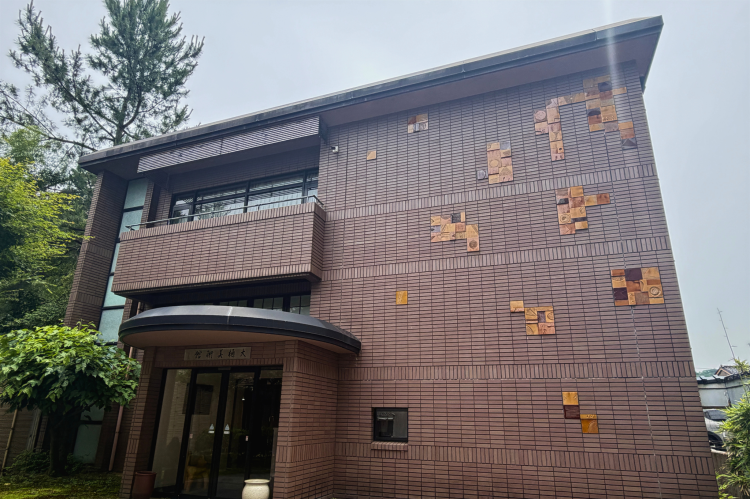
The Ohi Museum allows visitors to experience the 360-year history of Ohi ware through the works of successive heads of the family.
Ohi ware originated when Maeda Tsunanori, the fifth lord of the Kaga Domain, highly valued the tea ceremony. At Maeda Tsunanori's invitation, the first Ohi Chozaemon, a potter and disciple of the Raku family in Kyoto, accompanied Senso Soshitsu, the fourth head of the Urasenke school of tea ceremony, to Kanazawa, where they spread tea culture. The Ohi kiln, as the only subsidiary kiln of the Raku family, laid the foundation for tea ceramics in Kanazawa.
The defining characteristic of Ohi ware, passed down through generations, is that it is shaped by hand without the use of a potter's wheel. The soft curves unique to handcrafted work and the deep hues of the amber glaze applied to the surface give each tea bowl a different expression. These works, created in harmony with nature, have been passed down to the present day along with the spirit of the tea ceremony.
Ohi ware flourished during the Edo period as the official kiln of the Kaga Domain, but the Meiji Restoration brought a major turning point when it lost the domain's patronage. Nevertheless, by adapting to the changing times and preserving its traditions, it has continued its history for over 360 years to this day.
Discover the charm of Ohi ware through the works of successive heads of the family.
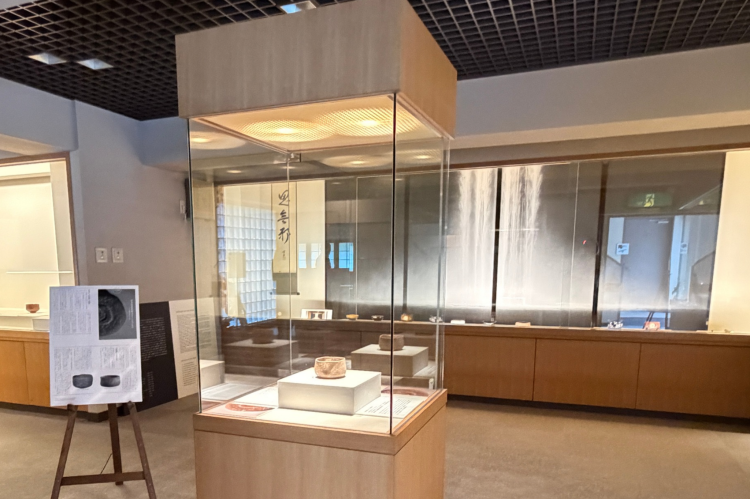
The second floor of the museum displays works by the first to eleventh heads of the family.
At the Ohi Museum, you can admire works created by successive heads of the family, from the first generation to the present day. A major attraction is the opportunity to compare the differences in style and expression from each era, and to experience the history and aesthetic sensibilities of Ohi ware that have been passed down through generations. Works by the 11th generation (current head), Ohi Chozaemon, are also on display, allowing you to see how Ohi ware continues to connect with the present day while inheriting tradition.
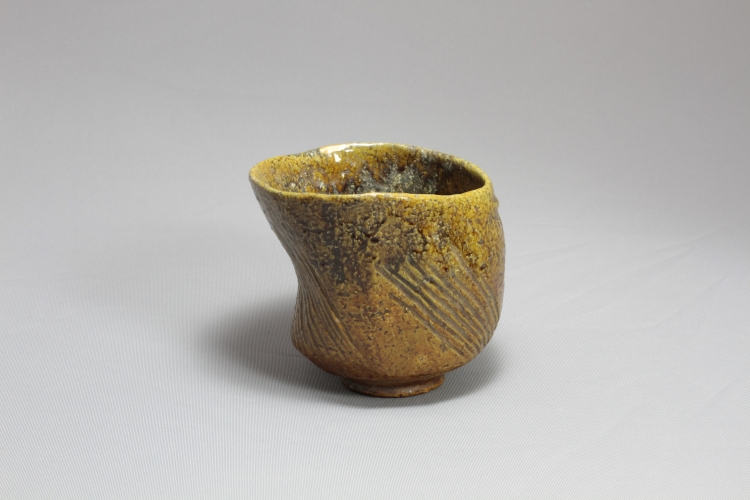
"Ohi Amber Glazed Sacred Tea Bowl" by the first Ohi Chozaemon (Edo period) © Ohi Museum
The first floor primarily displays representative works by successive heads of the family. In addition to the permanent exhibitions, the museum also holds themed exhibitions from time to time. For example, there are exhibitions that focus on the tea culture, people, and works surrounding Ohi ware, such as the tea bowl "Kuchu" (Aerial) which introduces the connection between Hon'ami Koetsu, a cultural figure from the early Edo period, and his grandson Koho, and Kanazawa.
In the past, they have held ikebana (flower arrangement) exhibition events. By arranging flowers in Ohi ware vessels, they have introduced the charm of the vessels beyond their use as tea ceremony utensils, and the new beauty that arises from combining them with different forms of expression. Encountering different works each time you visit is one of the unique pleasures of the Ohi Museum. Even those without experience in the tea ceremony can immerse themselves in the profound world of Ohi ware while learning about the background and intentions behind the works.
A special cup of tea to be savored in an Ohi ware tea bowl.
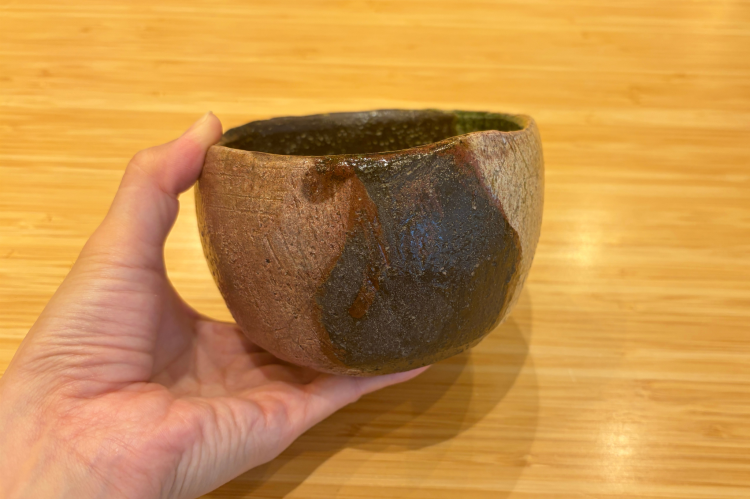
A tea bowl made by the 11th generation Ohi Chozaemon.
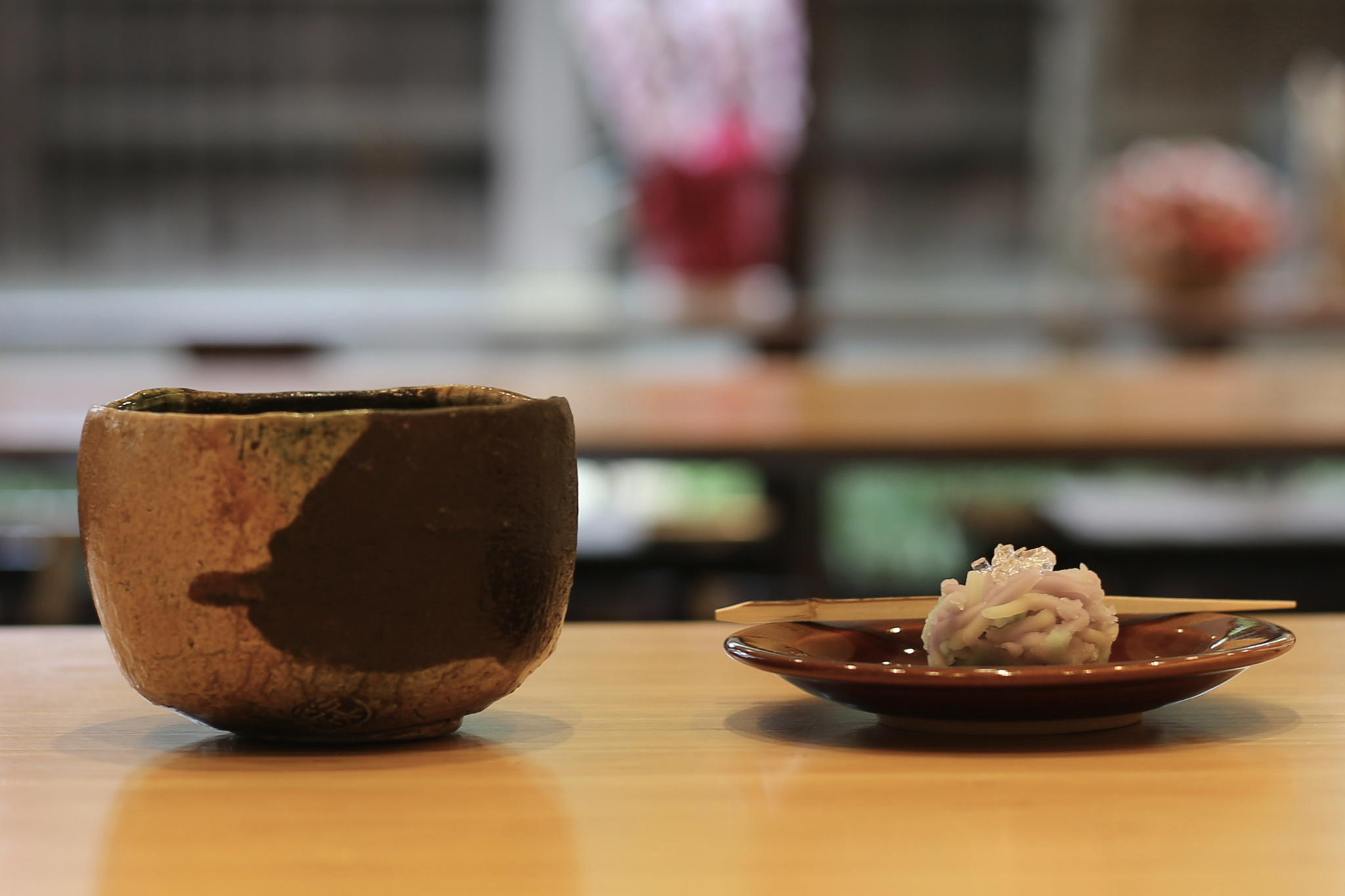
One experience you should try when visiting the Ohi Museum is the "Tea Ceremony" (for a fee), where you can enjoy seasonal wagashi (traditional Japanese sweets) sourced from several long-established confectionery shops in Kanazawa, along with matcha green tea. What's unique to this location is that you can choose your own tea bowl from among those crafted by successive generations of Ohi Chozaemon. It's a rare opportunity to actually hold a historically valuable tea bowl in your hands and savor the taste of matcha.
The tea bowl has a pleasant weight, yet it fits naturally in the hand. The comfortable feel in the hand and the soft texture of the rim, which cannot be appreciated through a display case, allow you to truly experience the charm of Ohi ware, which is "a vessel that is completed through use."
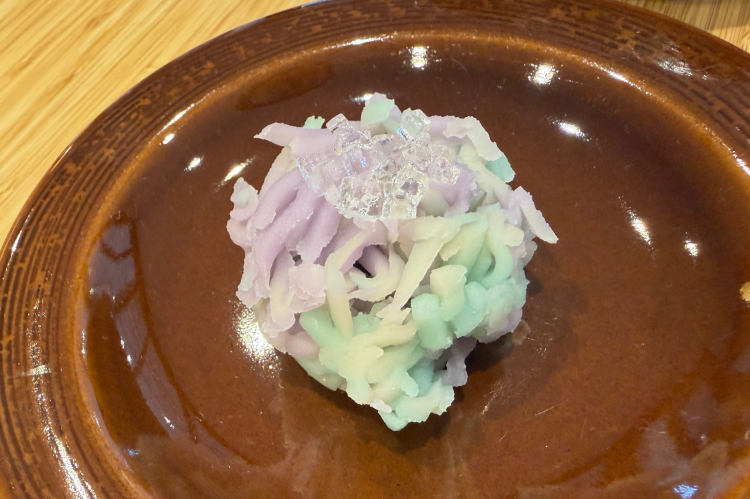
A traditional Japanese sweet, reflecting the colors of the season, is served with the tea.
Ohi ware as art that can be enjoyed even without knowing about the tea ceremony.
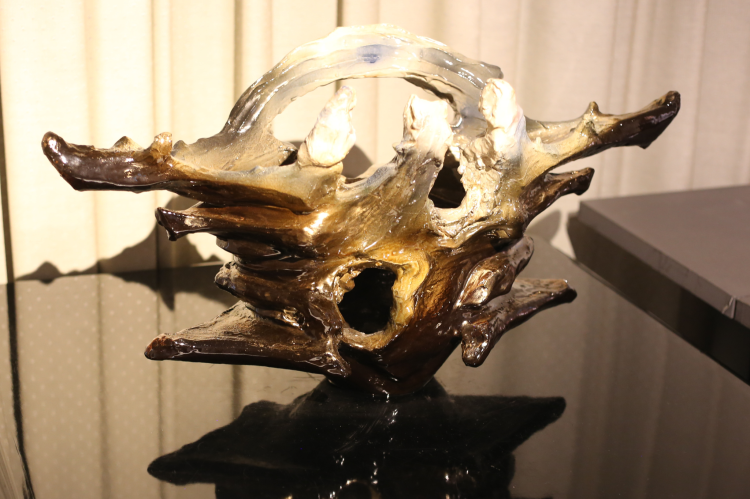
"God's Cliff 2021," a sculptural work by the 11th generation Ohi Chozaemon and Ohi Toshio.
"Foreign visitors appreciate Ohi ware as contemporary art. There is a dialogue here that transcends words," says Mr. Ohi. Currently, about 70-80% of visitors to the Ohi Museum are tourists from overseas, and many of them have no experience with the tea ceremony. They are often seen drawn to the forms, colors, and textures, and spend time engaging with the works.
To ensure that the appeal of the artworks is conveyed to visitors from overseas, the museum provides ample English explanations. The 11th generation head of the family personally devised the explanations, with the hope that "even those unfamiliar with the tea ceremony can experience the artworks and appreciate their charm."
On the third floor of the museum, large art pieces by the 10th and 11th generations are on display. While continuing the tradition of the 9th generation, which focused on tea ceremony ceramics, the 10th generation added new forms of expression such as sculptural works, further expanding the world of Ohi ware.
"Ohi ware isn't just about tea ceremony pottery using amber glaze. The world created by generations of generations is what Ohi ware is all about," says Mr. Ohi. As an expression that transcends the boundaries of traditional crafts, he actively holds exhibitions overseas, continuing to spread the charm of Ohi ware to the world.
Preserving tradition while moving towards new forms of expression
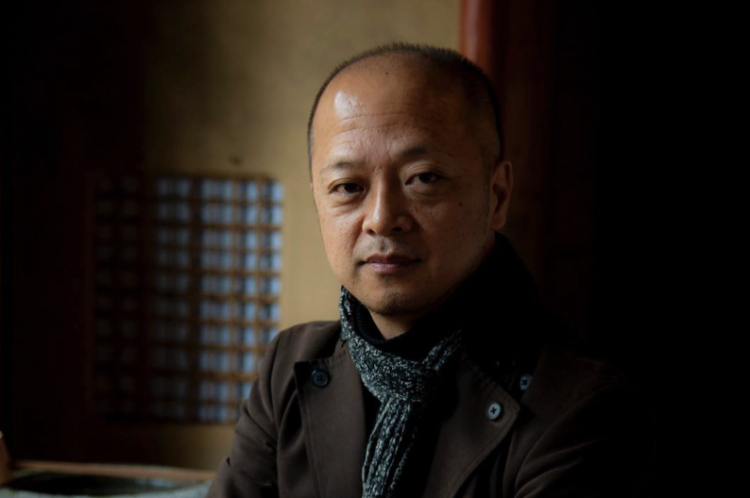
11th generation Ohi Chozaemon © Ohi Museum
"Tradition is not something to be merely preserved, but something to be passed on to the next generation," says Mr. Ohi. True to his words, Ohi ware has been passed down for over 360 years, creating new value in line with the times. Based on the techniques and aesthetic sense cultivated as tea ceremony utensils, they not only preserve tradition but also continue to challenge themselves with new forms of expression such as contemporary art.
Currently, the Ohi Museum is undergoing renovations to the Ohi Gallery and the museum's front garden, both located on the same grounds, with completion targeted for March 2027. During the construction period, visitors can still view and purchase artworks in a temporary gallery, and tea ceremonies will continue as usual. After the renovations, the museum is expected to be reborn not only as an exhibition space, but also as a place where visitors can experience tea culture more deeply.
The Ohi Museum of Art continues to showcase new charms while inheriting its history. Having experienced the unique appeal of Ohi ware in the present day, expectations are high for the newly renovated Ohi Museum of Art.
大樋美術館
電話:076-221-2397
住所:石川県金沢市橋場町2-17
アクセス:JR金沢駅から車で約10分/バス「橋場町」バス停から徒歩約1分
HP:https://ohimuseum.com/
SNS:https//www.instagram.com/toshioohichozaemon11/
*営業時間や定休日についての詳細は、上記のリンクからご確認ください。
*記事の内容は2026年6月時点の情報です。2026年8月より館内の一部でリニューアル工事を実施しているため、実際の館内の様子や展示内容が記事・写真と異なる場合があります。あらかじめご了承ください。
*2026年8月17日~10月20日は改修工事のため臨時休館。期間中も仮設ギャラリーでの作品の鑑賞・購入、邸内茶室での呈茶は利用できます。改修に伴い、美術館前庭などの様子が変更となる場合があります。
