ReservationSearch and reserve rooms
Click here to confirm, change or cancel your reservation
Flight-Inclusive Packages
Shinkansen-Inclusive Hotel Packages
Corporate Partner Reservations
2026.06.20
You wouldn't find it unless you knew about it—the traditional craftsmanship passed down at a long-established Japanese confectionery shop without a sign.
NEIGHBORS
Kitahama in Osaka. This town has flourished as a merchant town since the Edo period, and as a place where people involved in commerce and finance have come and gone, a culture of souvenirs and hospitality has naturally developed.
Japanese sweets have long been an integral part of daily life in this town, serving as a way to convey feelings in place of words, whether in business negotiations or as a way to express gratitude at significant milestones.
In a corner of Kitahama, there is a traditional Japanese confectionery shop that doesn't have a large sign, only a small sign with the shop's name written on the glass, making it a place you wouldn't find unless you knew about it.
Kikujudo Yoshinobu is a long-established confectionery shop founded during the Edo period's Tenpo era. For approximately 200 years, across 18 generations, they have continued to make Japanese sweets alongside the lives of the people in this town.
The reason for not displaying a sign is not "special."
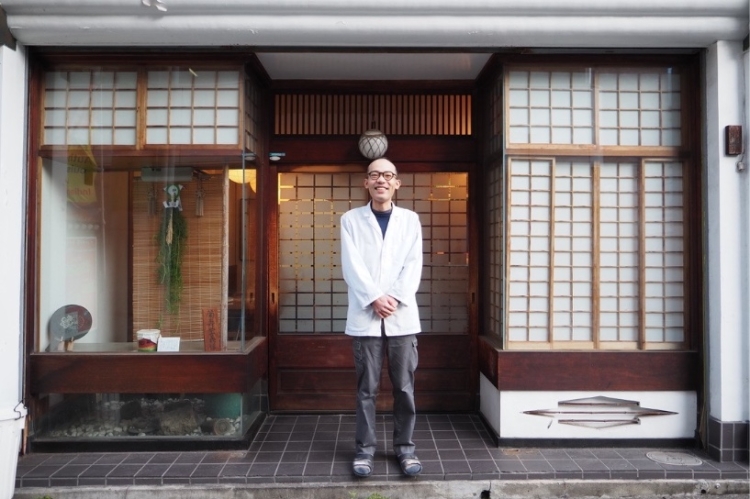
Tetsuya Kubo, the 18th-generation owner, shared the history of the shop with us.
"People often say we don't have a sign, but for us, this has always been normal," says Tetsuya Kubo, the 18th-generation owner. He says that the shop has never had a large sign since he was a child.
"I've never even considered running ads. Frankly, we can't produce that many copies."
All of Kikujudo Yoshinobu's Japanese sweets are handmade. There is a limit to how much can be made at once, and if they try to attract too many people, they won't be able to cherish the customers in front of them.
"If the number of customers increases too much, we'll have to install machinery. But I don't think that's the right approach."
Not displaying a sign isn't about aesthetics or strategy. It's simply a very natural choice: to consistently do what we can do right now.
The way we work hasn't changed since our founding.
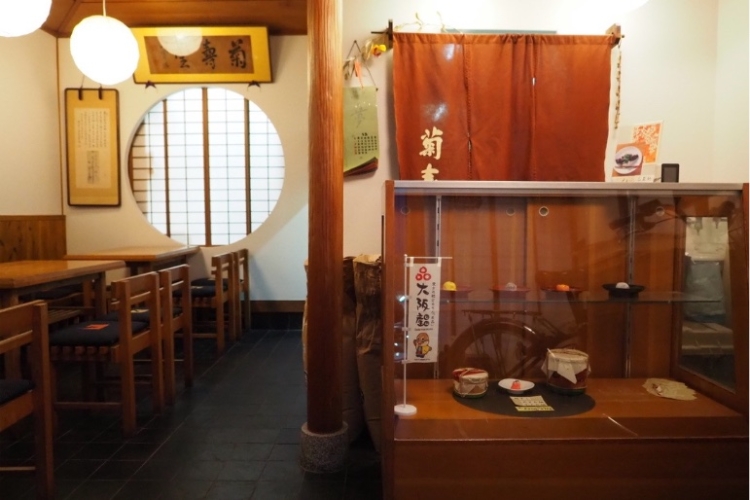
The store continues to welcome our valued customers.
Kikujudo Yoshinobu was originally founded in Senba, a representative district of Osaka where commerce was thriving. However, the store was destroyed in the war and relocated to its current location.
The shop was formerly known as "Yamato-ya," but one generation of owners specialized in sweets shaped like chrysanthemums, so the idea arose to include "chrysanthemum" in the shop's name, and that's how it came to be called "Kikujudo Yoshinobu."
"Honestly, I don't think how many generations a business has been around or what its name is is that important," says Tetsuya.
What Tetsuya values most is the existence of "people who will eat his food right now."
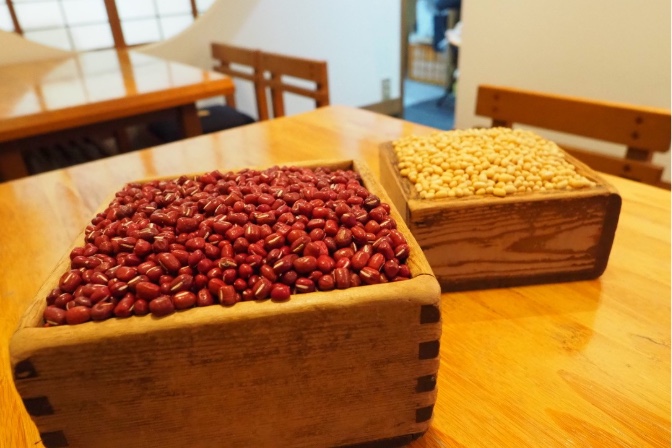
The traditional method of making red bean paste, passed down through generations.
The shop is currently run by Tetsuya's father, the 17th generation Masaya Kubo, and his son, the 18th generation. This is also the reason why they insist on being a family business.
"I want to sell the things I make myself with my own hands. I want to take responsibility for delivering them to customers from start to finish."
They only cook one sho (approximately 1.8 liters) of red bean paste per day, using only adzuki beans and refined sugar. The method of preparation has also remained unchanged, passed down through generations.
"There's no need to force yourself to change things you've always believed to be good. I think there's value in continuing them in themselves."
We close the shop once we've sold out. That, too, is a manifestation of the commitment this shop has always upheld.
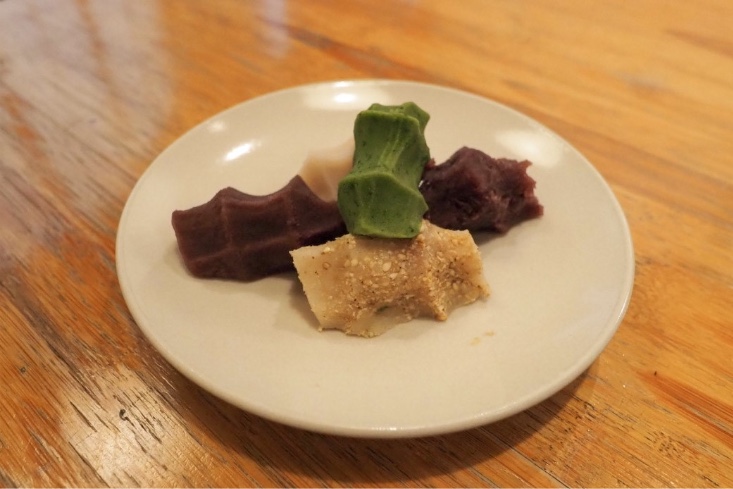
The famous "Komamochi" is made to order.
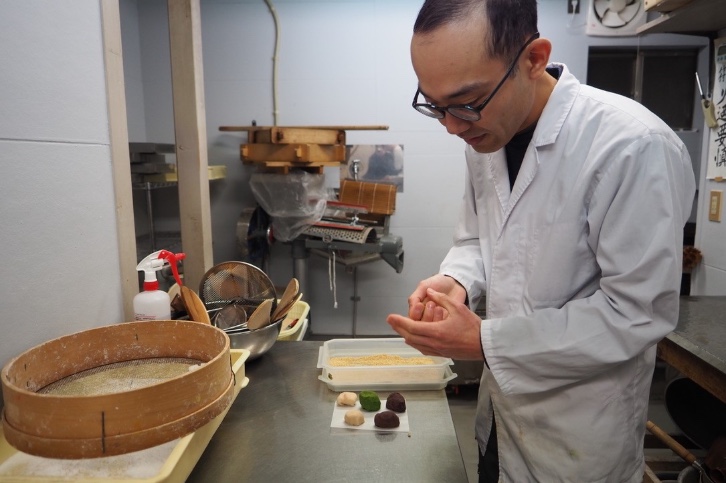
Kikujudo Yoshinobu, which continues to build upon what they consider to be "good," is famous for its "Kourai Mochi," which is made to order. It was created during the time of the 15th generation owner as a confection that could be quickly served in a tea room.
Unlike daifuku, there's no need to knead the dough; the mochi is wrapped in sweet bean paste and quickly shaped. The process is somewhat reminiscent of nigiri sushi.
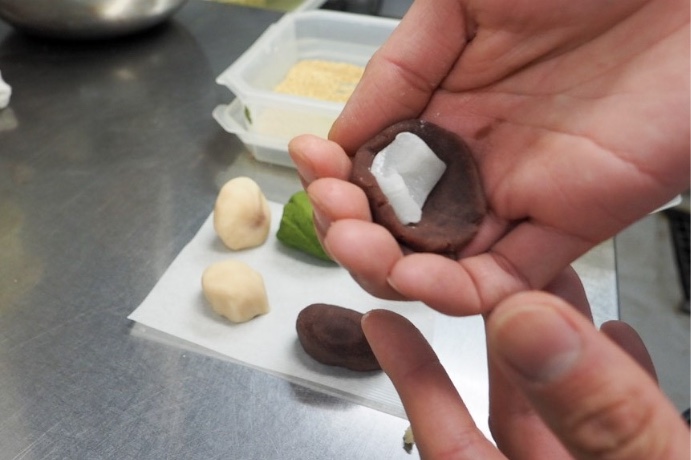
"Koryo mochi" is made to order.
"Since you're going to the trouble of eating it, I want you to enjoy it at its most delicious state."
Koryo mochi comes in five varieties: smooth white bean paste, chunky bean paste, sesame, and matcha. Because the bean paste is exposed, it dries out over time. That's why it's worthwhile to enjoy it fresh in the shop.
The ingredients and process are surprisingly simple, but each bite reflects the long hours and years of dedicated handiwork that went into it.
With determination, build each day by day.
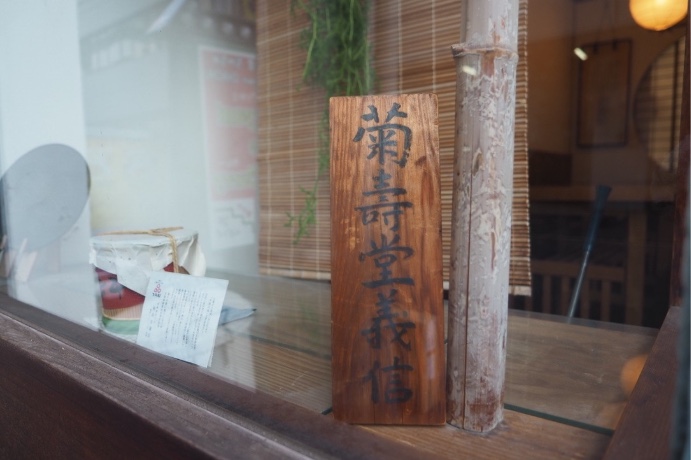
"To be honest, I don't know what the future holds," Tetsuya began, before continuing.
"But I'll continue doing the things I've cherished since long ago, today and tomorrow. I hope that will accumulate over a week, a year, and ten years."
What Kikujudo Yoshinobu aims for is not flashy changes or introducing new things, but rather continuing without disrupting the balance.
A long-established Japanese confectionery shop, with a history of approximately 200 years, can be found in a place you wouldn't discover unless you knew about it. Its quiet, sincere, and understated flavors are sure to linger in your travel memories.
菊壽堂義信
電話: 06-6231-3814
住所:阪府大阪市中央区高麗橋2-3-1
アクセス: Osaka Metro堺筋線 北浜駅 から徒歩2分
SNS: https://www.instagram.com/kikujudo_osaka/
*For details on opening hours and closing days, please check the link above.