


ReservationSearch and reserve rooms
Click here to confirm, change or cancel your reservation
Flight-Inclusive Packages
Shinkansen-Inclusive Hotel Packages
Corporate Partner Reservations
2026.03.10
370 Years in Ueno-Ikenohata: The Hidden World of Kumihimo, Mastering Color and Structure
NEIGHBORS
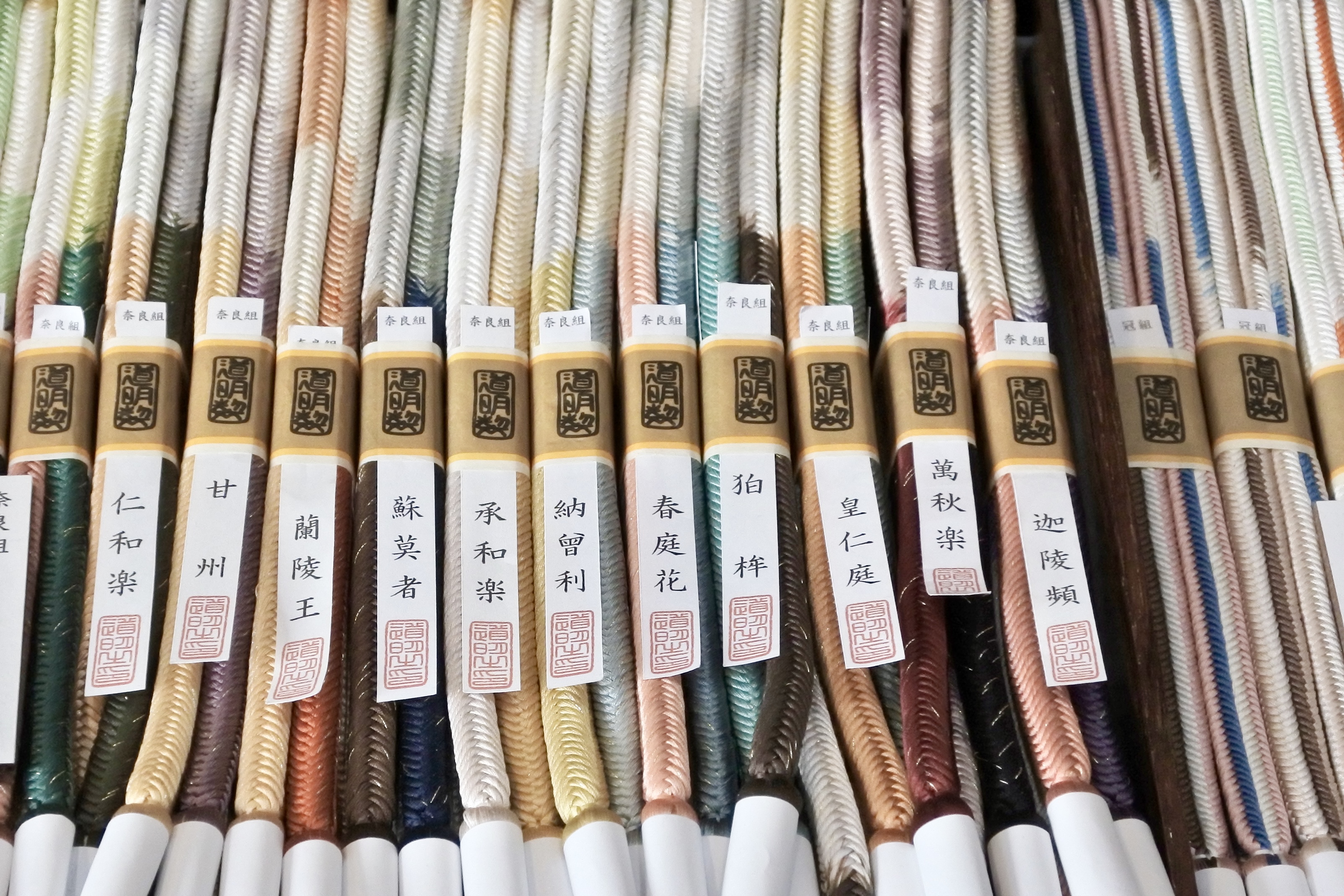
Ueno Hill, dotted with numerous art museums and museums, exudes a cultural atmosphere. At its foot lies the Ikenohata area, where "Yusoku Kumihimo Domyo" proudly displays its traditional noren (shop curtain). Founded in 1652 (Keian 5), it is one of Tokyo's leading long-established businesses, having witnessed the changes in Ikenohata since the time of Tokugawa Iemitsu.
Kumihimo, in its essence, is a traditional craft made by braiding together dozens of silk threads. In the past, it supported Japanese attire as decorative cords for armor and tea ceremony utensils, and as obi sashes for kimonos. The colorful cords displayed in the shop embody 370 years of accumulated skill and pride.
The functional beauty unique to hand-woven fabrics has supported the long-established shop's reputation.
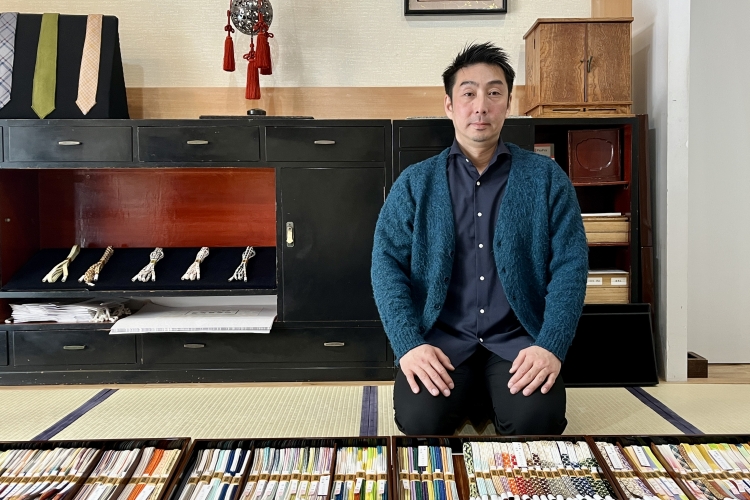
Kiichiro Domyo, the 10th generation of the "Domyo" family, is responsible for both preserving tradition and promoting new forms of communication through experiential facilities.
As industrial mechanization progressed after the Meiji Restoration, many kumihimo (braided cord) makers disappeared. So why was "Domyo" able to maintain its traditions and reputation?
Kiichiro Domyo, the 10th president of the company, says the reason is the expressive power and practicality that only handcrafted work can offer. The complex techniques, such as switching patterns midway through the process or dyeing the threads in a gradient, cannot be easily replicated by machine.
Even more important is the subtle layer of air and unique texture that only hand-woven cords possess.
"Without the elasticity unique to hand-braiding, the knot would easily come undone. That functional aspect is another strength that only hand-braiding can offer."
It's easy to tie, and once tightened, it won't loosen. Its reliable practicality as a tool is the reason it has remained popular for so many years.
In pursuit of the ideal color. A rational choice: an integrated in-house system.
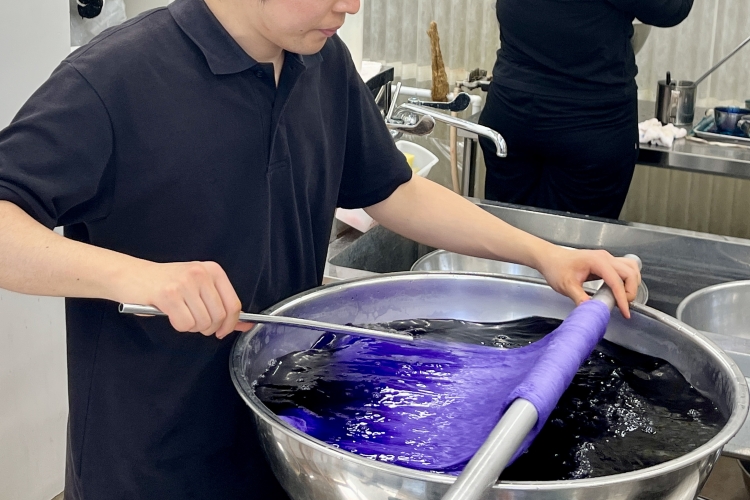
Our own dyeing facility pursues the ideal color. Craftsmen hand-dye the threads from white, precisely creating the desired shades.
The braided cords displayed in the shop are all made from threads that have been dyed in-house from white thread. In pursuit of the ideal color, a dedicated dyeing room is located on the upper floor of the shop. The uncompromising, delicate colors are born from this consistent process.
Furthermore, a workshop for braiding the dyed threads into cords is also located within the same building. While many traditional crafts employ a division of labor system, completing all processes in-house is a rational decision to ensure the continuation of the tradition. A division of labor system carries risks such as the inability to obtain certain threads if a supplier goes out of business, but an integrated system is not affected by external factors.
An uncompromising pursuit of the perfect color and an independent production system—these two pillars have supported "Domyo" braided cords in every era.
Unraveling the past to inform the present: The role of a "research institution"
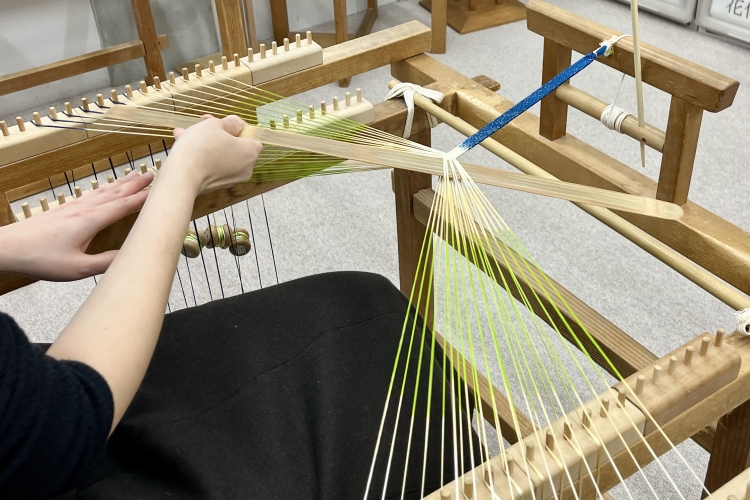
The workshop is a scene of the production process. Using a tool called a "takadai," the craftsman carefully weaves together each individual thread.
"Domyo" also functions as a research institution. For nearly 100 years, it has been investigating and restoring historical braided cords preserved in places like the Shosoin Treasure House, deciphering the structural logic from these artifacts.
This comprehensive survey of major kumihimo (braided cords) in Japan is an area that only this shop, which maintains such advanced handcrafting techniques, can undertake. A sense of mission to prevent the intricate braiding methods of the past from dying out and to pass them on to the future as a living culture supports this painstaking research.
The deciphered structures and knowledge of the past are not merely being reproduced as products, but are also being applied to the development of modern Western clothing items, including neckties. By integrating historical beauty into today's lifestyle, kumihimo (braided cords) continue to thrive as a vibrant cultural phenomenon.
Experience the depth of kumihimo (braided cord) by braiding it yourself. We also operate a kumihimo experience facility.
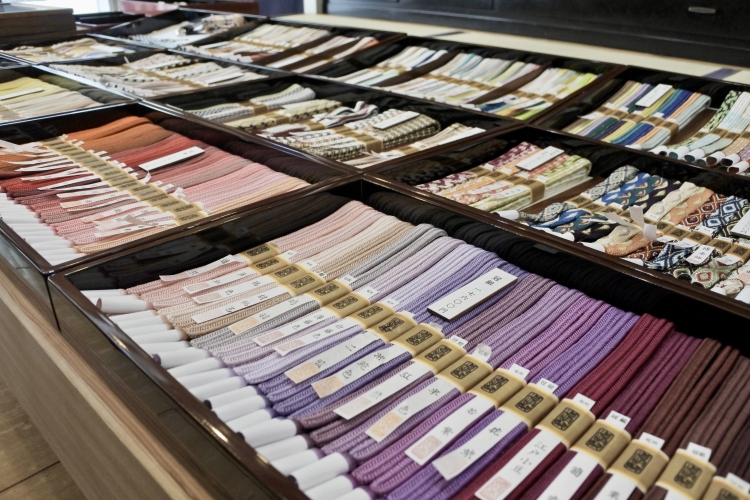
The obi sashes are lined up in a crowded space. The cords, dyed and woven by hand, create a vibrant gradient.
Kiichiro Domyo says the following:
"Now that traditional Japanese clothing has become something of a special occasion, kumihimo (braided cords) are easily overlooked unless you consciously look for them. That's why I want to share this historical technique, which has developed uniquely in Japan, with people who wear Western clothing and with people from overseas."
One place that embodies this philosophy is "Kumihimo Experience by DOMYO," an experience facility located in Kagurazaka. Here, visitors can deepen their knowledge through guided tours of historical materials and restored cultural artifacts, and then actually experience making kumihimo (braided cords). It has gained popularity as a place that satisfies intellectual curiosity and allows visitors to experience Japanese culture through kumihimo.
The flagship store in Ueno-Ikenohata is the gateway to the world of kumihimo (braided cords). The time spent encountering authentic colors and techniques will be etched into your memories as a vivid part of your journey.
Traditional Braided Cord Domyo
Phone: 03-3831-3773
Address: 2-11-1 Ueno, Taito-ku, Tokyo
Access: 7-minute walk from JR Ueno Station / 3-minute walk from Yushima Station on the Tokyo Metro Chiyoda Line
Website: https://kdomyo.com/
SNS: https://www.instagram.com/domyo_kumihimo/
*For details on opening hours and closing days, please check the link above.