



ReservationSearch and reserve rooms
Click here to confirm, change or cancel your reservation
Flight-Inclusive Packages
Shinkansen-Inclusive Hotel Packages
Corporate Partner Reservations
2026.03.10
A story woven in Nihonbashi, the starting point of the Five Highways. A traditional Japanese paper specialty store with over 370 years of history.
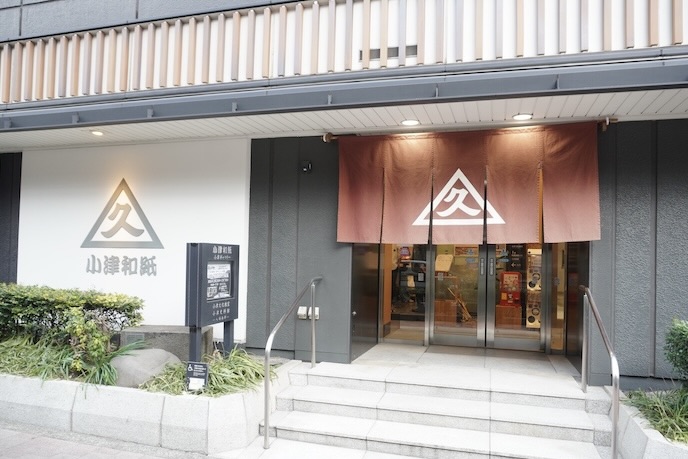
The Nihonbashi area is a 15-minute walk from RESOL HOTEL Akihabara. While it is now a bustling office district, it has a rich history as a commercial hub that transported goods from all over Japan during the Edo period. In a corner of Nihonbashi, a traditional Japanese paper shop with a history of over 370 years still hangs its noren (traditional Japanese curtain).
Founded in 1653 (Shoo 2). Contributed to the popularization of washi (Japanese paper).
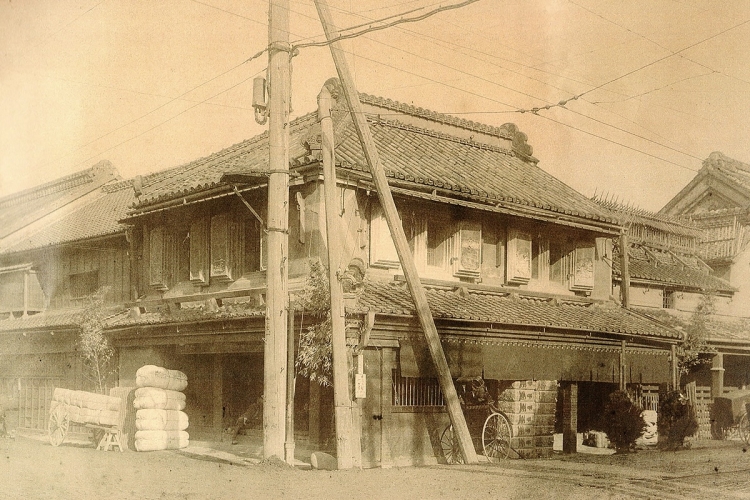
Exterior view of the "Ozu Washi" shop from the Meiji era
Nihonbashi is known as the starting point of the "Five Highways," the representative roads of Edo, including the Tokaido, Nakasendo, Koshu Kaido, Nikko Kaido, and Oshu Kaido. It was here in 1653 (Shoo 2) that Ozu Seizaemon Nagahiro, originally from Matsusaka in Ise Province, established a washi (Japanese paper) wholesale business, marking the beginning of "Ozu Washi." At that time, he started his business in a major commercial area called "Odenmacho," where merchants from Ise Province gathered.
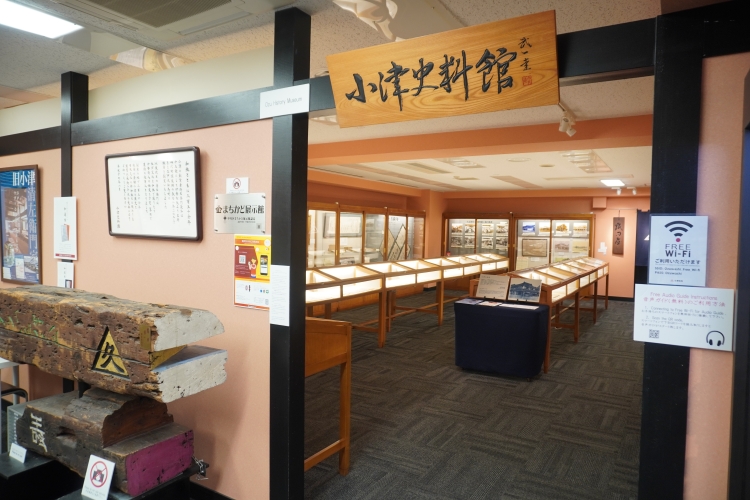
You can learn about the history of "Ozu Washi" (Ozu Japanese paper) at the museum on the third floor of the store.
"After opening, we also handled textiles such as cotton, but as people interacted more during the Edo period, the demand for paper expanded. Accordingly, we began to seriously focus on washi (Japanese paper) business, and over time we established ourselves as a shop," says President and CEO Norimitsu Nakata. As of 2026, Ozu Washi continues to operate in the same location as when it was founded.
We sell durable washi paper in a variety of designs.
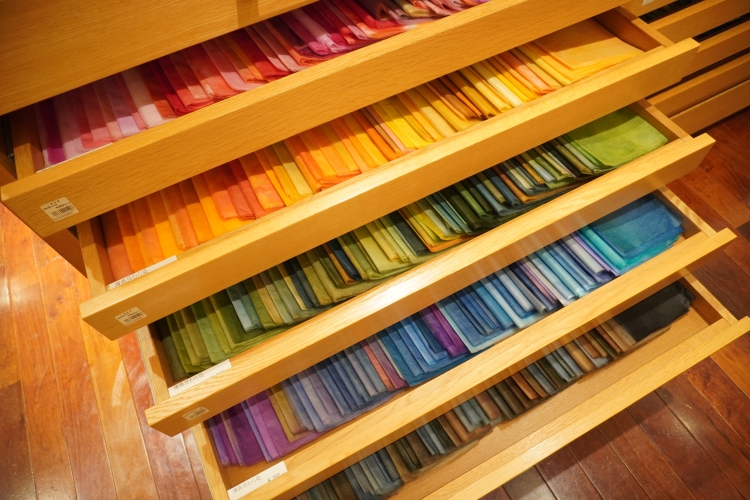
"Tengujo-shi" is a vividly colored paper dyed by mixing multiple colors.
Ozu Washi sells handmade Japanese paper carefully selected from production areas throughout Japan. The paper is made using plants such as mulberry, paperbush, and gampi as raw materials, and is meticulously finished by skilled artisans. Because of its excellent durability, Japanese paper is suitable for long-term preservation and is sometimes used in the restoration of artworks in museums and galleries overseas.
A space where you can fully appreciate the history and charm of washi paper.
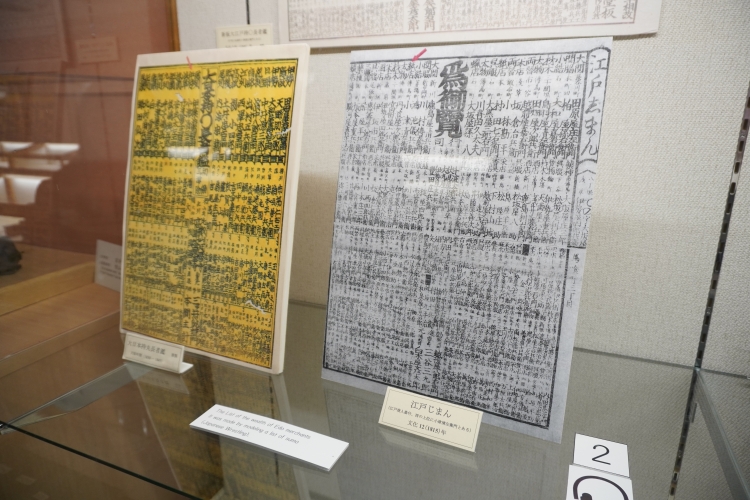
List of the wealthiest people displayed in the historical museum
On the third floor, the historical museum displays valuable materials, including ancient documents that tell the story of the company's history and heavy treasure chests containing thousands of gold coins. Admission is free, so you can easily stop by before or after shopping and deepen your knowledge of the lives of merchants in the Edo period and washi paper.
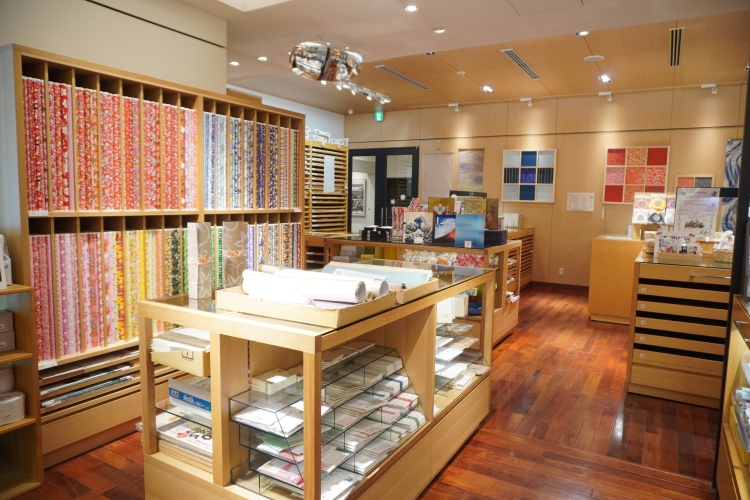
The shop on the first floor displays approximately 500 types of handmade Japanese paper collected from all over Japan. In addition to letter sets and stamp books that allow you to easily enjoy Japanese paper, brightly colored Yuzen paper is also popular.
In recent years, the number of tourists from Asia and Europe has increased dramatically, and they can be seen purchasing items such as "Aohakeme Washi" (blue brushstroke patterned Japanese paper), which boasts a high level of design, as interior decoration for their homes.
It seems that those with a deep understanding of art and history tend to have a strong interest in the culture of washi (Japanese paper).
Learn about the skills of artisans through a washi paper making experience.
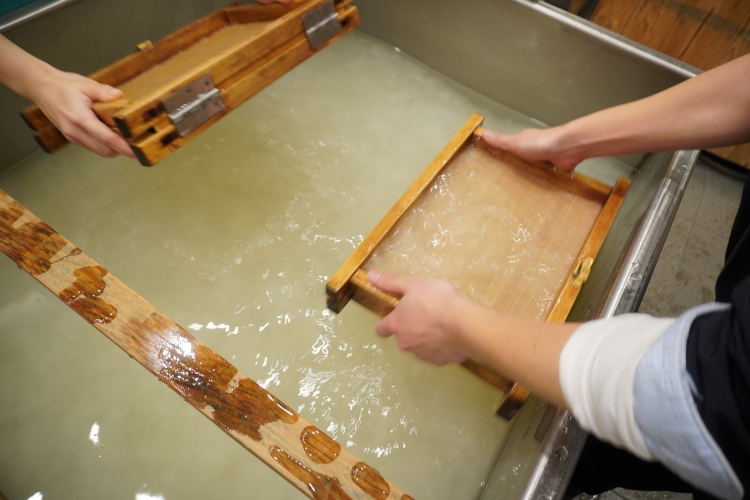
Part of the pouring process. Water mixed with the raw materials is drawn deep into the ground to entangle the fibers.
One way to truly appreciate the charm of the "Ozu Washi" store is to experience the "Handmade Washi Paper Workshop" on the first floor. You can experience the entire production process, from papermaking to drying, just like a craftsman.
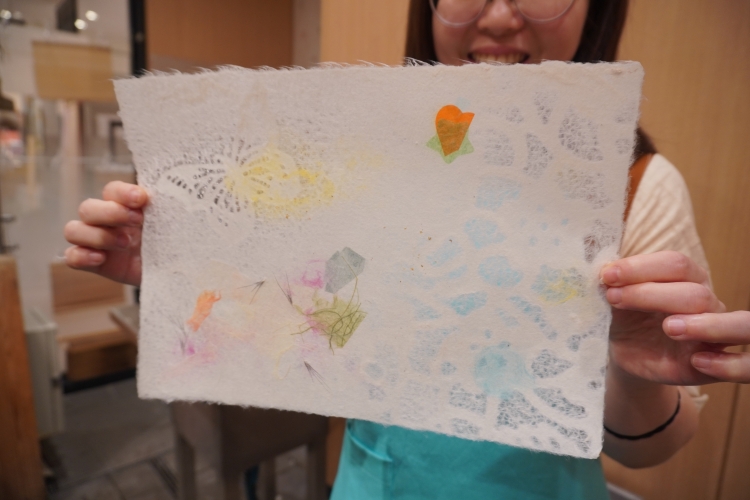
Designed washi paper with added parts
The workshop offers a variety of hands-on courses, including "water-dropping paper," where you create patterns by dropping water droplets onto freshly made washi paper, and "designer washi," where you can freely decorate with your own ideas. There's no end to the fun to choose from. By getting your hands dirty and seeing the moment a sheet of washi paper is created up close, you can feel closer to the culture of washi paper.
We want you to enjoy washi paper in a way that suits modern culture.
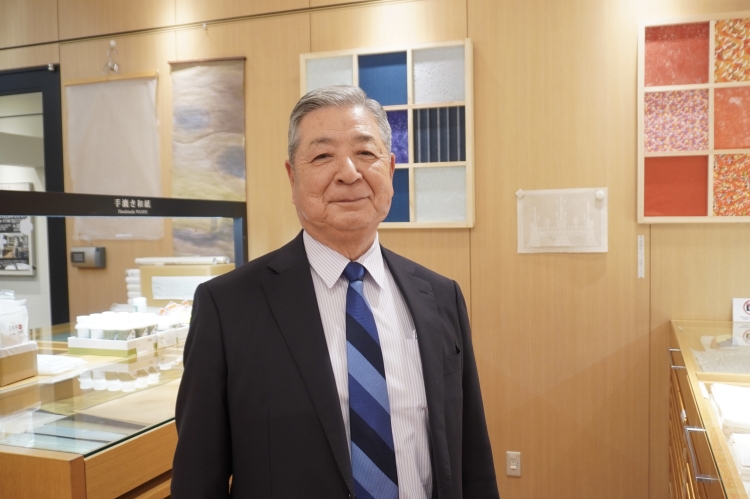
Representative Director and President, Norizō Nakata
In 2014, the traditional Japanese papermaking technique was registered as a UNESCO Intangible Cultural Heritage, and its recognition among younger generations has been increasing.
"In line with our management philosophy of 'learning from the past to create the new,' we intend to preserve the traditions of washi paper, which is our company's founding business, while constantly challenging ourselves with new initiatives. We hope that everyone will incorporate washi paper into various aspects of their daily lives and enjoy its texture and warm feel."
Ozu Washi has grown alongside the development of Nihonbashi. We will continue to convey the value of tradition to many people and pass on the culture of washi paper to future generations.
Ozu Washi
電話:03-3662-1184
住所:東京都中央区日本橋本町3-6-2 小津本館ビル
アクセス:JR新日本橋駅から徒歩2分、東京メトロ小伝馬町駅から徒歩5分
HP:https://www.ozuwashi.net/
SNS:https://www.facebook.com/Ozuwashi.since1653/
https://www.instagram.com/ozuwashi/
*The "Handmade Washi Paper Workshop" requires advance reservations (walk-ins are possible if there are openings).
*Please check the link above for details such as business hours, closing days, and experience fees.