


ReservationSearch and reserve rooms
Click here to confirm, change or cancel your reservation
Flight-Inclusive Packages
Shinkansen-Inclusive Hotel Packages
Corporate Partner Reservations
2026.06.15
Mizu Manju, a summer tradition in Ogaki City. A clear, refreshing taste unique to the city of water.
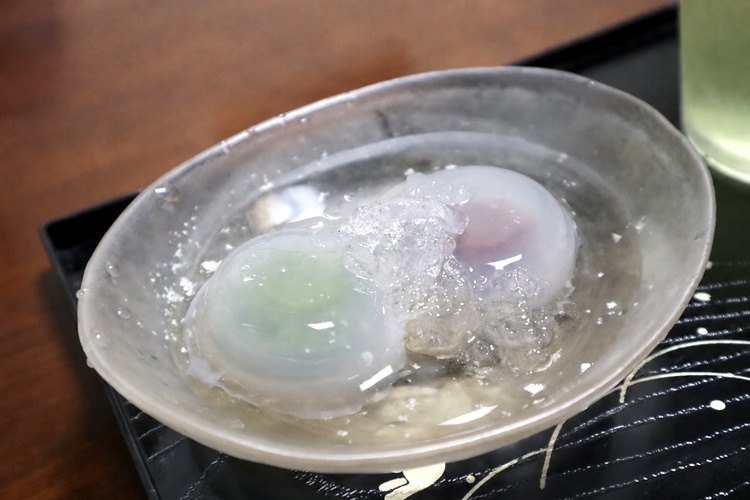
Ogaki City in Gifu Prefecture is known as the "City of Water." When the castle town developed, a network of waterways was laid out, and even today, you can see abundant groundwater gushing out in many places throughout the city.
The confection born from that blessing is "mizu manju." It was created in the Meiji era, when refrigeration was not widespread, as a confection to be eaten chilled with cold spring water during the summer. "Kinchōen Sōhonke," founded in 1798 (Kansei 10), continues to make this "mizu manju" using traditional ingredients and methods.
Japanese sweets born in the city of water
Ogaki was once a thriving town thanks to water transport, as evidenced by Funamachi Port, which is known as the final stop on Matsuo Basho's "Oku no Hosomichi" (The Narrow Road to the Deep North). From the late Edo period to the Meiji era, as well-digging technology spread to the private sector, "well boats" (idobune) for storing groundwater were built in various locations.
The groundwater, which maintains a temperature of around 14 degrees Celsius throughout the year, is also used as a natural refrigerator, becoming an indispensable part of daily life.
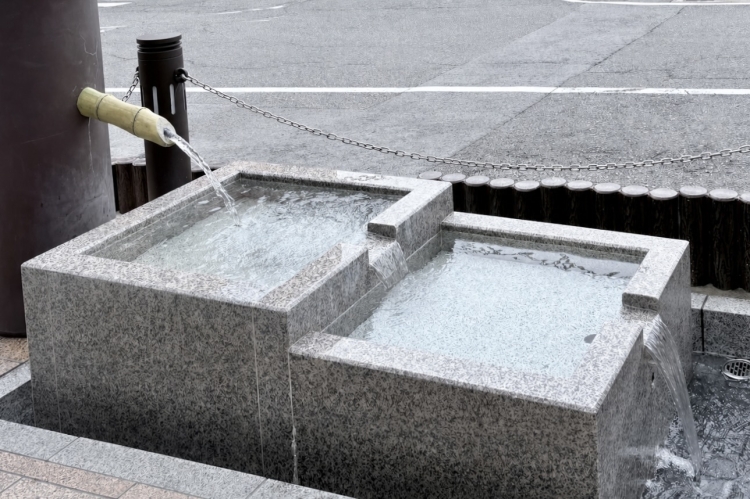
The "well boat" in front of Ogaki Station. It's two-tiered, so the upper and lower sections are used for different purposes.
Around that time, a Japanese confectionery shop owner, wanting to offer a delicious treat even in summer, devised "mizu manju," a sweet bun chilled in groundwater. It soon spread throughout the region and became so popular that it was sold chilled alongside vegetables in greengrocers' "well boats." Mizu manju is a sweet that embodies the culture of this "city of water."
At the storefront of "Kinchoen Sohonten," you can still see "mizu manju" (water-filled sweet buns) chilled in groundwater. People come from far and wide to enjoy this summer tradition of Ogaki.
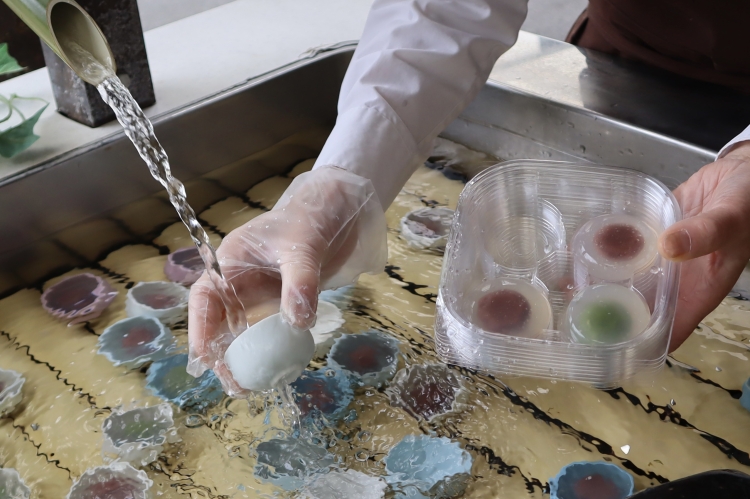
They use water pressure to dispense water dumplings from small cups and serve them to customers.
Authentic water mochi made with kudzu and bracken.
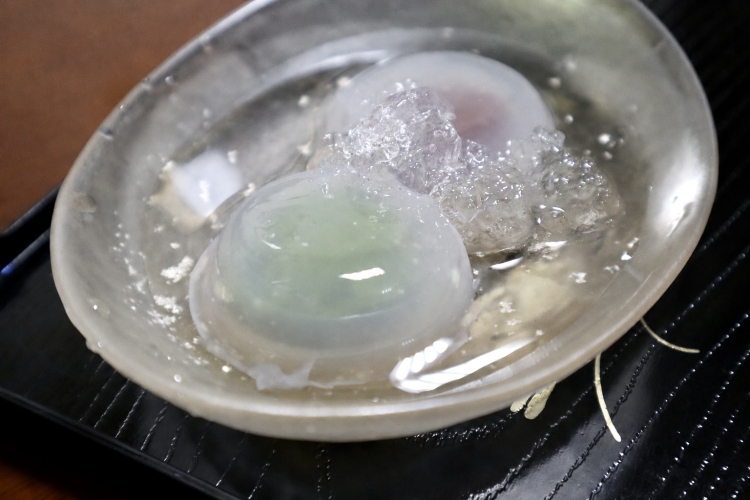
Matcha bean paste (front) and smooth bean paste (back). The matcha bean paste was developed by the 8th generation owner.
Unlike many other "mizu manju" (water dumplings) made throughout Japan, Kinchoen Sohonten continues to uphold the traditional method of using kudzu starch and bracken starch.
The production of kudzu starch and bracken starch is decreasing year by year, making them difficult to obtain. Nevertheless, the 8th generation owner, Hideki Kitano, insists on using traditional methods because he wants people to "experience the transparency, texture, and flavor of freshly made products."
"Mizu Manju," made with kudzu starch and bracken starch, spoils easily and can only be sold on the day it's made. For this reason, they do not sell it online. Kitano says, "I believe that getting people to come to Ogaki is a way of contributing to the community," and he remains committed to providing an experience that can only be enjoyed by those who visit this place.
The pure flavor of the bean paste is only possible because of the abundant groundwater.
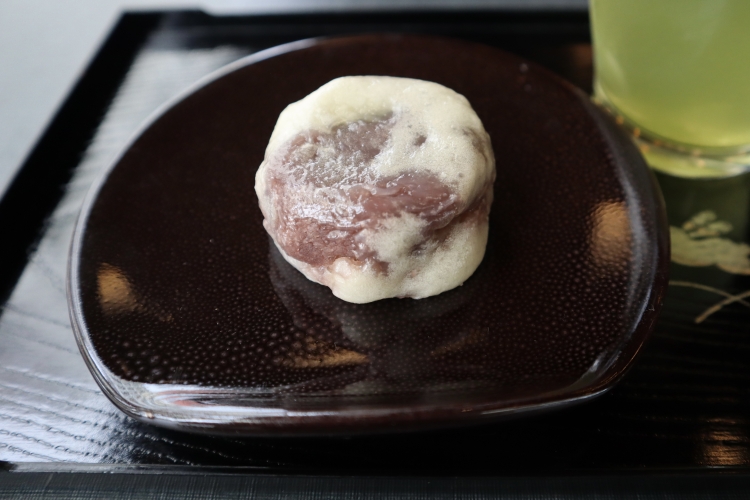
"Kinchoen Manju." The skin has a faint aroma of sake and is so thin that the red bean paste filling is visible through it.
The key to the taste of "mizu manju" (water dumplings) lies in the bean paste. At Kinchoen Sohonten, when cooking the red beans, they are rinsed 3 to 4 times with a large amount of spring water to carefully remove any impurities, and after cooking, they are rapidly cooled with a large amount of cold water. This method would not be possible without abundant groundwater. "The biggest advantage of making sweets in Ogaki is that we have access to an abundance of delicious groundwater," says Kitano.
Alongside "Mizu Manju," another specialty of Kinchoen Sohonten is "Kinchoen Manju." This is a Sakamoto Manju, said to be the prototype of modern manju, characterized by its thin skin made solely through natural fermentation with yeast and a high proportion of red bean paste. That's why the smooth, light red bean paste that melts in your mouth is essential.
Our mission is to preserve the authentic.
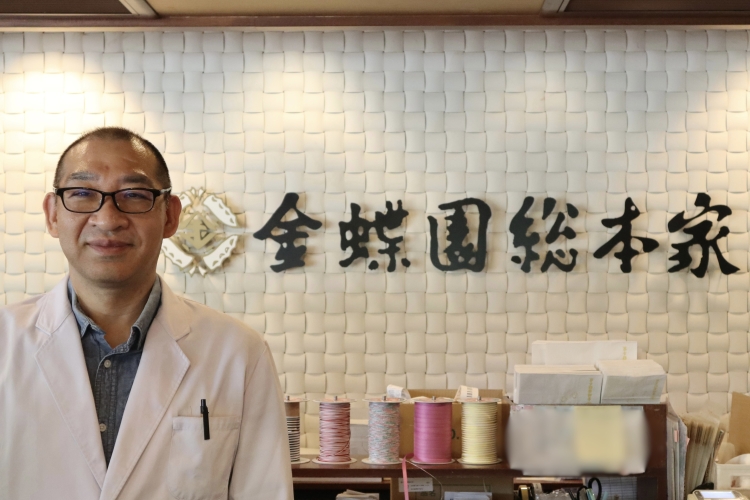
Hideki Kitano, the 8th generation owner
The reason we continue to use time-consuming, traditional methods is not just because we want to deliver delicious products.
Kitano says, "I believe my mission is to preserve the local food culture."
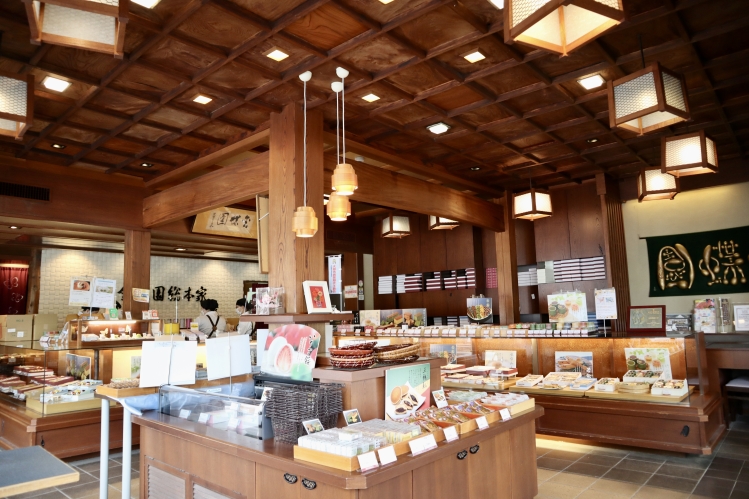
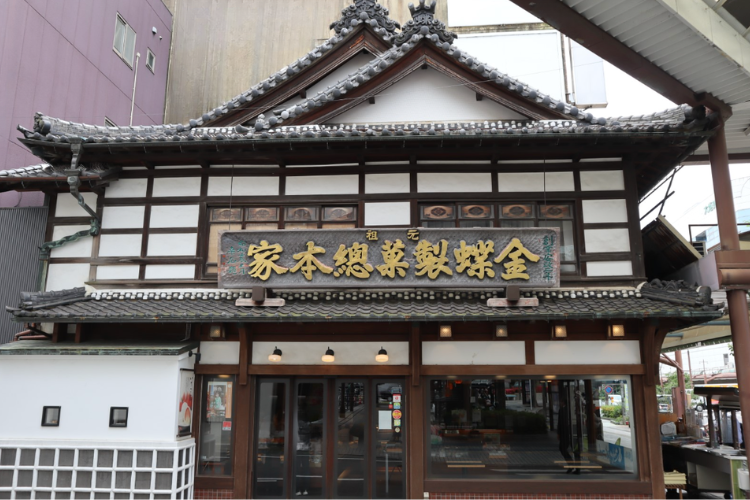
The imposing building, constructed entirely of zelkova wood, has been designated a "Landscape Heritage Site of Ogaki City."
With a history spanning over 200 years, this establishment, rebuilt in 1951 (Showa 26) using zelkova wood by master carpenters even after its original structure was completely destroyed by fire during the war, embodies the history that has been passed down through generations.
In order to pass on the culture of Ogaki, the "City of Water," to future generations, Kinchoen Sohonten will continue to preserve its unchanging taste.
Kinchoen Sohonten Ogaki Station Main Store
電話:0584-78-3300
住所:岐阜県大垣市高屋町1丁目-17
アクセス: JR「大垣駅」南口より徒歩2分
HP: https://kinchouen.co.jp/
SNS: https://www.instagram.com/kinchouen_souhonke/
*営業時間や定休日についての詳細は、上記のリンクからご確認ください。