


ReservationSearch and reserve rooms
Click here to confirm, change or cancel your reservation
Flight-Inclusive Packages
Shinkansen-Inclusive Hotel Packages
Corporate Partner Reservations
2026.08.15
Bringing 1,300 years of history into modern life. Expanding the possibilities of the masu (wooden measuring cup) - Masuya Workshop
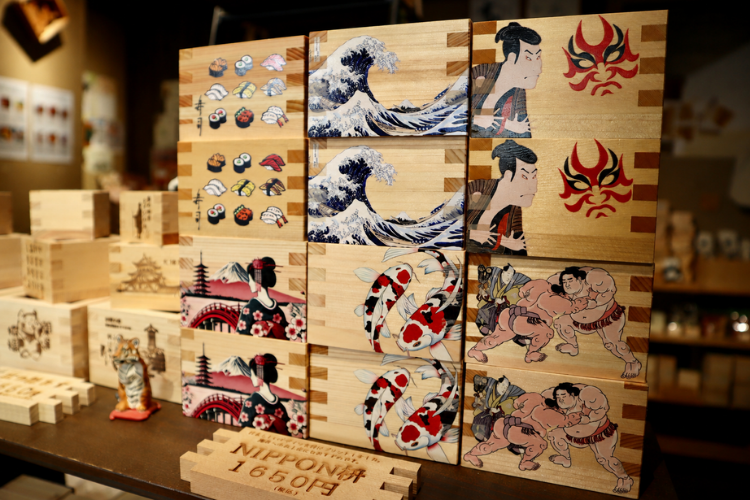
Ogaki City in Gifu Prefecture is a major production center for masu (wooden measuring cups), accounting for approximately 80% of the national production. Blessed with abundant groundwater, the city is also known as the "City of Water," and is close to Tono, a region known for its cypress trees. In the past, high-quality timber could be transported by river.
With these blessings of the land as a backdrop, the making of masu (wooden measuring cups) took root, and at one point, it is said that there were about nine workshops lined up in the city. Currently, only three companies continue to make masu. One of them is Ohashi Ryoki Co., Ltd., which was founded in 1950.
Sharing the charm of traditional masu (wooden measuring cups) that has been passed down through generations.
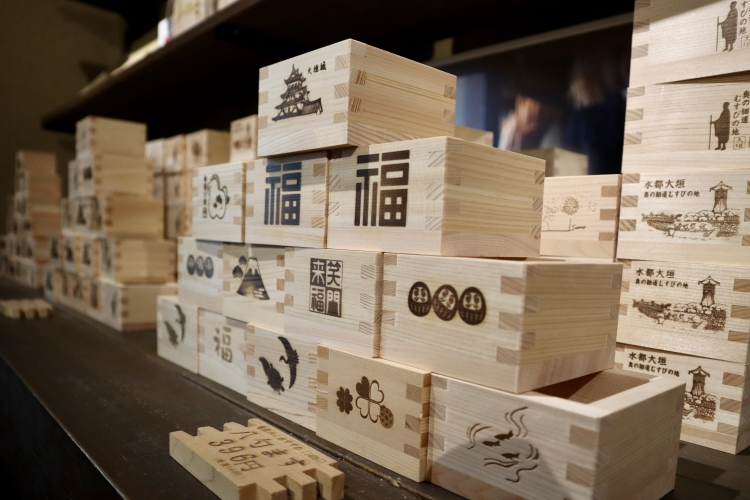
The masu (wooden measuring cup) is a tool that has been used for about 1,300 years. It was highly valued as a measuring vessel for crops and as a vessel for offerings to shrines, supporting both daily life and prayer. Eventually, it became popular as a lucky charm and is now often seen at celebratory occasions and when drinking sake.
On the other hand, in recent years, the use of masu (wooden sake cups) at weddings and opportunities to drink sake have decreased year by year, and they are rarely seen in everyday life.
Simply continuing to produce the same things as in the past will not allow tradition to be preserved. Sensing this crisis, Ohashi Ryoki decided to create products that suit modern lifestyles and to promote their appeal through their physical store, "Masu Kobo Masuya."
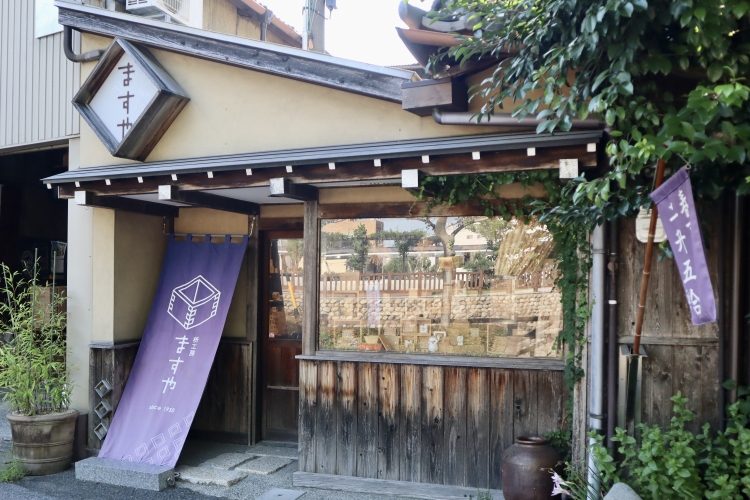
"Masu Kobo Masuya," a physical store adjacent to the workshop.
Continue to protect while taking on challenges
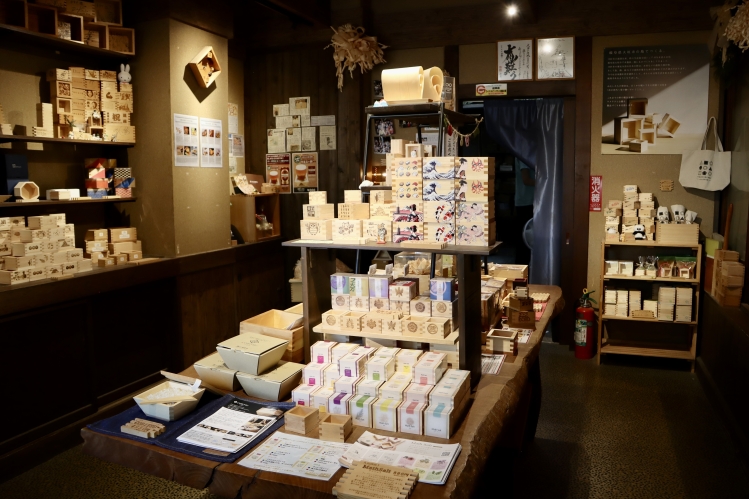
To expand the possibilities of the masu (wooden measuring cup), representative Hiroyuki Ohashi has dedicated himself to product development. Going beyond the boundaries of measuring cups and sake cups, he is creating a series of products that are in line with modern lifestyles. He also responds flexibly to unusual requests from customers, such as "Can you make this shape?"
On the other hand, Hayato Oguchi of the sales department says there are things they continue to preserve in order to maintain the good qualities of the masu (wooden measuring cup). One is using domestically produced cypress wood. Another is making use of the unique "joint" pattern that is characteristic of masu.
The masu (wooden measuring cup) is made by joining grooves together rather than gluing the sides together, and the skill of the craftsman is essential. Because there is a craftsman at each of the 10 steps, the joints fit together perfectly, resulting in a beautiful masu that does not leak even when filled with water.
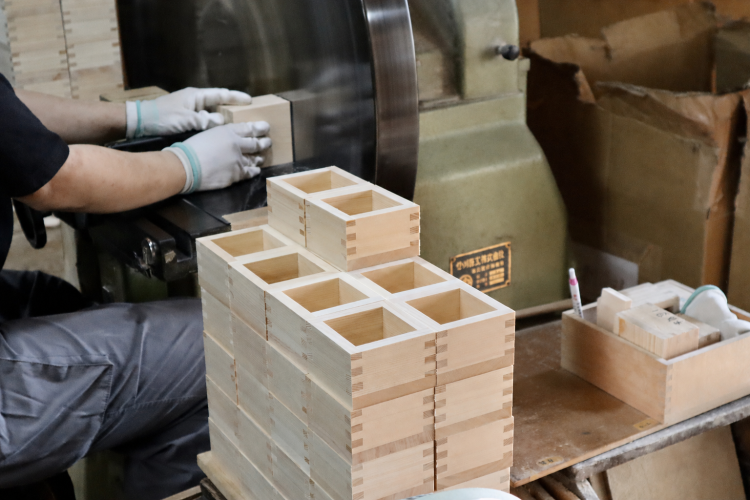
"Shaving" the surface of the measuring box. This process smooths out any slight unevenness in the joints, making them uniform.
New masu (wooden measuring cups) that complement everyday life
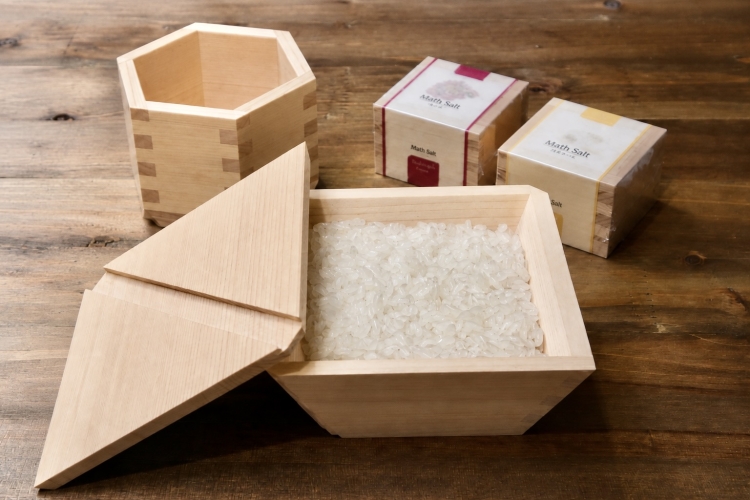
From front to back, clockwise: "COBITSU", "Rockmas", "Math Salt".
One product that has garnered a huge response is "COBITSU." Simply put freshly cooked rice in it, close the lid, and put it in the freezer. When you want to eat it, heat it in the microwave, and the wood will regulate the moisture to the perfect degree, restoring the texture to that of freshly cooked rice. The cypress wood has a gentle fragrance, giving it the feel of enjoying rice from a traditional rice container. At one point, it was so popular that there was a waiting list of six months.
Another popular item is "Math Salt," which is enjoyed in the bathtub. When the entire masu (wooden measuring cup) is placed in the hot water, the salt dissolves, revealing a hidden message at the bottom, making it a popular gift.
Born from an idea by the sales department, "Rockmasu" is a cup-shaped masu (wooden measuring cup) with a wide opening that makes it easy to put ice in. Because it is made of wood, it is lighter than it looks, surprising those who pick it up. The warmth of cypress wood and the beauty of the joinery breathe life into every product.
The warmth of wood can only be conveyed through touch.
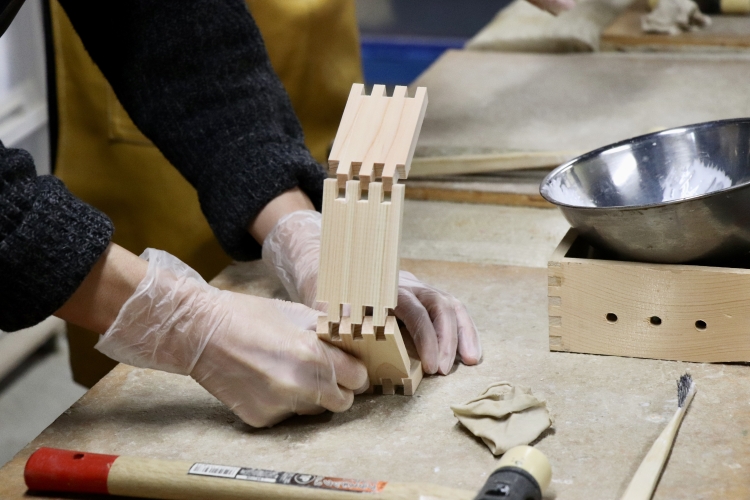
In the workshop, participants assemble a 1-go (180ml) measuring cup. They can also experience machine-based "shaving and chamfering" techniques.
The charm of a masu (wooden measuring cup) can only be truly appreciated by touching it. The workshop also offers masu-making experiences.
The process involves applying glue to the joints, assembling the frame, attaching the bottom plate, and trimming the sides. Finally, a brand mark of Ogaki Castle is added, completing the one-go (180ml) measuring cup. The whole process takes about an hour. Not only local families, but also tourists from far away visit the workshop to enjoy making their own measuring cups.
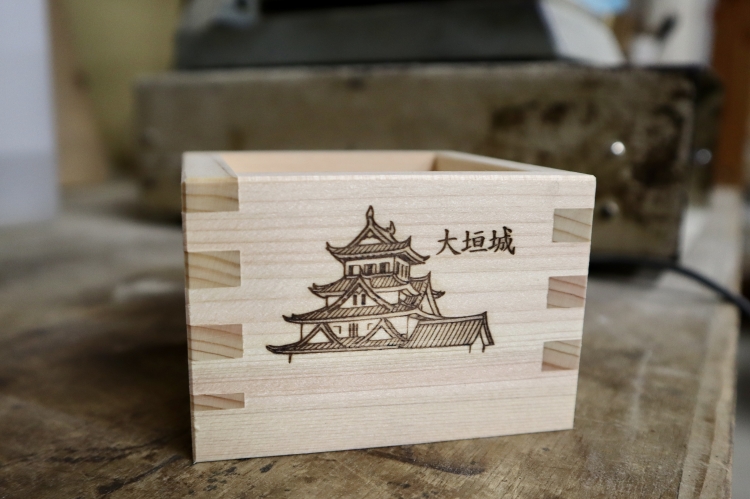
The brand mark of Ogaki Castle
Ms. Oguchi, who said she knew almost nothing about masu (wooden measuring cups) before joining the company, says, "The warmth of the wood and the beauty of the grain can only be truly appreciated when you hold it in your hands. I want more people to know about masu, each one having a unique expression."
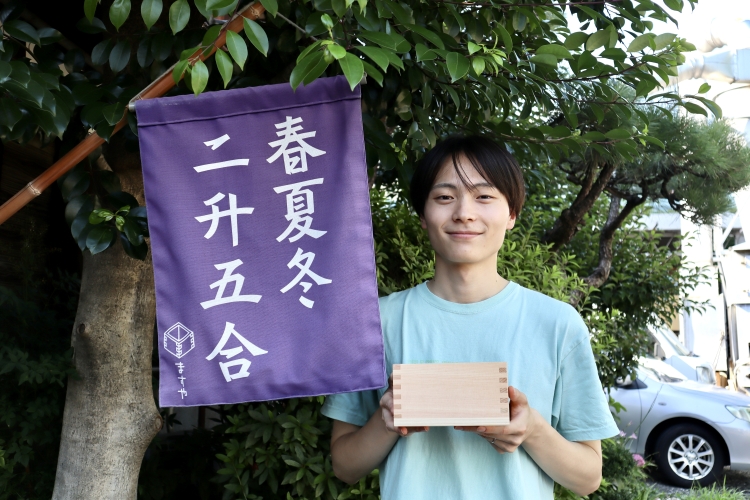
Hayato Oguchi from the sales department. The flag represents "business (without autumn), increasing (two measuring cups), and prosperity (half a measuring cup)."
Bringing 1,300-year-old tools into modern life. Through "Masuya Masu Workshop," Ohashi Ryoki continues to convey the new possibilities of the masu (wooden measuring cup).
枡工房ますや
電話:0584-78-8333
住所:岐阜県大垣市西外側町2丁目8
アクセス:JR大垣駅から車で5分
HP:https://www.masuza.co.jp/
SNS:https://www.instagram.com/masuya.ohashiryoki/
*営業時間や定休日についての詳細は、上記のリンクからご確認ください。