



ReservationSearch and reserve rooms
Click here to confirm, change or cancel your reservation
Flight-Inclusive Packages
Shinkansen-Inclusive Hotel Packages
Corporate Partner Reservations
2026.09.10
Celebrating 150 years in business, this Asakusa-based paulownia wood craft specialist has developed a unique technique: "Kiri Mokumekomi Zaiku" (paulownia wood inlay work).
NEIGHBORS
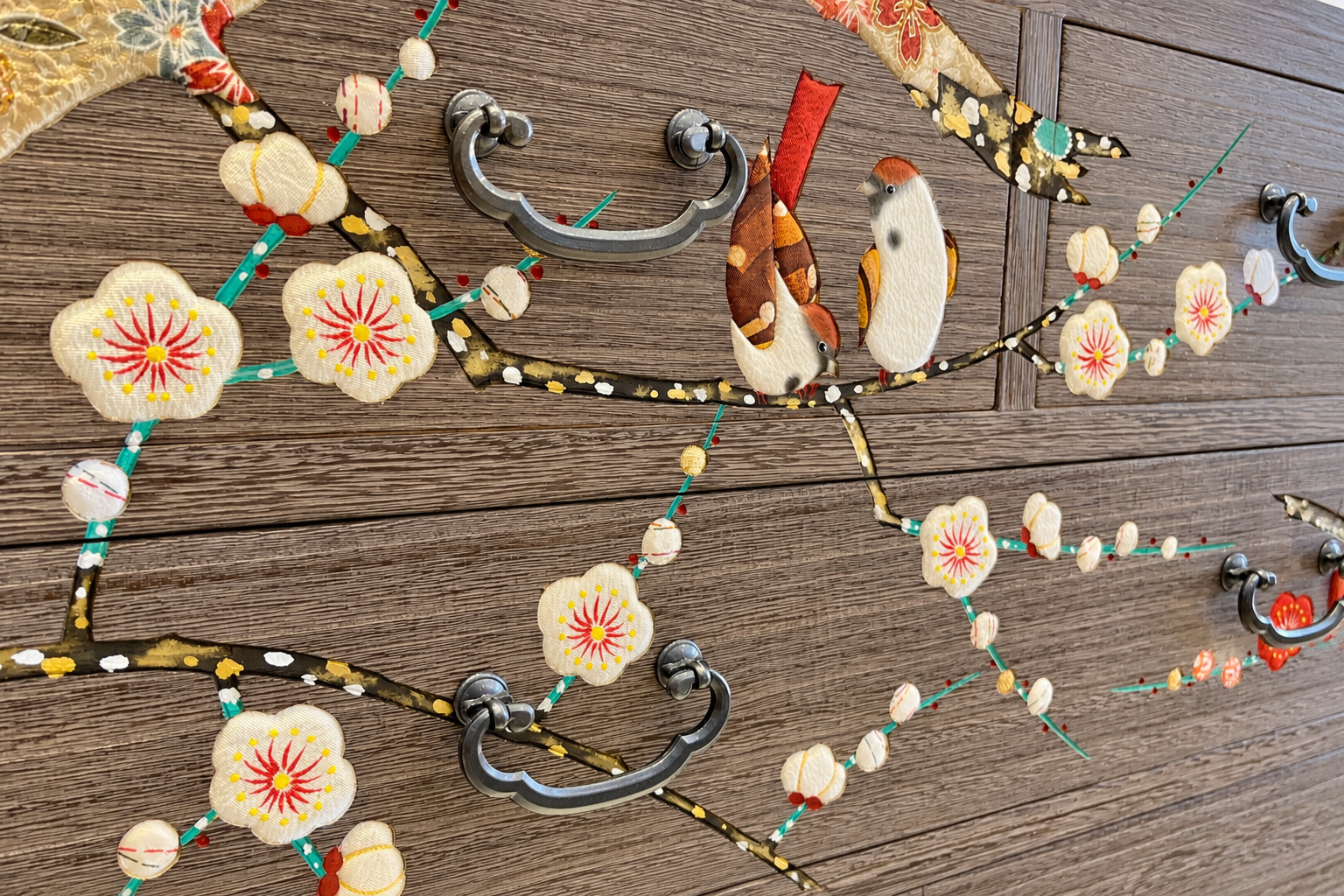
Asakusa's Orange Street is bustling with tourists from both Japan and abroad. Nestled in one corner of this street is "Hakocho," a specialty shop for paulownia wood crafts.
The shop's roots trace back to 1874 (Meiji 7), when it began making paulownia wood boxes as "Miyata Shoten" in the nearby Kotobuki-cho. Later, the second-generation owner, Chojiro Miyata, took over and the shop became known as "Hakoya no Chojiro" (Chojiro the Box Maker), before changing its name to its current one.
For a long time, the shop mainly sold wholesale and at department store events, but about 30 years ago, it opened a store in the bustling Asakusa district. Since then, it has also focused on selling to the general public, and continues to do so today. Inside the store, you will find a variety of paulownia wood products, from soft, light-colored wood to "period finishes" where the surface is burnt and polished.
"Kiri-mokumekomi" (paulownia wood inlay work) adds a touch of elegance to the paulownia wood grain.
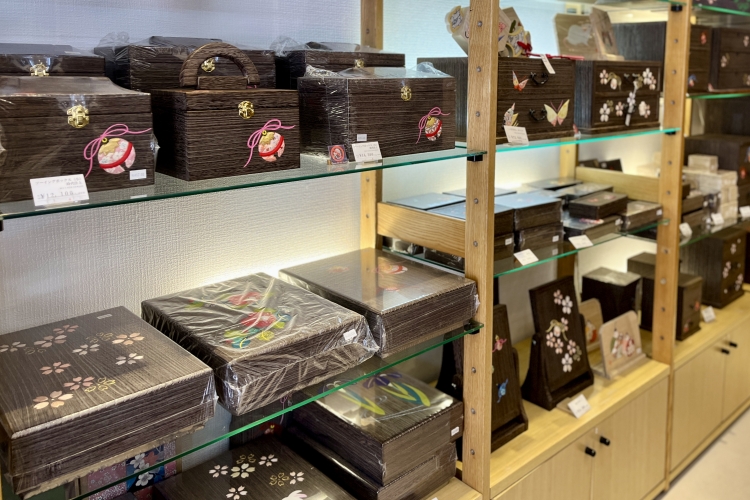
Paulownia wood products such as sewing boxes and writing boxes are displayed in stores. Popular designs include bells, butterflies, and cherry blossoms.
In the early Showa period, "Hakocho" developed its own unique technique called "Kiri-mokumekomi-zaiku" (paulownia wood inlay work). This is a handcraft where intricate grooves are carved into paulownia wood using a carving knife, and then brightly colored kimono fabrics are carefully inlaid using a spatula.
This technique was devised to add further value to paulownia wood boxes, which are excellent in insect resistance and humidity control. It is the original technique for which we once held a patent, and when combined with our woodworking skills, which involve crafting the box body in-house, we continue to maintain a high level of quality that cannot be imitated by others.
The workshop stores a large number of bolts of fabric, and they can create custom-made items to meet customer requests, from box size and pattern type to fabric color. The fusion of paulownia wood and fabric, through the hands of skilled craftsmen, creates truly unique tools.
Flexible manufacturing that adapts to changing lifestyles
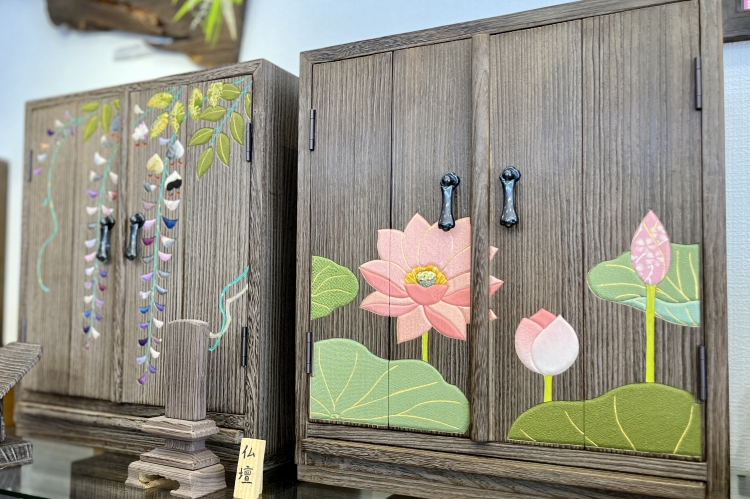
A "mini Buddhist altar" with a design that suits both Japanese and Western-style rooms. Made to suit modern lifestyles.
The products of "Hakocho" have flexibly changed shape to match the changing lifestyles of people. The large paulownia wood chests that were once the mainstream have seen a decline in demand, and now smaller Buddhist altars that blend in with Western-style rooms and apartments are gaining popularity. These are said to be the result of many years of dialogue with customers.
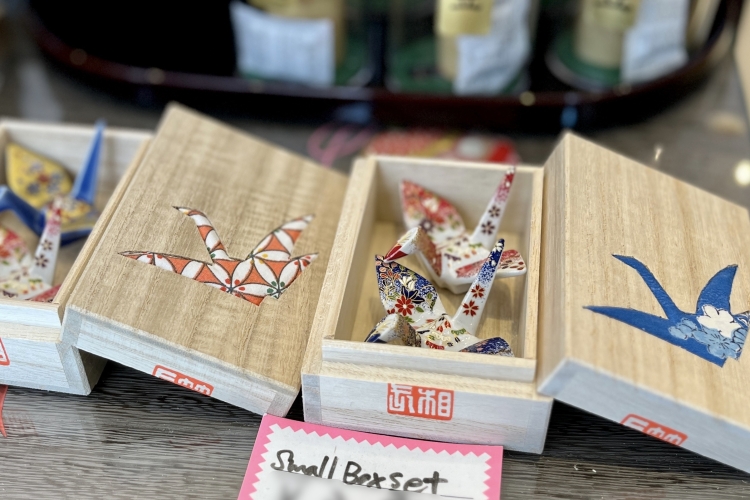
The small box used to hold the umbilical cord is one of those products that are rarely used these days, but it has been reborn in a new form with a change of perspective. A crane-shaped chopstick rest that fits inside the box has been added to the set, and it is now being offered as a souvenir that will allow foreign tourists to experience something uniquely Japanese.
Create it yourself and discover its charm: A hands-on workshop on "Kiri-mokukomi" (paulownia wood inlay craft).
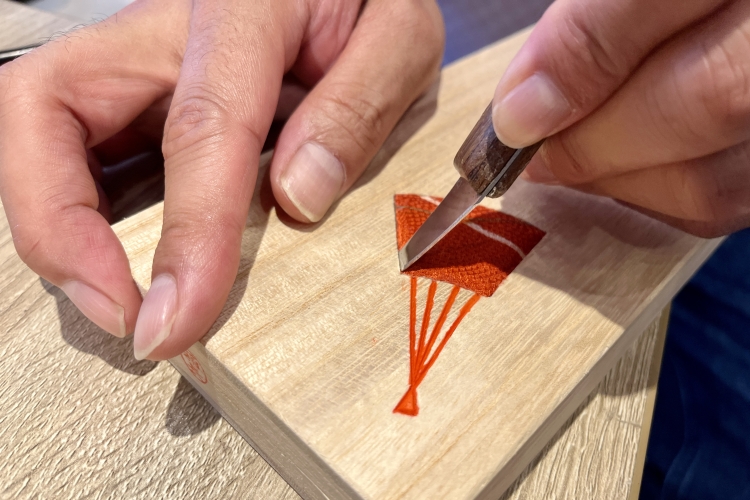
In "Kiri-mokumekomi" (paulownia wood inlay) crafts, the edge of the cloth is pressed into the grooves carved with a carving knife using a spatula.
At "Hakocho," we offer workshops where you can experience "paulownia wood inlay crafts." It originally started in response to customer requests from people who wanted to "try making it themselves," and now we welcome many school groups on field trips, as well as hold small group workshops for the general public once a month.
The instructor is Kenji Miyata, the fourth-generation president. He not only explains the work, but also makes an effort to make the experience enjoyable for the participants by using a lighthearted speaking style and sometimes eliciting laughter.
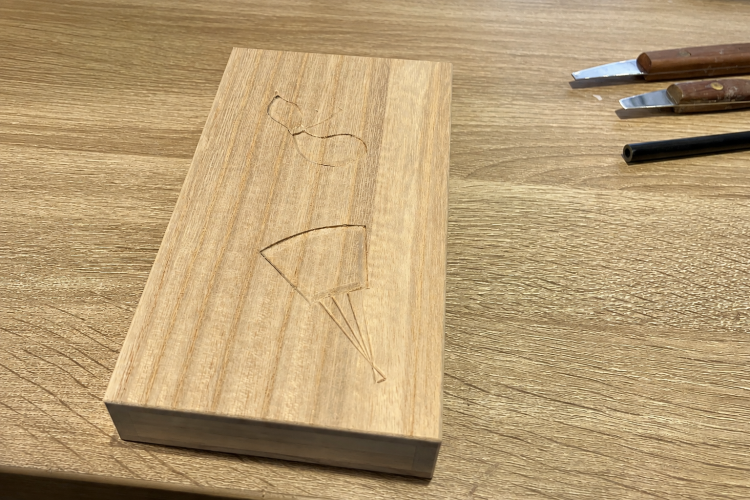
A paulownia wood box (for storing banknotes) for the experience. The surface of the lid has pre-carved designs.
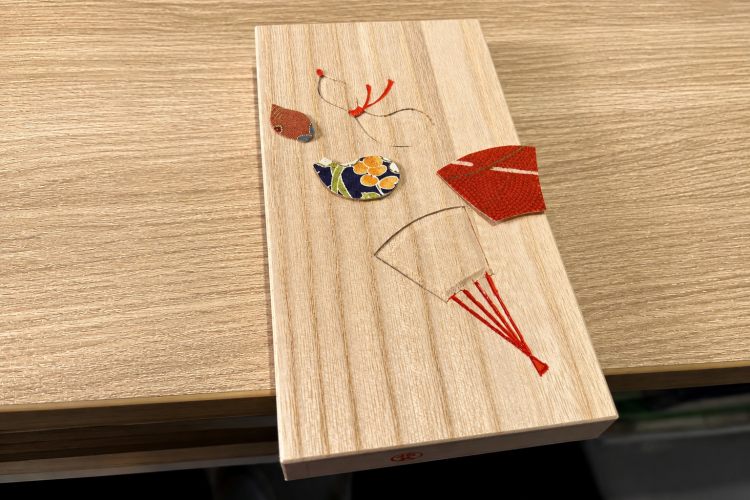
Paint a portion of it with paint, and choose a piece of fabric with your favorite pattern (already cut to fit the shape).
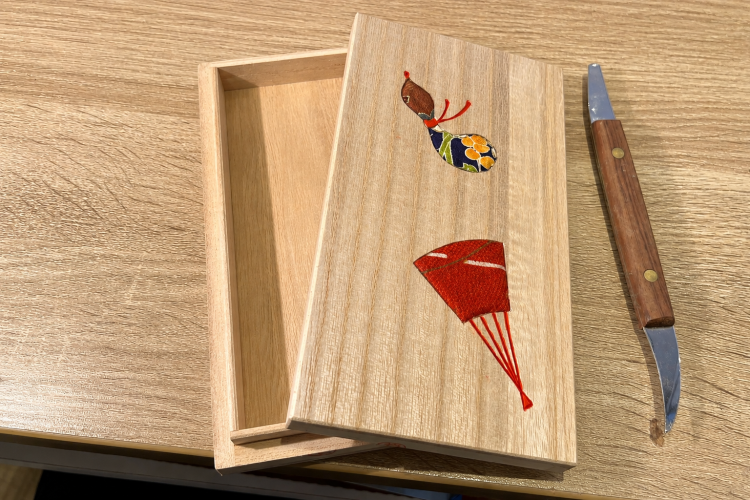
The fabric is glued and then pressed into the groove with a special spatula to complete the process.
In this experience, you will use a spatula to fit fabric into pre-carved grooves on the surface of a paulownia wood box (for storing banknotes). You will naturally develop an attachment to the box you finish by choosing your own fabric, and you can take it home as a memento of your visit to Asakusa.
Towards our 200th anniversary. Connecting the value of handcrafted work to the future.
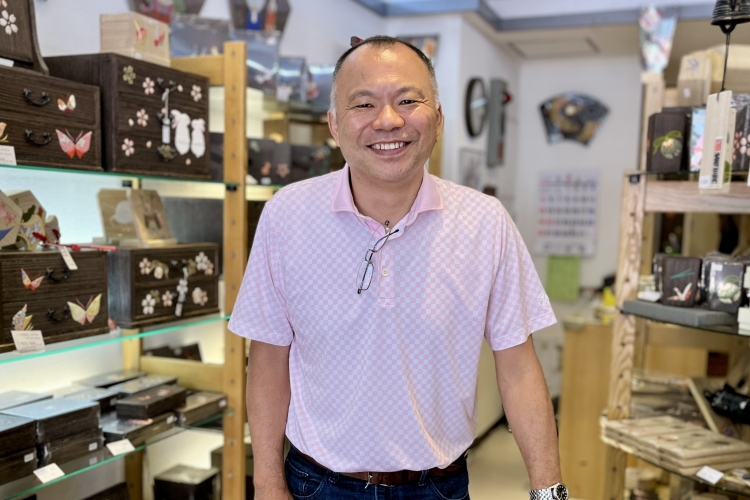
Kenji Miyata, the fourth-generation president of "Hakocho," is a friendly person who warmly welcomes customers who visit his shop.
Mr. Miyata's sights are set on the company's 200th anniversary, which he anticipates reaching around the time he turns 100. Rather than resorting to mass production, he values maintaining the current system while diligently continuing to improve the quality of each and every product.
In recent years, many foreign tourists have visited the Asakusa store, drawn to the delicate craftsmanship of Japan and purchasing a variety of products. "We want people all over the world to know about it and preserve the value of handmade goods for future generations," says Miyata.
The shop's strengths lie in its long-cultivated box-making techniques and extensive collection of kimono fabrics. As a place where customers can directly experience original products born from handcrafted work, this long-established paulownia wood box maker continues to welcome customers in Asakusa today.
箱長 (オレンジ通り店)
電話:03-3843-8719
住所:東京都台東区浅草1-4-5
アクセス:東京メトロ浅草駅から徒歩4分
HP:https://hakocho.shop/
SNS:https://www.instagram.com/hakocho_official/
https://www.facebook.com/hakocho/
*営業時間や定休日についての詳細は、上記のリンクからご確認ください。
