



ReservationSearch and reserve rooms
Click here to confirm, change or cancel your reservation
航空券付きプラン
Shinkansen accommodation plan
提携法人専用予約
2025.09.10
Discover the one-of-a-kind "Kimono Sneakers" in Asakusa, the "City of Footwear"
NEIGHBORS
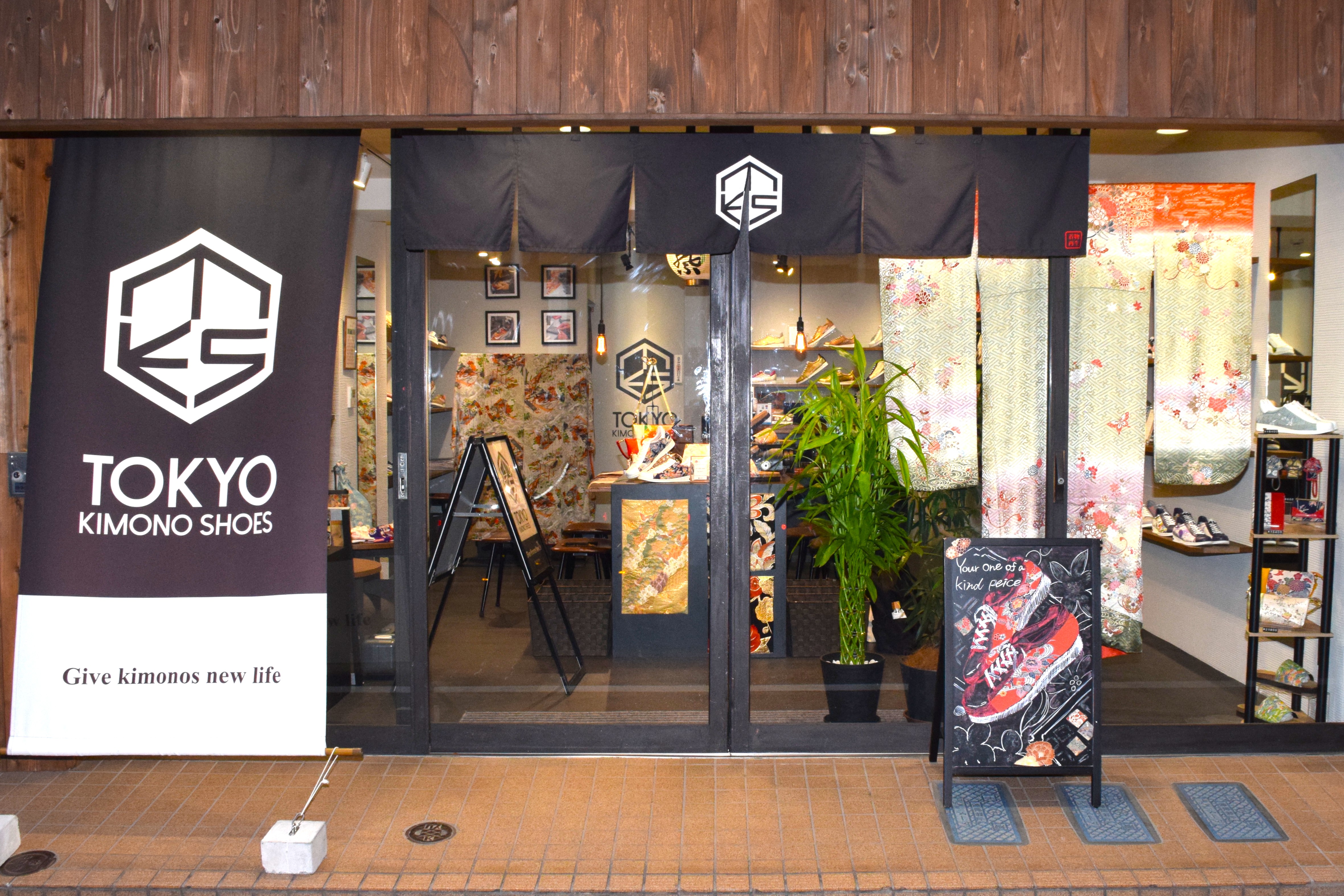
The Hanakawado area, located north of Sensoji Temple, has long been known as "footwear town." Due to its proximity to the Sumida River, where materials for zori and geta sandals were easily available via boat, many thong craftsmen moved to the area from the Edo period through the Meiji period.
The popularity of Western clothing subsequently boosted Hanakawado's shoe industry, which grew rapidly. At its peak in the early Showa period, the area was home to over 250 shoe wholesalers. Today, the number has drastically decreased, and the area's former bustle is fading, but the sights of the long-established workshops scattered around the area still convey the atmosphere of those days.
TOKYO KIMONO SHOES opened in a corner of this historic town in 2023. It is a shoe store that sells "kimono sneakers" made from recycled kimonos.
The shoes are manufactured by skilled craftsmen in Hanakawado who have been making shoes for over half a century. We spoke to the company president, Mr. Shotaro Kawamura, about the appeal of "Kimono Sneakers," which combine traditional Japanese clothing with the skills of artisans.
A pair of shoes made to order
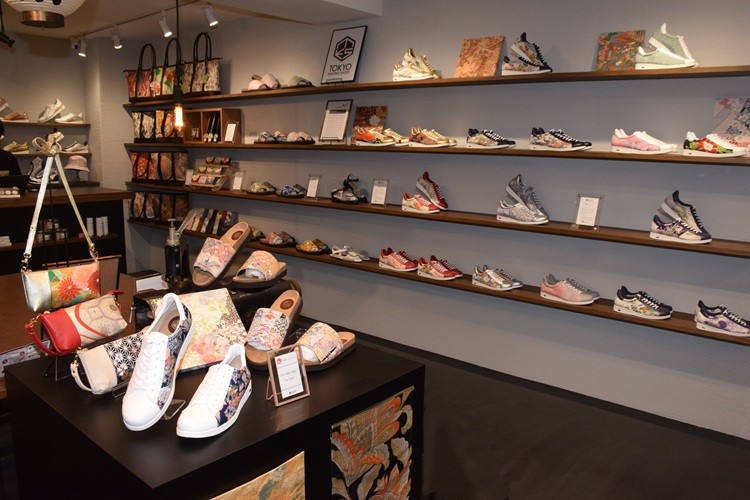
Inside the store, you'll find a wide selection of gorgeous "kimono sneakers"
The interior of the store is filled with a Japanese atmosphere, with colorful sneakers decorated with vibrant kimono colors such as red, purple, and gold.
The sneakers are made of genuine leather and are all handmade by artisans. The store always has around 250 pairs in stock, so you can enjoy choosing from a wide variety of designs, from pop to chic and subdued. Custom-made shoes are also available, and you can choose your favorite color and pattern from around 30 types of kimono, as well as the color of the sole and shoelaces. You can order a pair that is one of a kind and made just for you.
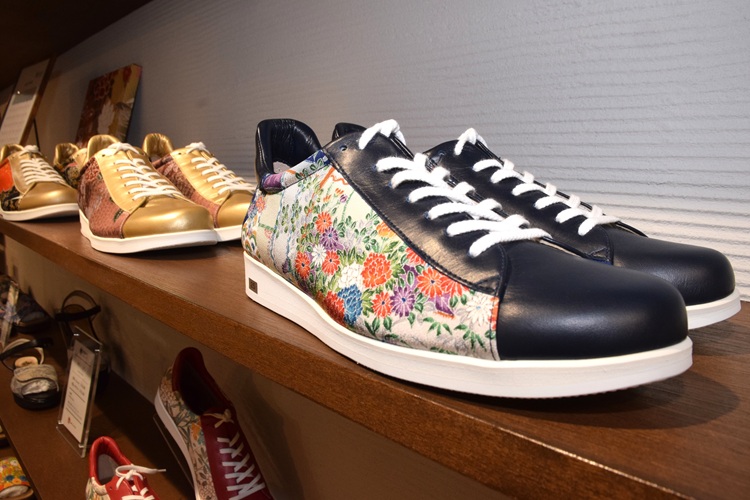
The impression changes depending on the kimono pattern and leather color
"The impression changes depending on which part of the kimono you cut out, and the different patterns on each shoe add a touch of charm."
Just as Kawamura said, even if they are made from the same kimono, the finished product has a completely different design. You can't help but be captivated by the intricacy that goes into the texture of the fabric and the decorations.
Made in Asakusa: The artisanal skills that support it
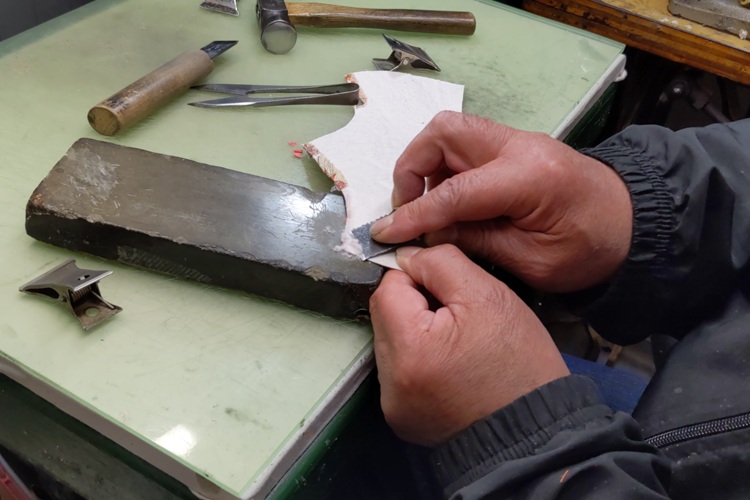
The process of skiving leather to maintain a consistent thickness. This is an important step that tests the craftsman's skill.
Approximately 20 craftsmen are involved in making one pair of shoes. They work together to complete six steps, including cutting and sewing, and the production period lasts for two months.
Particularly difficult is the process of adjusting the thickness of the leather, known as kawasuki. If the thickness is not consistent, the shoes will feel uncomfortable when worn, so fine adjustments are made visually and by the feel of the fingertips.
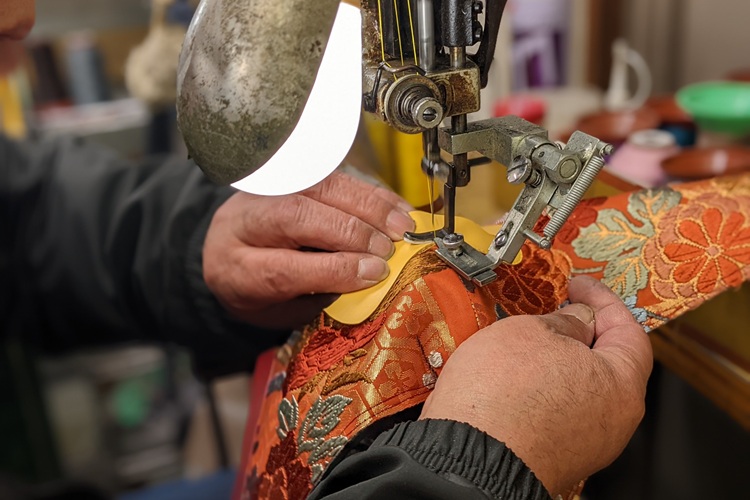
The sewing process to secure the reinforced kimono to the insole. Careful work is required to prevent sagging.
Another important process is to turn the kimono fabric back into a bolt of fabric and then reinforcing it with a lining. Because the kimono would not be strong enough to be used as shoes, each piece is processed by hand to suit the characteristics of the fabric.
"We are supported by the shoemaking techniques of Asakusa. The kimonos, leather, and shoe materials are all sourced in Asakusa, so our kimono sneakers are truly Made in Asakusa."
My encounter with "Kimono Sneakers"

Kawamura is a fan of "Kimono Sneakers" even in his private life.
Kawamura first encountered kimono sneakers just one year before opening TOKYO KIMONO SHOES, right after he founded his own company with the mission of "bringing joy to the world with Japanese things."
"Even though I had started the company, I hadn't decided what to sell. I was searching all over Japan for things to sell when I heard that there was a craftsman in Asakusa who made kimono shoes, so I visited his workshop. The moment I saw him, I knew this was it."
That workshop is Axt Co., Ltd., which currently produces the majority of TOKYO KIMONO SHOES products. It is a shoe workshop with over 70 years of history in Hanakawado.
"The practicality of sneakers, the beautiful design, and the rarity of them all stood out, and I thought this was the epitome of Japanese craftsmanship. I asked them if I could sell them through my company, and that's how our relationship began."
30 trillion yen sleeping in the dresser

A kimono that has been returned to its original shape. It is so beautiful that it is hard to believe it was once discarded.
The biggest feature of the "Kimono Sneakers" is that they are upcycled products made from discarded kimonos. It is said that 30 trillion yen worth of kimonos are lying dormant in drawers in Japan, and many of these kimonos are discarded without ever being used again.
"I was shocked when I saw the scene of the destruction. Kimonos that were probably worth hundreds of thousands of yen were piled up like mountains. They were all beautiful kimonos. 'What a waste!' was all I could say."
Preserving the owner's memories in a tangible form
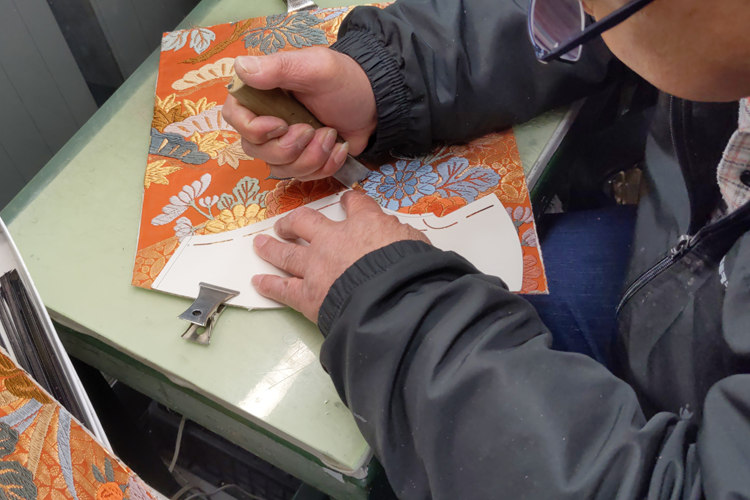
The cutting process of discarded kimonos into the shape of shoes
Breathing new life into kimonos that would otherwise be discarded as trash. Kawamura's efforts have attracted attention from the perspective of the SDGs and have been featured in overseas media. However, TOKYO KIMONO SHOES aims to do more than just reuse kimonos.
"I want to eliminate the waste of kimonos altogether. Every kimono is filled with the memories of its owner. I want to provide a way for people to avoid throwing away the kimonos that their grandmothers and mothers cherished."
What she envisions is a service that remakes kimonos into various forms such as clothing and bags. She is exploring ways to preserve the irreplaceable memories that families have woven together in a tangible form.
Bringing change, creating value, and connecting to the future
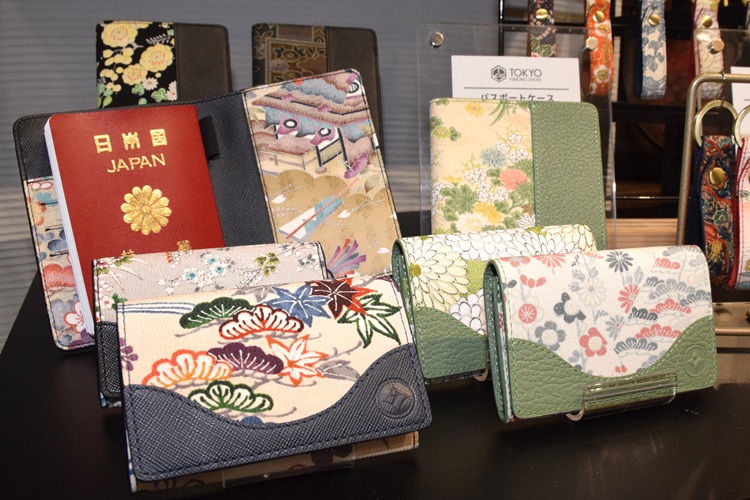
Kimono passport cases and other leather goods are popular among foreign tourists.
As shoemakers age, the passing on of skills is becoming an issue for the footwear culture of Hanakawado. While the number of businesses going out of business is increasing, the number of foreign tourists who have fallen in love with Japan's high level of craftsmanship and are visiting Asakusa in search of leather shoes and geta sandals is also increasing.
"People tend to think that foreign customers prefer flashy colors and patterns, but many of them are very interested in the aesthetic of wabi-sabi and choose subdued designs, so we make sure to listen carefully to what they want."
So says store manager Ryo Kobayashi. He doesn't just explain the products, but also explains the people and flowers depicted on the kimonos, and introduces the characteristics and history of Japanese textiles, striving to provide service that deepens customers' understanding of Japanese culture itself.
"I believe that shoes and kimonos can be revived and given new value if we put in some effort, change their shape, and sell them to different people," says Kawamura with a serious expression.
"Our mission is to connect people and preserve Japan's excellent technology for the future. We would like to continue to convey the charm of Asakusa and Japan in various ways."
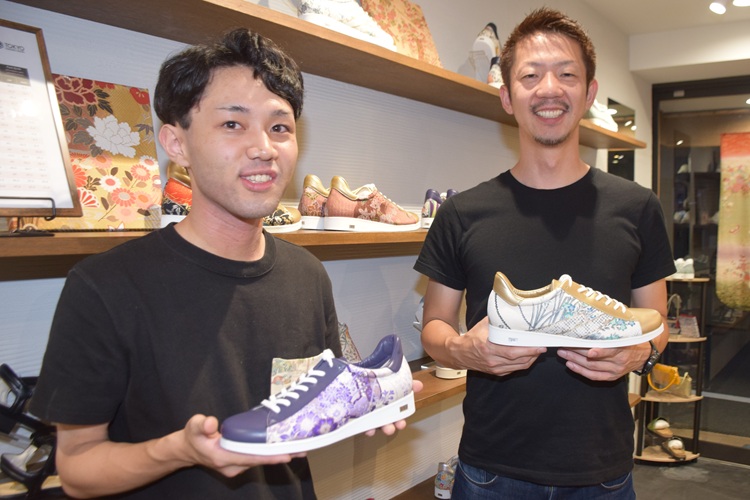
Manager Ryo Kobayashi (left) and Mr. Kawamura (right)
TOKYO KIMONO SHOES has shown new possibilities for a local industry in Asakusa that has continued since the Edo period. Their attitude of challenging innovation while preserving tradition will surely revitalize the town and attract the hearts of visitors.
TOKYO KIMONO SHOES
電話:080-9579-4014
住所:東京都台東区花川戸2-16-3 辰巳ビル1F
アクセス:東武スカイツリーライン「浅草駅」から徒歩5分
HP:https://tokyokimonoshoes.com/ja
SNS:https://www.instagram.com/tokyokimonoshoes/
*営業時間や定休日についての詳細は、上記のリンクからご確認ください。
