ReservationSearch and reserve rooms
Click here to confirm, change or cancel your reservation
Flight-Inclusive Packages
Corporate Partner Reservations
2026.01.25
Weaving a tradition that has continued for over 780 years into the future. Mori Hakata-ori's challenge to create the next generation of craftsmanship.
NEIGHBORS
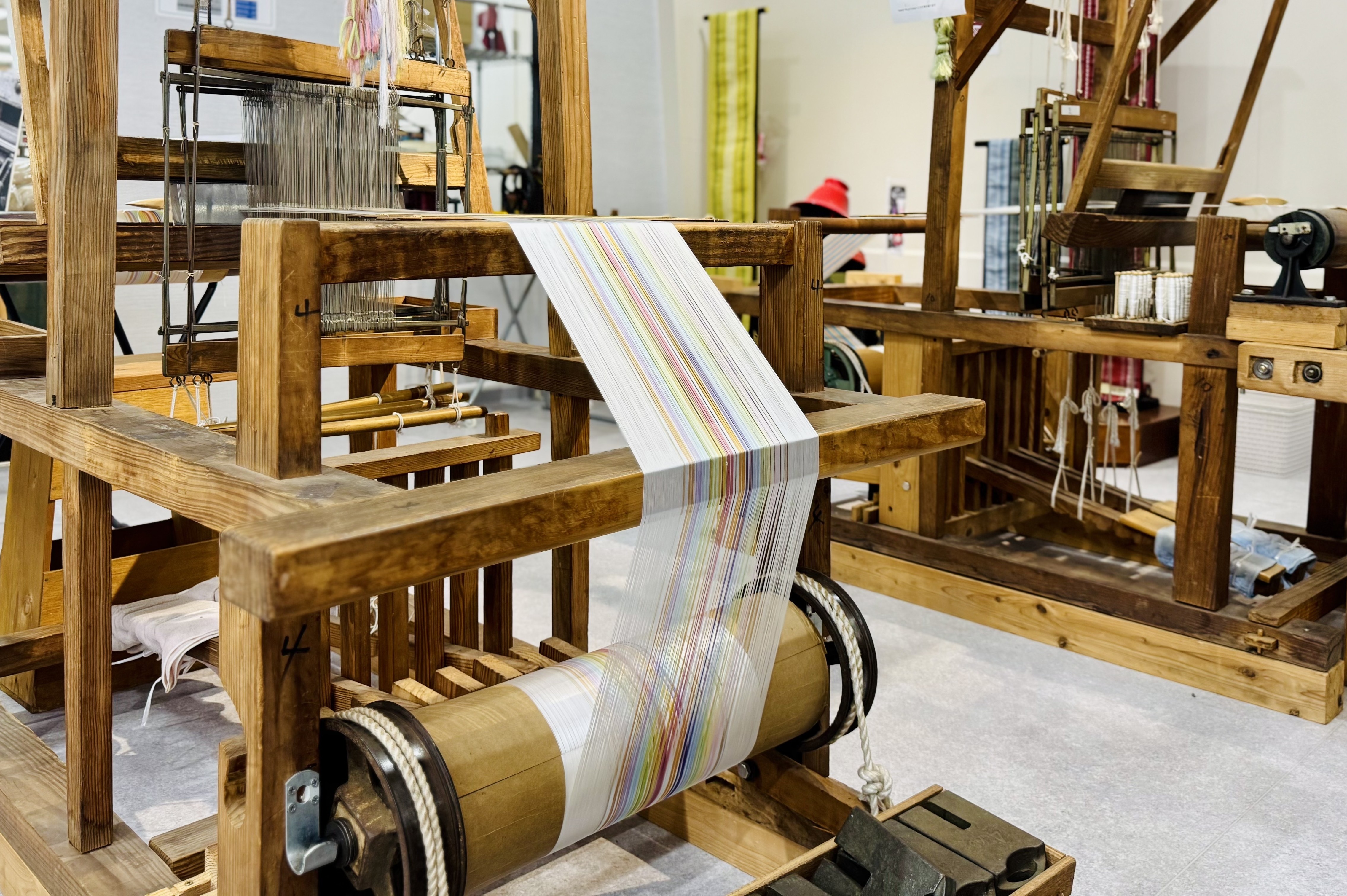
The rhythm of the looms echoing in the quiet workshop is as steady as breathing, seemingly infusing this place with vitality. Mori Hakataori Co., Ltd. has been producing Hakataori textiles for over 130 years, spanning four generations.
The fourth-generation owner, Yoshio Mori, is taking on a new challenge: "opening up the manufacturing process." He is opening up the skills and passion that have been passed down through generations more freely. His actions convey a determination to forge a new era while preserving tradition.
Skills and passion passed down for 130 years
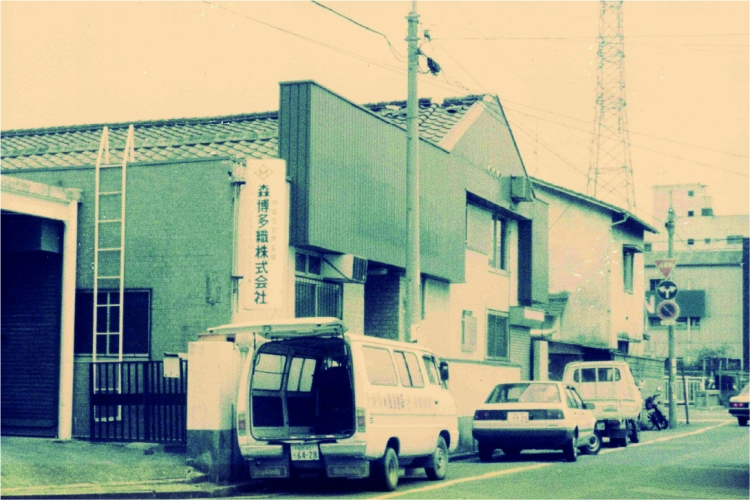
The factory where the second-generation owner, Shigeru Mori, changed the company name to "Mori Hakataori" at the time.
The history of "Mori Hakataori" dates back to the Meiji era. The first generation, Mori Takejiro, originally ran a shipping wholesale business, but due to his family's temperament of enjoying change and his own taste for sophistication, he changed the sign to "Hakataori-ya" (Hakata Textile Shop) in 1896 (Meiji 29).
The era was in the midst of modernization, and Hakata-ori textiles were undergoing a major transformation. While Western clothing was becoming increasingly common among men, the majority of the population—farmers and women—still mostly wore traditional Japanese clothing. The challenge was to shift the market from practical men's obi sashes to decorative women's obi sashes, anticipating these changes.
The second-generation owner, Shigeru, took over in 1940. After completing his military service, he began to seriously engage in the business, employing local people and dedicating himself wholeheartedly to it. He changed the company name to "Mori Hakataori" and resolved to pass it on to the next generation.
Shigeru, a diligent and hardworking man, introduced automatic looms and built a new factory in 1967. In this way, he solidified the foundation of "Mori Hakata-ori."
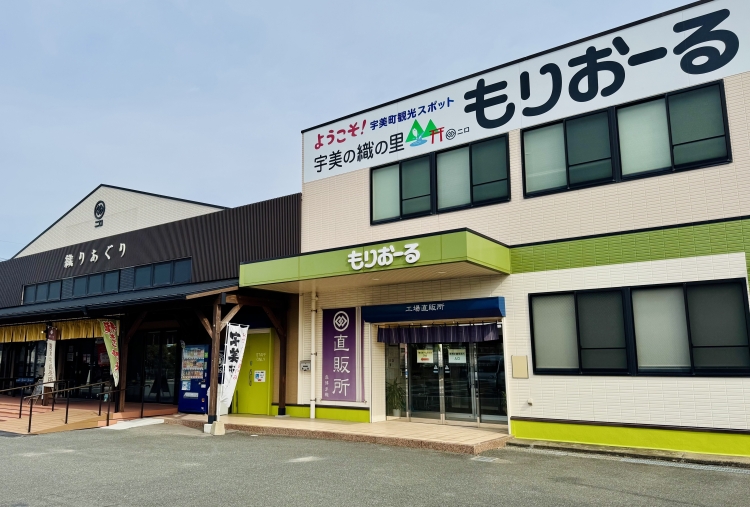
The current factory has an attached retail store.
Then came the era of the third-generation owner, Junichi. Having frequented the factory since childhood, helping his mother with the reeling of thread, Junichi took over the family business in 1983. Although the traditional Japanese clothing industry was thriving at the time, Junichi's sense of crisis was growing.
Faced with the predicted decline in demand for traditional Japanese clothing, Junichi took on the challenge of creating something that "goes beyond traditional Japanese clothing products." After much trial and error, including creating everyday items that utilize the advantages of silk, the "Silk Body Towel" was born in 2010.
"I can only ask my father, the third generation, about the details of how the company was founded. I only know about it from the time he started to implement some changes," laughs Yoshio, the fourth generation. The challenges of the first generation, the foundation-building of the second generation, the innovations of the third generation, and now the fourth generation. The story of over 130 years woven by one family is certainly being passed down in this workshop.
The traditional design, preserved for generations, has evolved with the times.
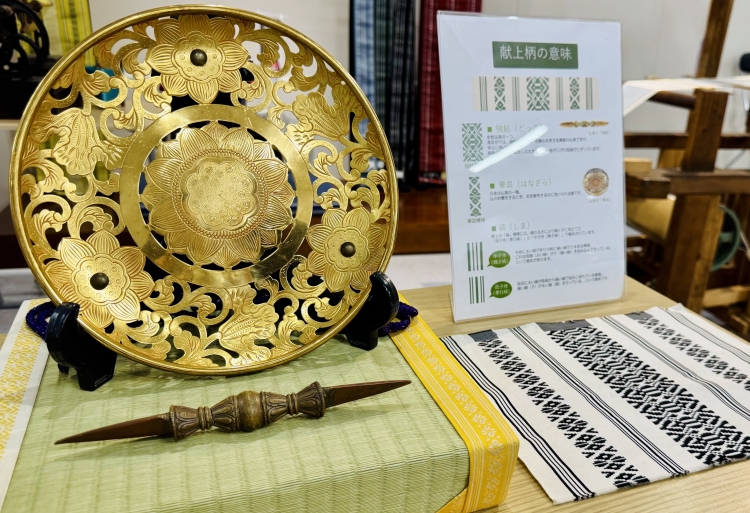
The Buddhist implements depicted in the design are a tribute pattern: bottom left: dokko (a type of vajra), top left: hanazara (a type of flower plate).
The obi hanging on the workshop wall is woven with geometric patterns. These designs, known as "Kenjo-gara" (tribute patterns), include motifs such as the dokko (a type of vajra), hanazara (a type of flower plate), and oyakojima (a type of parent-child stripe). They are said to embody wishes for protection against evil and for peace and harmony in the family.
This pattern, which is said to have gotten its name "Kenjo" (meaning "presentation") from the Edo period when Kuroda Nagamasa presented these Buddhist implements to the Tokugawa shogun, has been passed down as a symbol of Hakata weaving. Hakata obi sashes spread throughout the country through word of mouth among samurai. However, when the samurai class system was abolished in the Meiji era, Hakata weavers, starting with the first generation, shifted their market to women's obi sashes.
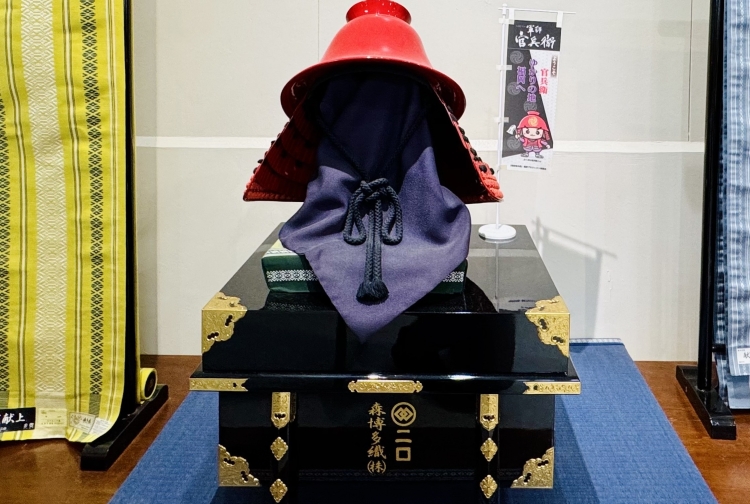
The design of the tribute pattern is said to have been spread throughout the country by the warlord Kuroda Nagamasa.
130 years have passed since then. While preserving the traditional tribute patterns, Mori Hakata-ori has flexibly adapted to the changing times. At its core lies the spirit of challenge that the founder embodied when he shifted the business from a shipping agent to a Hakata weaving company during a period of transition.
The story contained within a single obi
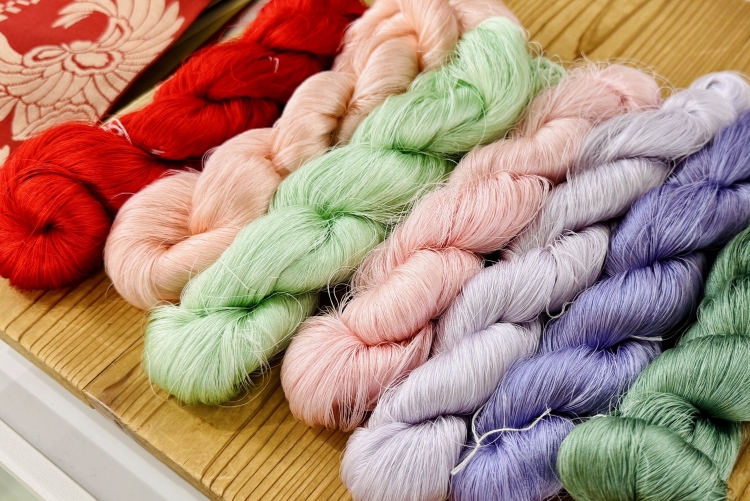
White silk thread made from silkworm cocoons, dyed with dyes.
In the dyeing workshop, colorful silk threads are neatly arranged. Silk is an animal fiber, just like human hair, and is extremely delicate. It is prone to breaking due to static electricity in dry seasons, and its texture changes when it becomes damp during the rainy season. The dyeing process is also done by skilled artisans, making it difficult to perfectly reproduce the same color.
"Silk is a high-maintenance material, but it responds well to proper care," says Mr. Yoshio. Reading how the silk threads change in appearance due to humidity and temperature, and discerning the subtleties of color combination, is a skill honed through years of experience. "Since we sell to department stores, we cannot compromise on quality in any way." This sense of responsibility is what underpins the products of Mori Hakataori.
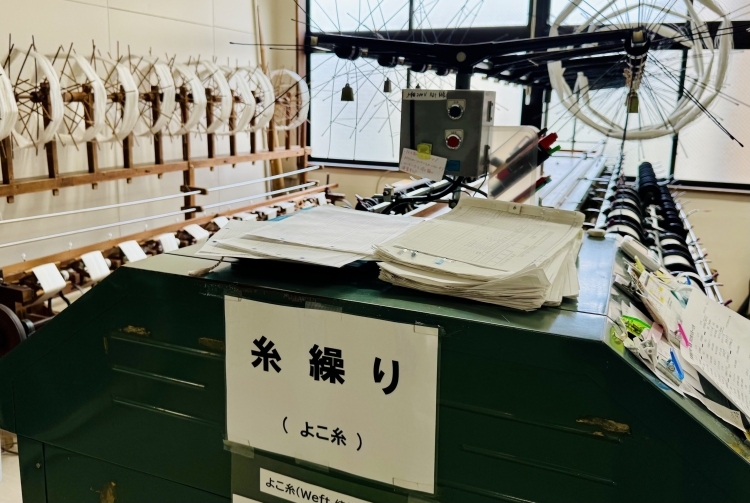
The process of rewinding dyed silk threads into a more usable shape is called "thread winding."
From conception to weaving, it takes more than two months to make a single obi (kimono sash). The process involves deciding on the design, selecting the colored threads, and preparing the warp threads. After approximately 10 steps and careful inspection, only those that meet the standards are released to the public.
"Even just looking at the weaving process, we can only manage two to three pieces a day. The characteristic of Hakata weaving, which uses many thin warp threads to create patterns, is achieved through a very time-consuming process," says Mr. Yoshio.
Understanding the philosophy behind Hakata-ori, where time invested becomes the source of value, reveals that even though Hakata-ori is often considered expensive, it's not necessarily overpriced. Through this meticulous process, Hakata-ori is created that is easy to tie, durable, and long-lasting.
Experience tradition and connect with culture in a familiar way.
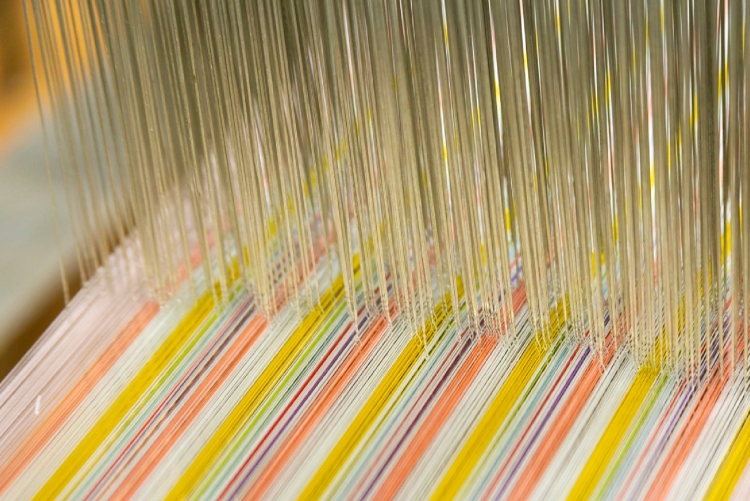
A beautiful sight of warp threads and weft threads intertwining.
Opening a factory tour facility in 2006 was a major decision for Mori Hakataori since its founding. "You can only truly appreciate the value by seeing the process. If the passion of the makers is conveyed, I believe it becomes more than just a product, but a 'souvenir'," says Mr. Yoshio.
At the factory, visitors can observe the weaving process, experiencing firsthand the joy of choosing colored threads and the thrill of watching the loom come to life. They can also try their hand at weaving traditional Hakata-ori patterns using a traditional handloom, making it a popular destination for tour groups and international tourists.
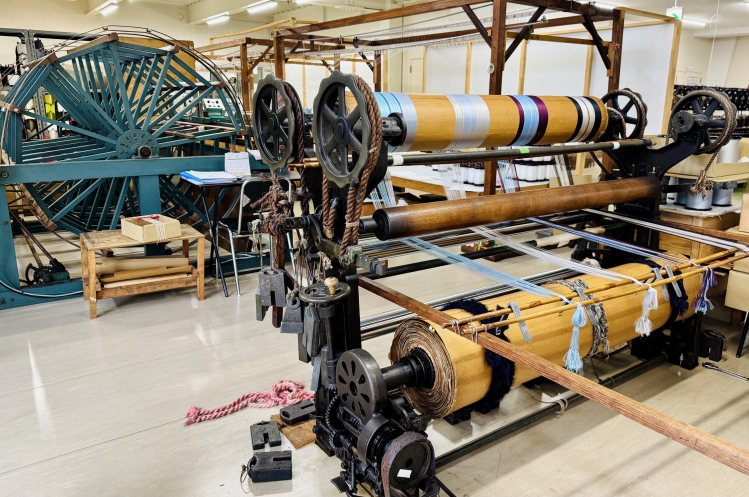
The factory contains more than 15 machines, including looms.
Mori Hakataori, which has continued its challenge of "opening up the production site," embarked on a new endeavor in the Heisei era. As the demand for kimonos gradually declined, they started producing everyday goods that could be used more readily.
"Ballpoint pens and small items that serve as souvenirs of the trip are popular. 'Portable Hakata-ori' items, which make the most of the texture of silk, are also gaining acceptance among younger generations who are unfamiliar with obi sashes," Mr. Yoshio told us.
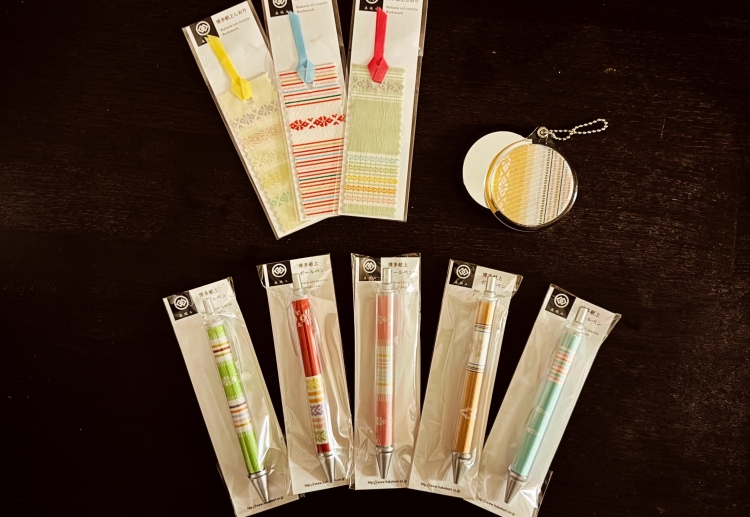
Hakata-ori textile goods such as ballpoint pens and bookmarks are popular souvenirs.
Bringing traditional techniques to life in a way that suits modern lifestyles – that's the challenge at Mori Hakataori.
The factory's attached direct sales store features locally produced agricultural products and specialty goods, and it seems that more and more travelers are stopping by on a whim. As a special place where you can experience the moment a work of art is created, a system is being developed where the town's tourism and culture are naturally linked.
The future of "Mori Hakataori" as envisioned by the 4th generation
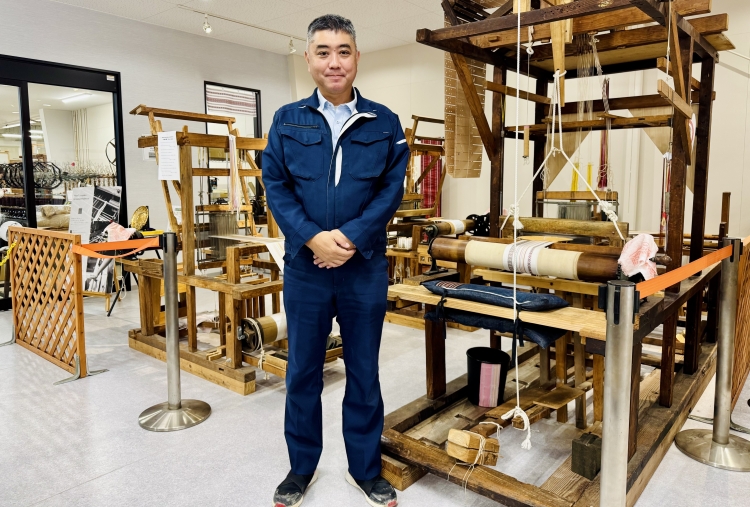
The 4th generation, Yoshio Mori
"Even if you inherit the business, it's meaningless if it doesn't sell," Mr. Yoshio says frankly.
During the third generation's era, they also ventured into developing products that made use of silk, but due to soaring raw material costs and changing demand, they decided to return to their core business. This trial and error, which may have seemed like a roundabout way, is said to have led to the factory tours, experiences, and general merchandise they offer today.
In recent years, new developments have emerged in the world of Hakata-ori textiles. Young designers who have studied at vocational schools are setting up their own workshops and expanding their fields of expression. It is said that Mori Hakata-ori's initiative to open its workshops to the public is one of the reasons why people want to work there.
"There are things that should be preserved and things that should be changed. I believe my role as the fourth generation is to continue translating tradition into 'modern sensibilities.' First and foremost, I want many people to see, touch, and experience Hakata-ori textiles."
The skills and spirit that have been passed down for generations continue to thrive in the workshop today.
森博多織株式会社
電話:092-932-0577
住所:福岡県糟屋郡宇美町桜原3-4-7
アクセス:福岡空港から車で30分
HP: https://hakataori.co.jp/
*営業時間や定休日についての詳細は、上記のリンクからご確認ください。