ReservationSearch and reserve rooms
Click here to confirm, change or cancel your reservation
Flight-Inclusive Packages
Corporate Partner Reservations
2026.07.05
Higashiya Juraku, a long-established soba restaurant that has walked hand in hand with Maruyama, continues to pass down its flavors and restaurant management from father to son.
NEIGHBORS
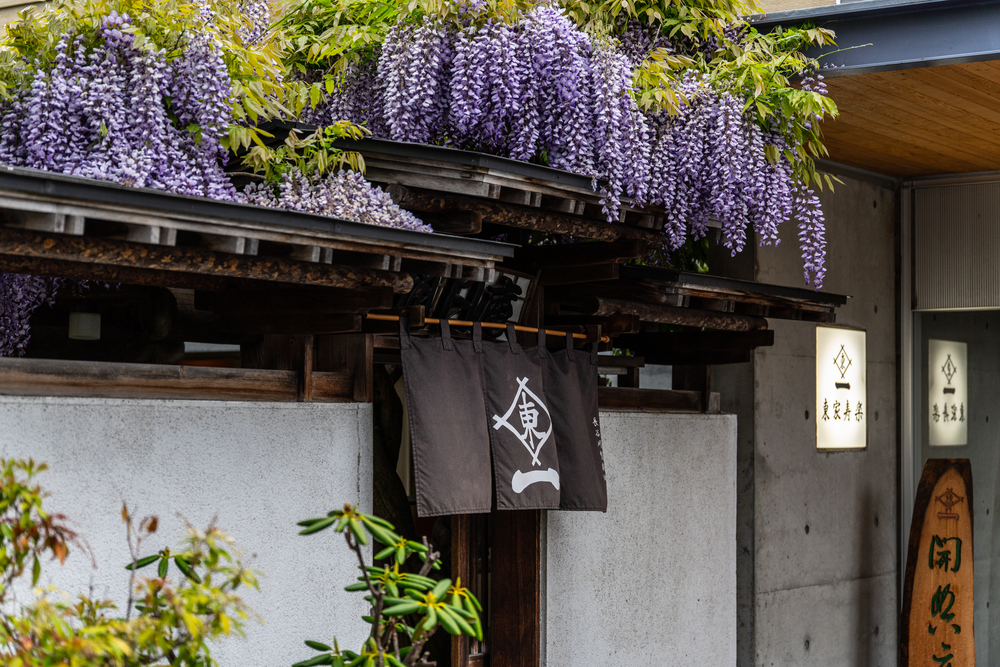
Located in a quiet residential area near Maruyama Park and Hokkaido Shrine, "Azumaya Juraku" has its roots in Kushiro, and after operating in Sapporo's Susukino district, it has been serving soba noodles in Maruyama for over half a century.
The restaurant is currently run by the third-generation owner, Motoharu Sato, and the fourth-generation owner, Hisao Sato. We follow the flavors that have been passed down by father and son, their relationship with customers, and their vision for the future of the restaurant in the ever-changing Maruyama area.
From Sapporo's Susukino district to Maruyama. A shop run by a parent and child.
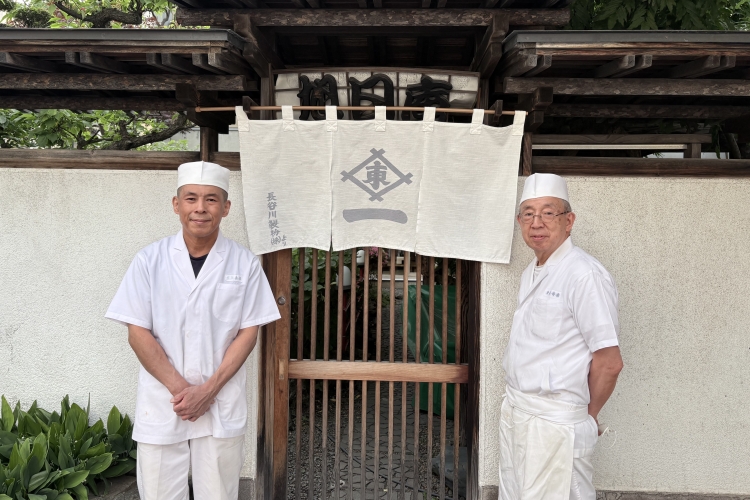
The fourth generation, Hisao Sato (left in the photo), and the third generation, Genji Sato (right in the photo).
The roots of "Higashiya Juraku" lie in "Higashiya Sohonten Takeiroen" in Kushiro. The first generation owner learned soba making and opened a branch of Higashiya in Kushiro in 1919 (Taisho 8). Later, in 1949 (Showa 24), it moved to Susukino in Sapporo and became the first "Higashiya" restaurant to be established in Sapporo.
After operating in Susukino, the decision to move to Maruyama was prompted by a comment from Prince Mikasa Takahito, who visited the Susukino store: "I would like to enjoy soba in a more tranquil setting." Following this, the previous owner decided to relocate to the current location. The restaurant was established in 1966 (Showa 41). At that time, Maruyama was not as bustling with people as it is now, and the restaurant faced difficulties for some time after opening.
The third-generation owner, Genji, has been helping with soba noodle making since he was in elementary school and has worked at the shop for many years. His son, Hisao, returned to the shop after working at a hot spring inn and took over as the fourth-generation owner in 1999. Father and son are continuing the legacy of the shop.
"Gozen Nama-uchi Soba" (soba noodles made to order) and "Soba Sushi" (soba sushi) that has been passed down through generations.
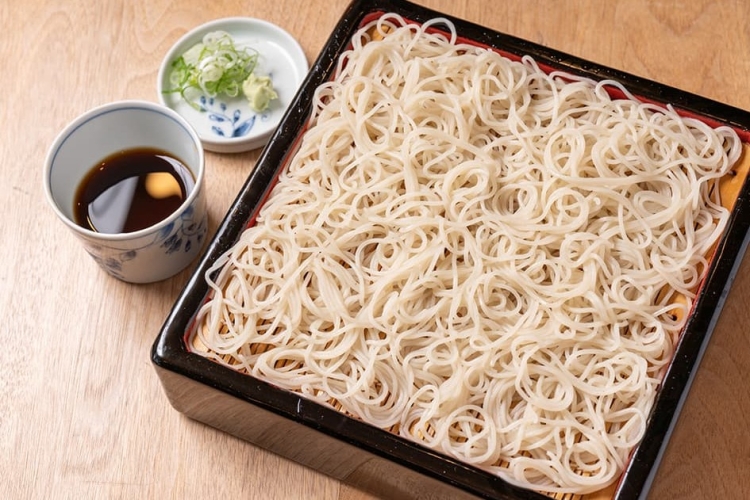
"Gozen Nama-ko Uchi Soba" - noodles made to order.
At Higashiya Juraku, they use buckwheat flour from Furano. In particular, the Gozenko (Sarashina flour), which is made from the center of the buckwheat grain, is said to be expensive because it is produced in small quantities. It was difficult to obtain in Sapporo after the war, and there was a time when the previous owner searched for the flour.
Soba noodles made with Gozen flour are characterized by their white color, mild flavor, and firm texture despite being thin. "Gozen Raw Flour Soba" is the restaurant's signature dish, with noodles made to order.
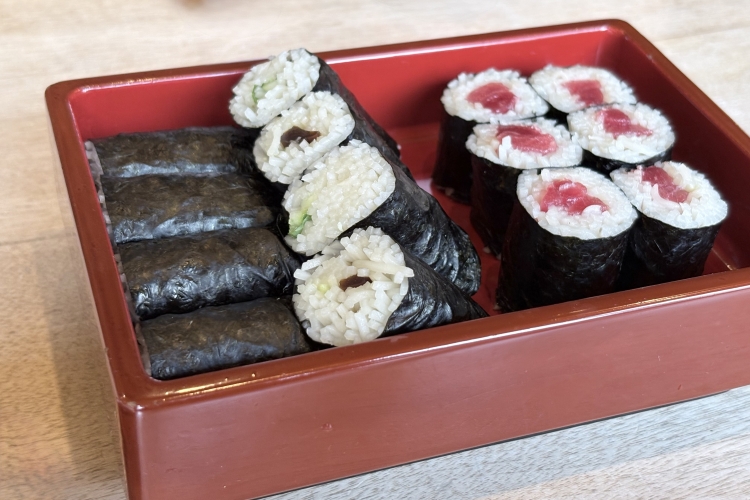
"Soba sushi" is a refreshing dish with the flavor of vinegar.
Another signature dish of the restaurant is "soba sushi," which consists of boiled soba noodles wrapped in seaweed with pickles, cucumber, and tuna. It has been on the menu since the restaurant moved from Kushiro to Sapporo and is a long-loved favorite among customers.
We will continue to uphold the principle of "making our customers happy."
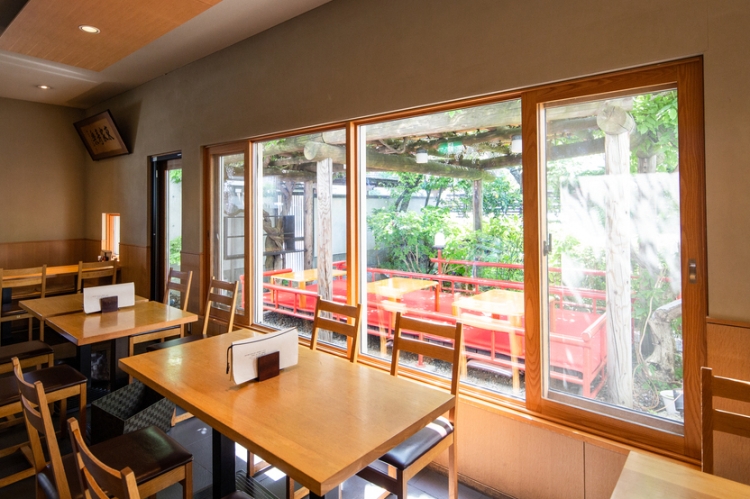
Depending on the season, courtyard seating may also be available.
Genji says that what has been cherished in the shop for generations is "making customers happy."
Dividing one dish into two portions, cooking soba noodles softer than usual, or making the seasoning milder – we have tried to accommodate requests as much as possible so that customers can enjoy their meals in a way that suits them, rather than the restaurant dictating how to eat.
The store's environment also reflects the consideration given to customers. When the number of female customers increased and lines formed at the restrooms, they added more women's restrooms. When the current store was built, an elevator was installed to make it easier for elderly customers to go up to the second floor, and the number of steps inside the store was also reduced.
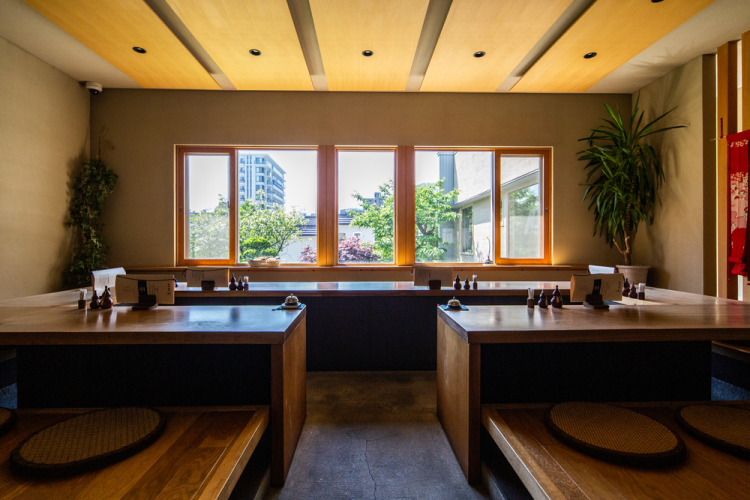
The second floor seating area features sunken tables (horigotatsu), and is designed to allow wheelchair users to enter without any issues.
From the way we serve our food to the facilities inside the restaurant, we've taken every step of the process to ensure that our customers don't experience any inconvenience, and that's what has led to the restaurant's current form.
Considering the future of shops in light of the changes in Maruyama
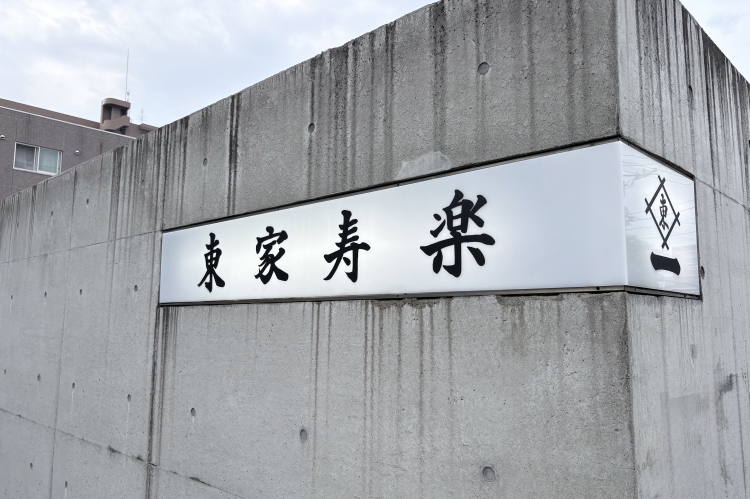
When the area was first relocated, Maruyama was a downtown-like neighborhood lined with company housing and small shops. With the opening of the subway before the Sapporo Olympics, the number of apartments and restaurants increased. Now, it attracts not only locals but also tourists from both within Japan and internationally.
For many years, Genji has collaborated with neighboring shops to hold festivals in which local children can participate. His connection to Maruyama is not only about keeping the shop open, but also about creating opportunities for local people to gather. Hisao is also thinking about how he can utilize the connections with surrounding shops and local people in developing his shop going forward.
On the other hand, the traditional customer service that caters to detailed requests is a considerable burden in today's world with limited manpower. "We need to think of ways to maintain the values that have been passed down while also making things manageable for the employees," says Hisao. While keeping an eye on the changes in the town, he is trying to pass on the values that have been inherited from the store in a way that suits the present era.
東家寿楽
電話:011-611-8659
住所:北海道札幌市中央区北2条西27丁目1-1
アクセス:地下鉄東西線 円山公園駅 徒歩5分
HP:https://www.adumayajuraku.com/
*営業時間や定休日についての詳細は、上記のリンクからご確認ください。