ReservationSearch and reserve rooms
Click here to confirm, change or cancel your reservation
Flight-Inclusive Packages
Shinkansen-Inclusive Hotel Packages
Corporate Partner Reservations
2025.11.20
"Kyogashi Tsukasa Suetomi," a long-established Japanese confectionery shop that carries on a 130-year tradition.
NEIGHBORS
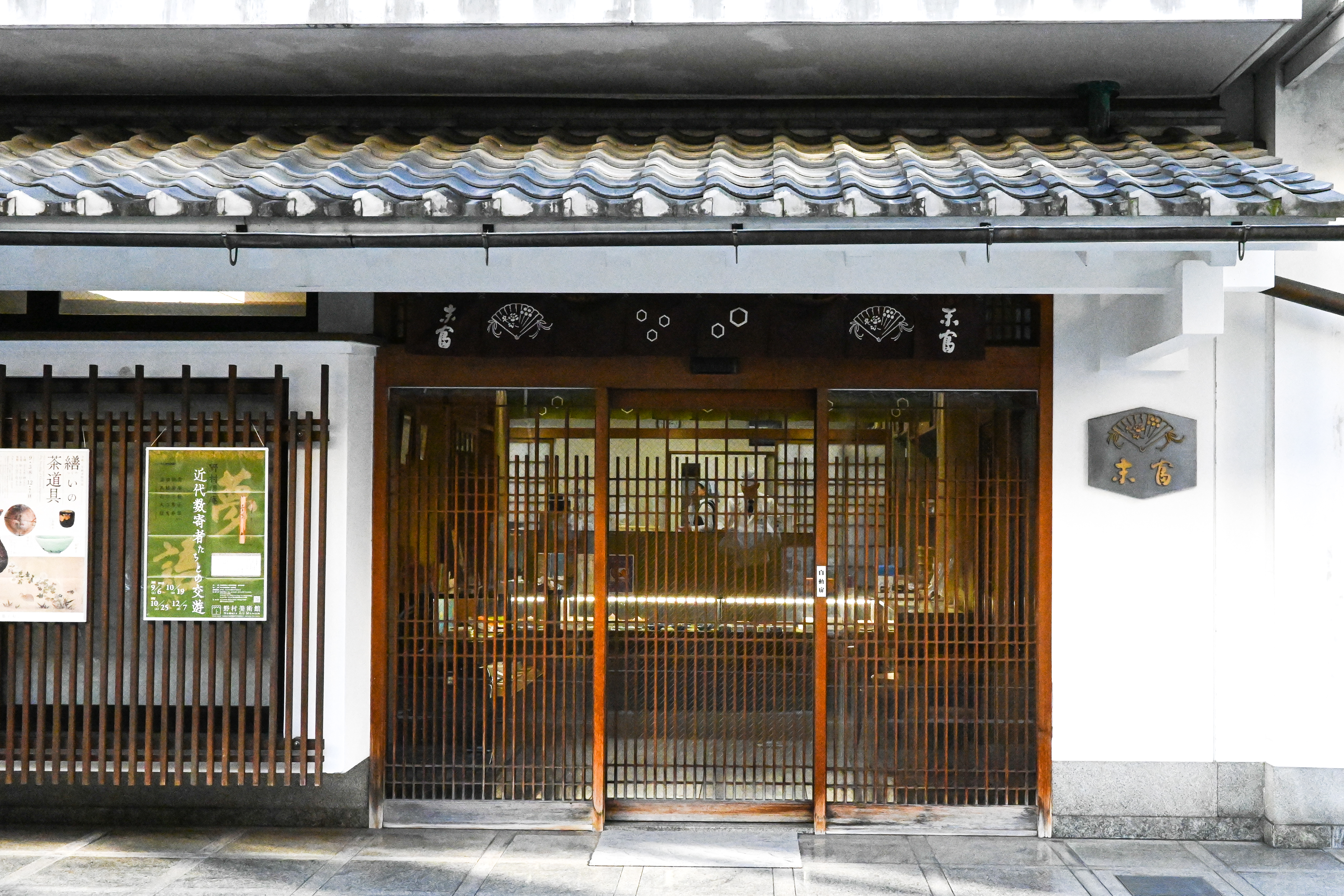
A three-minute walk south from "Hotel Resol Kyoto Shijo Muromachi," turn at the second corner towards Karasuma Street, and you'll come across "Kyogashi Tsukasa Suetomi Honten," a long-established confectionery shop founded in 1893 (Meiji 26).
Kyoto confectionery has a deep connection with the tea ceremony and has been cherished throughout Kyoto's history as "sweets that represent the changing seasons." "Kyogashi Tsukasa Suetomi" has been passing on this Kyoto confectionery culture for over 130 years. Currently, the fourth-generation owner, Shoji Yamaguchi, continues to uphold the tradition.
"Kyogashi Tsukasa Suetomi" primarily sells "high-quality sweets" used for welcoming guests. Combined with the shop's dignified appearance, which reflects its long history, many people may have the impression that it is a Japanese confectionery to be enjoyed on special occasions.
Regarding these high-quality confections, Director Tomiko Yamaguchi says, "We want people to enjoy them as 'Japanese sweets to have on an ordinary day.'"
The "world of dreams and fun" that Suetomi has continued to protect.
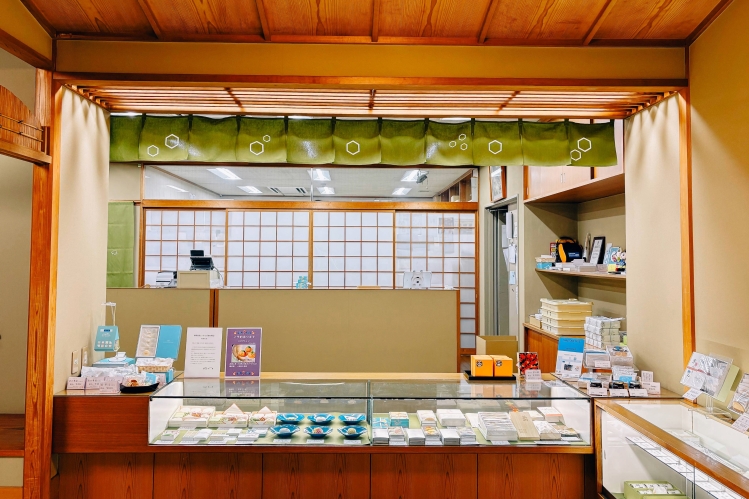
The interior of "Kyogashi Tsukasa Suetomi," a shop that has been in business for over 130 years.
"Suetomi" began when the founder trained at "Kame Suehiro," a long-established Japanese confectionery shop in Kyoto, and then established his own business through a branch-off arrangement. After becoming independent, the company served temples and shrines such as Higashi Honganji, as well as the heads of tea ceremony schools.
On the other hand, the early days of the business were also affected by the war. During the war, sugar became a prohibited item, making confectionery extremely difficult. However, because they served temples and shrines, they received rations and were able to overcome the hardships.
At Suetomi, the foundation of their wagashi (Japanese confectionery) making since their founding has always been "a world of dreams and joy." While upholding the tradition of wagashi that can be enjoyed with both the eyes and ears, they have carefully created each and every one of their products.
Japanese sweets to enjoy visually
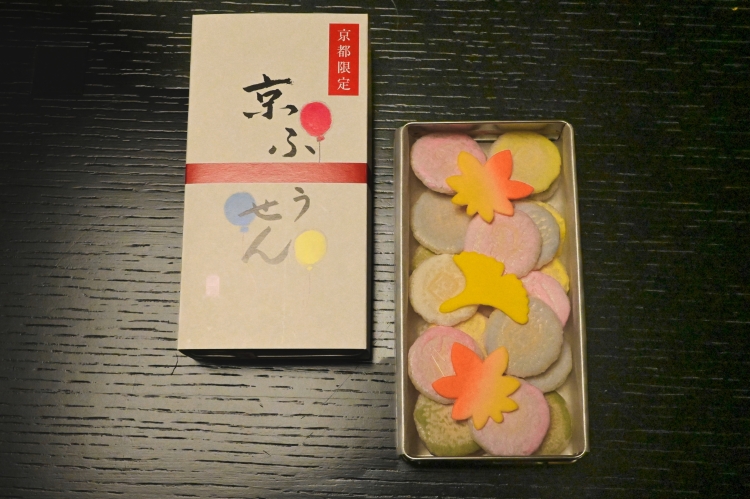
"Kyoto Fuusen" - a fu-yaki senbei (rice cracker) that looks like it's filled with adorable balloons.
"Kyo-fusen," one of Suetomi's signature products, is a simple Japanese confection made by pressing and grilling small pieces of mochi (rice cake) on an iron plate. Its appeal lies not only in its simplicity but also in its use of color.
Kyoto has a culture of "kasane-iro-me" (layered colors) dating back to the Heian period, where the changing seasons have been expressed through combinations of colors. "Kyo-fusen" is a Japanese confection that expresses this "kasane-iro-me" in a wagashi (Japanese sweet).
The five basic colors of sugar reflect the colors of Kyoto, and the gentle hues and light, fluffy texture are reminiscent of a balloon, just as the name suggests.
Our commitment to handcrafted products remains unchanged since our founding.
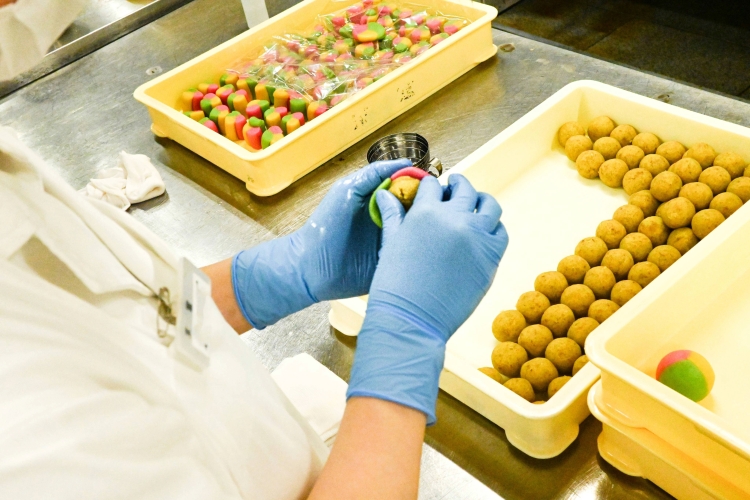
Japanese sweets, each made with heartfelt care.
All of the Japanese sweets at "Kyogashi Tsukasa Suetomi" are made by hand.
"For example, the position where you press the branding iron can make a rabbit's expression look adorable or mischievous. Uniformly made sweets may be 'pretty,' but I think the differences between them are what give them the unique charm of homemade sweets," says Yamaguchi.
Even though mass production isn't possible, they can offer a level of handcrafted precision that machines can't replicate, allowing them to create Japanese sweets with heartfelt care. This attitude, passed down since the company's founding, may be the very essence of the joy of Japanese sweets that are meant to be enjoyed visually.
Japanese sweets to enjoy with your ears
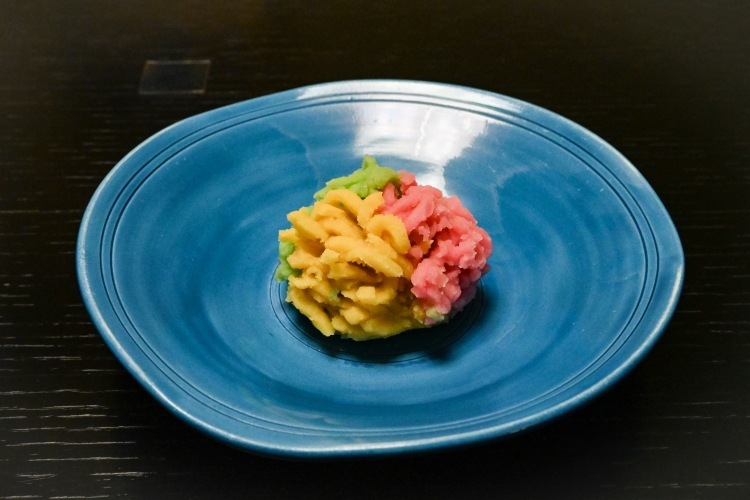
"Miyama no Nishiki," a fresh confection made with kinton (sweet potato paste), available only in November.
There's another way to enjoy the fresh confections that are available in the shop each month: they are Japanese sweets that you can enjoy with your ears.
In the world of the tea ceremony, Japanese sweets are given names called "mei" (名), which are said to represent the season or a particular sentiment. Red and white Japanese sweets are often used for celebrations, but during graduation season, they may be given a name such as "departure."
"Having a name on the confection makes it easier to start conversations about the sweets," says Yamaguchi. It's not just the shape and color, but the words that evoke the experience. Japanese sweets have the charm of being enjoyable not only with the eyes but also with the ears.
The "Suetomi Blue" that has become synonymous with the brand.
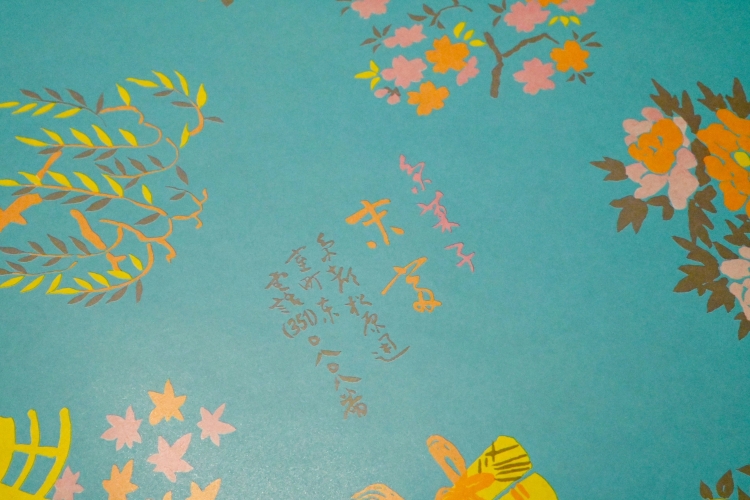
The wrapping paper has become a symbol of the store.
When discussing "Suetomi," the packaging paper is an essential element. This color, known as "Suetomi Blue," originated when the second-generation owner, Takejiro Yamaguchi, commissioned the Japanese painter Yoson Ikeda to design it.
At the time, the wrapping paper for Japanese confectionery shops was predominantly in subdued colors such as dark green and dark brown. Painter Ikeda, who also worked on Western-style paintings, and Takejiro thought, "Let's create a unique and innovative wrapping paper using a color not found in food or nature," and that's how they arrived at this blue.
At the time, printing technology made it difficult to reproduce the color, and the process of layering blue on top of white was apparently arduous. The resulting "Suetomi Blue" was innovative yet refined, and continues to be cherished and used to this day.
While preserving tradition, we create things that are suitable for the times.
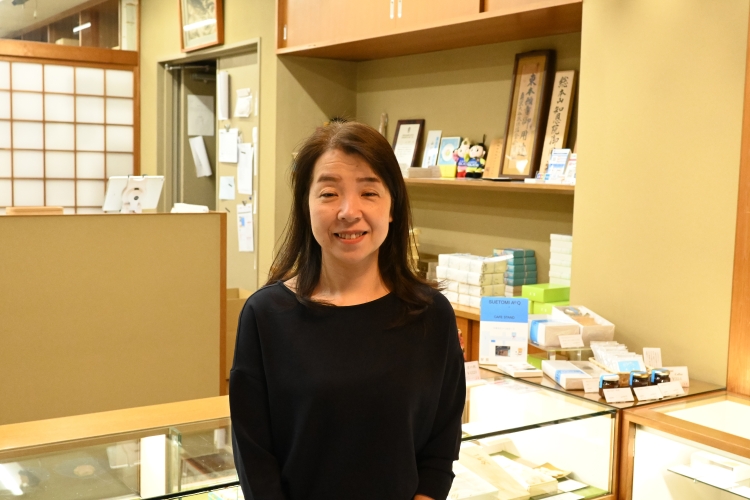
Director Tomiko Yamaguchi
"I believe that 'preserving tradition' doesn't simply mean continuing to do the same things. I want to gradually incorporate things that are in line with the times, while cherishing the fundamental principles and also challenging myself with new things."
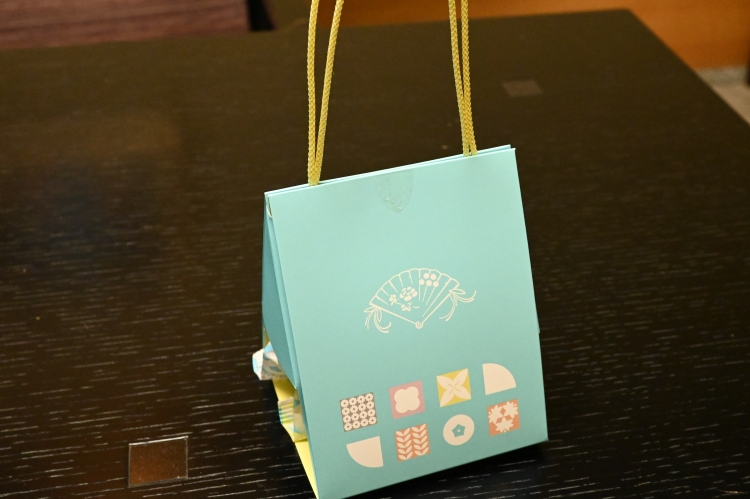
The tote bag-shaped packaging used for the dorayaki "Kyo no Hanaougi"
Embodying that sentiment, Suetomi has adapted its signature "Suetomi Blue" wrapping paper to create a product package that can be carried as a tote bag. Its elegance and cuteness are so striking that anyone who sees it on the street will be drawn to it and wonder, "What kind of sweets are these?"
In addition, they are also trying out a subscription service that combines Japanese sweets and coffee, with the hope that people will incorporate Japanese sweets into their daily lives, rather than being limited by the image that "Japanese sweets are only for matcha."
While cherishing tradition, Suetomi's challenge to explore new forms of Japanese confectionery will continue.
京菓子司 末富 本店
電話:075-351-0808
住所:京都府京都市下京区松原通室町東入玉津島町295
アクセス:市営地下鉄烏丸線「五条」下車 徒歩約5分 阪急電鉄 烏丸駅から徒歩約10分
HP:https://www.kyoto-suetomi.com/
SNS:https://www.instagram.com/suetomi.kyoto/
*営業時間や定休日についての詳細は、上記のリンクからご確認ください。