ReservationSearch and reserve rooms
Click here to confirm, change or cancel your reservation
Flight-Inclusive Packages
Shinkansen-Inclusive Hotel Packages
Corporate Partner Reservations
2026.05.20
Experience making rakugan (a type of Japanese confectionery) at "UCHU wagashi," a shop that creates "modern" Japanese sweets.
NEIGHBORS
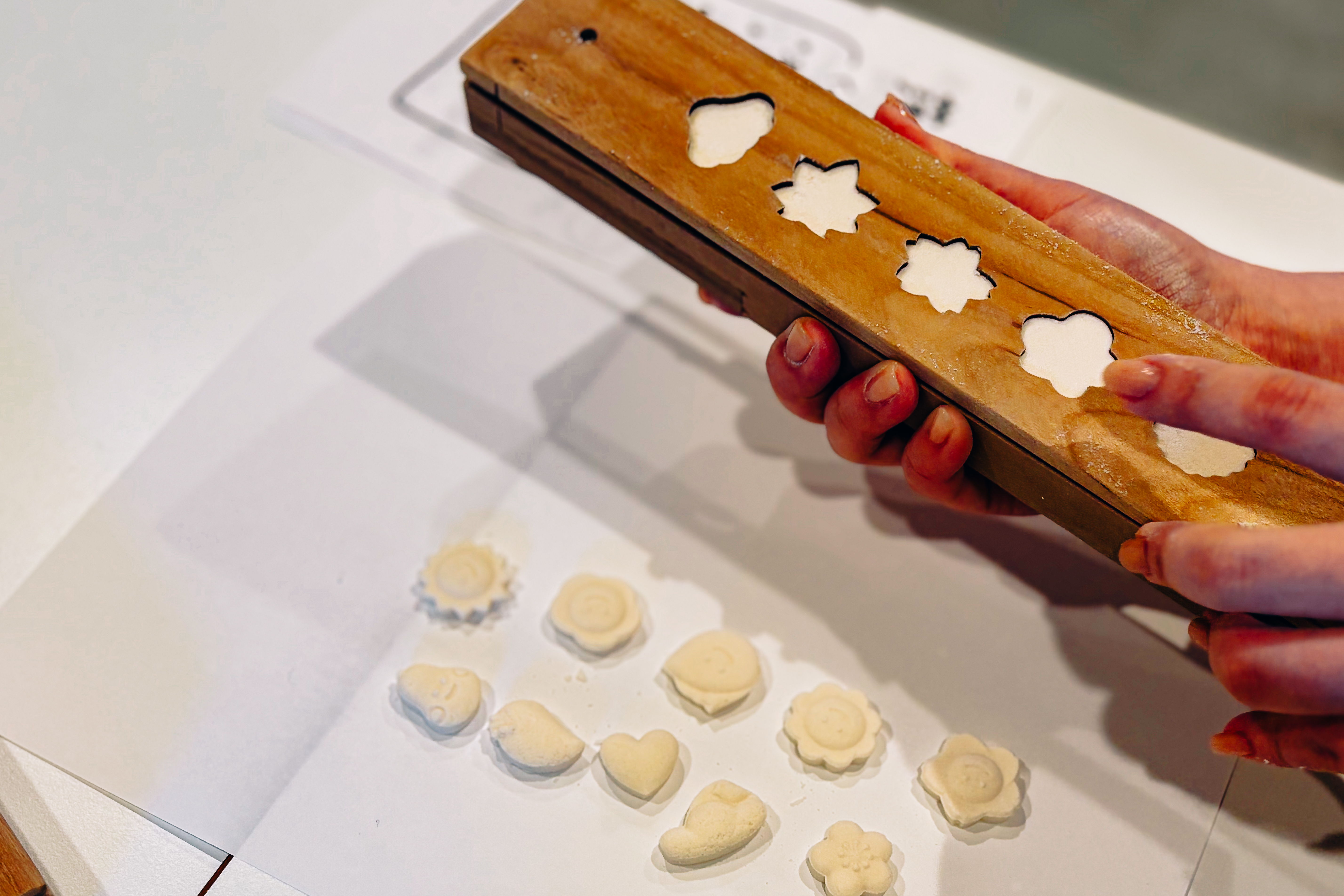
In Kyoto, a diverse range of Japanese sweets have been nurtured against the backdrop of the tea ceremony culture. Among them, rakugan, a type of dried sweet with a moisture content of less than 10%, has a long shelf life and has long been a familiar part of Kyoto life, used in tea ceremonies and as offerings.
UCHU wagashi Teramachi Main Store is a place where you can not only enjoy tasting rakugan (a type of Japanese sweet) but also experience making it yourself. Located on Teramachi Street, east of the Kyoto Imperial Palace, this confectionery shop was founded by graphic designer Katsuya Kimoto.
Based on the concept of "Japanese sweets that excite and bring happiness to people," the shop is filled with Japanese sweets that incorporate artistic elements in their colors, shapes, and packaging.
We spoke with Tomoko Oyama, a director and public relations officer who has been involved with "UCHU wagashi" since its inception, about the shop's origins, its history, and the thoughts behind the "Rakugan Workshop."
The journey to reach a Japanese confectionery shop
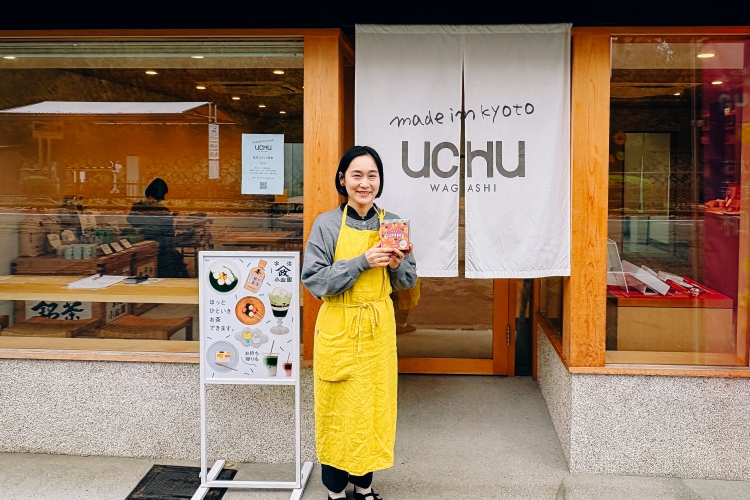
Director Oyama
"Kimoto opened the Japanese confectionery shop because he wanted to contribute to the culture and traditions of the land where he had lived," recalls Mr. Oyama.
Founder Kimoto, who worked for a character design company before becoming a freelance designer, is from Kyoto. He says that when he visited overseas, he was surprised by the strong interest shown by locals when he told them he was from Kyoto, which prompted him to take a fresh, objective look at Kyoto.
After returning to Kyoto, I began exploring ways to contribute to the city through the power of design, and that's when I came across Japanese confectionery.
My encounter with rakugan (a type of Japanese sweet) in the corner of a display case.
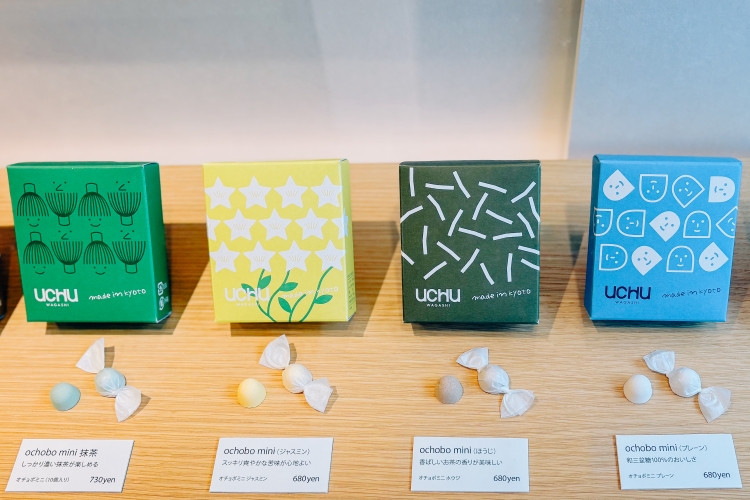
A showcase that makes you excited just by looking at the packaging.
While visiting traditional Japanese confectionery shops in Kyoto, what caught Ms. Kimoto's eye was the rakugan (a type of dried sweet) lined up at the edge of the display case. Although the taste is certainly good, rakugan is strongly associated with offerings to the gods, but she was struck by the beauty inherent in its simple ingredients and silhouette, and her heart fluttered with excitement.
Thinking, "I want to make this rakugan (a type of Japanese sweet) shine even brighter," Kimoto, after much trial and error, chose to create it himself.
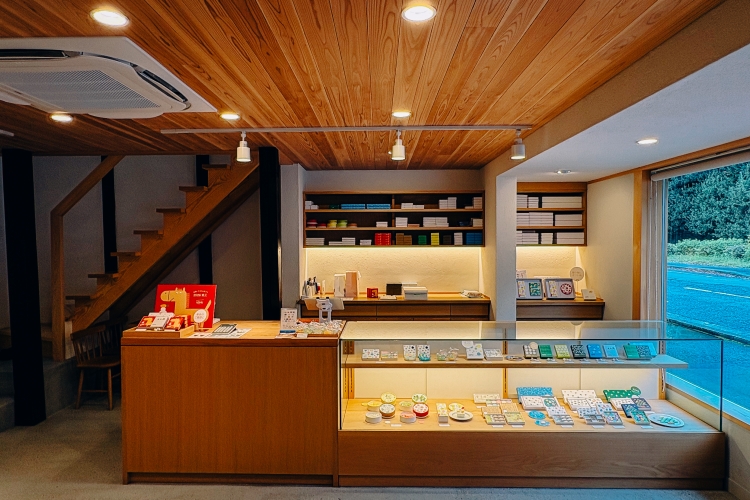
Inside the "UCHU wagashi" shop, which also has a cafe.
However, making rakugan (a type of Japanese confectionery) was an unknown world for them. There were many obstacles, such as sourcing sugar and finding a craftsman to make the wooden molds, but they persevered without giving up.
"Kimoto felt that there was a need for something different from graphic design work, which is consumed and discarded, but rather something that would remain in people's hearts and become a part of their lives," says Oyama. With these aspirations in mind, the Japanese confectionery shop "UCHU wagashi," which incorporates an artistic perspective and aims to "excite and make people happy," was born.
The workshop and shop are located in Nishijin, an area deeply connected to the tea ceremony culture, and the first shop opened there about 15 years ago. Later, the workshop remained in Nishijin, but the shop moved to its current location on Teramachi Street.
Take home tangible memories of your trip.
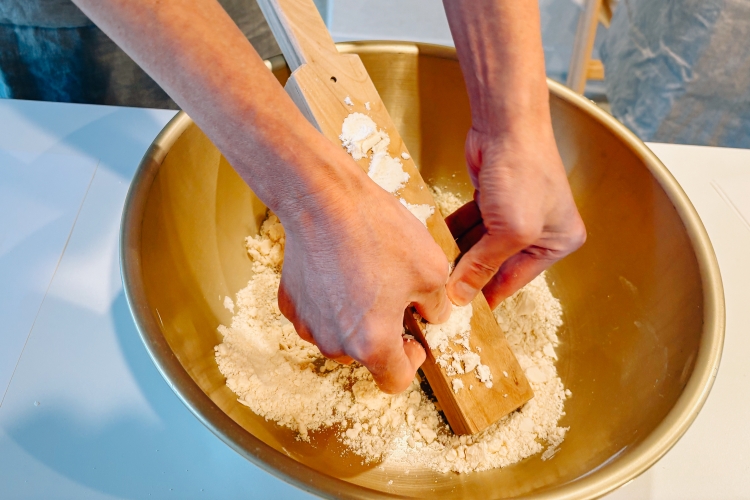
The process of pressing the water-soaked wasanbon sugar into a wooden mold with just the right amount of pressure.
At "UCHU wagashi," which features rakugan (a type of Japanese sweet) with a focus on color and shape, they also offer a "rakugan workshop" where you can actually make it yourself.
"Unless you have the opportunity to attend a tea ceremony, you don't often get to experience Japanese sweets. That's why I wanted to create an opportunity for people to feel closer to them," says Ms. Oyama.
In the workshop, you can experience the entire process from the raw wasanbon sugar to shaping rakugan (a type of Japanese confectionery) using wooden molds. The wasanbon sugar used is a precious sugar that is only produced in the area bordering Ehime and Tokushima prefectures. It is rich in minerals and is characterized by its gentle sweetness and how it melts smoothly in your mouth.
First, a small amount of water is added to the sugar by sliding it along the side of the bowl. After sifting it, it is packed into a wooden mold, and then gently inverted to complete the rakugan. It is a simple yet delicate process, as even the slightest misstep can cause it to crumble.
"It's okay to fail at first. I want you to just enjoy it," says Ms. Oyama. As you make rakugan (a type of Japanese sweet) through trial and error, you'll find yourself so engrossed that you'll lose track of time.
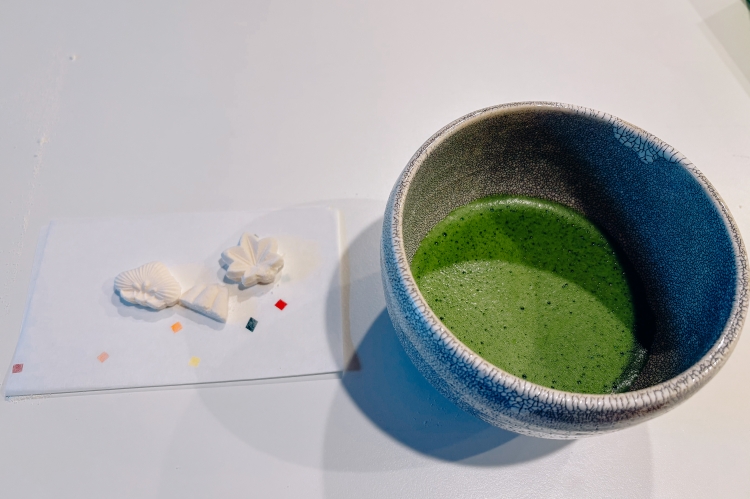
You can enjoy some of the rakugan (a type of Japanese sweet) you make with matcha tea, and take the rest home.
The wooden mold that supports the shape of rakugan (a type of Japanese confectionery).
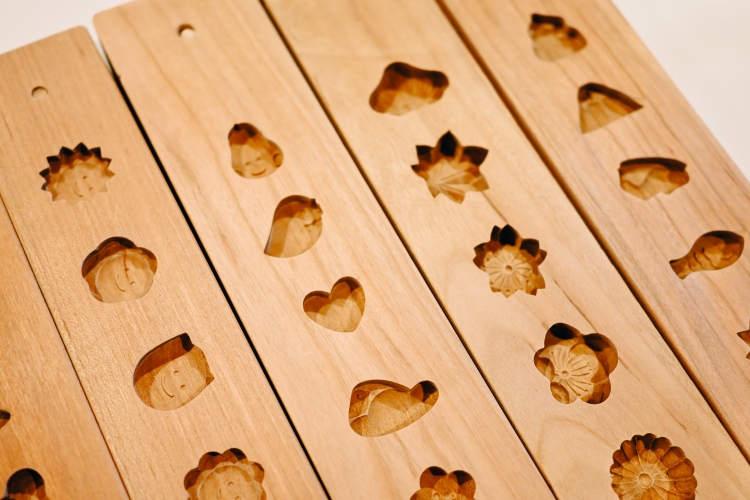
The wooden mold for the intricately crafted "UCHU wagashi"
When you gently remove the rakugan from the wooden mold, you'll be captivated by its adorable shape. The wooden mold that creates this shape is symbolic of "UCHU wagashi." It's an important tool that not only contributes to the cute appearance but also influences the taste and how it melts in your mouth.
The wood used is from wild cherry trees that have not been genetically modified. It is said that these trees grow in Japan's four seasons and have just the right amount of moisture and density, making them suitable for processing. Foreign woods and other tree species are prone to expansion and contraction due to changes in humidity, so there is no other option than wild cherry wood. "There is a reason why things that have been passed down for so long are the way they are," says Mr. Oyama.
Furthermore, the thinness of the wooden molds is also carefully considered. Even a difference of a few millimeters in thickness can affect the texture when you eat the rakugan (a type of Japanese confectionery). However, there are now only a handful of confectionery mold craftsmen left in the entire country, and "UCHU wagashi" is working on training these craftsmen from the ground up. Sharing this background is also a step in connecting tradition to the future.
Aiming for "new Japanese sweets"
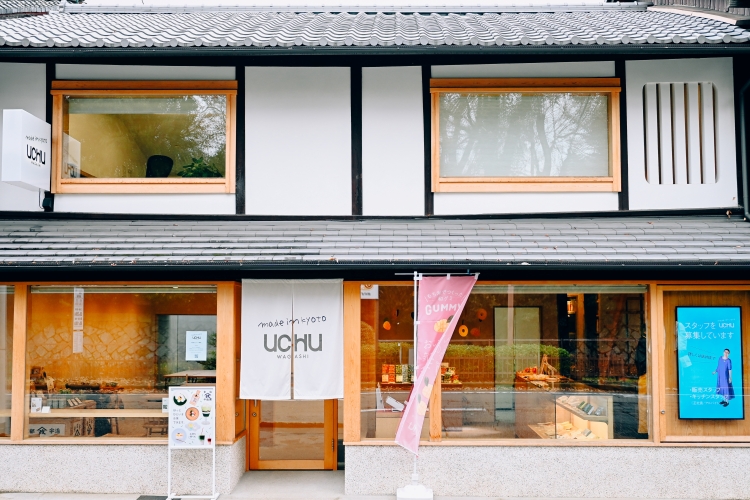
UCHU wagashi Teramachi Main Store, which was renovated last year.
"We want to contribute to Kyoto with wagashi (Japanese sweets) that will continue to be loved for the next 100 years. What we aim for is 'new wagashi,' but we believe that this can only be achieved through tradition. If we liken the long-established shops to the trunk and 'UCHU wagashi' to the branches, then we want to cherish the cycle in which new attempts expand the appeal of wagashi, and that expansion, in turn, supports the tradition that is the trunk."
"We want to be a bridge between people who have never been familiar with Japanese sweets and the world of Japanese confectionery." With this in mind, UCHU wagashi has created many original products. "Drawing" is a symbolic example of this, a type of rakugan (a type of Japanese sweet) that is assembled by combining pieces as if drawing. Other products include "Wagumi," a gluten-free gummy made from glutinous rice and konjac.
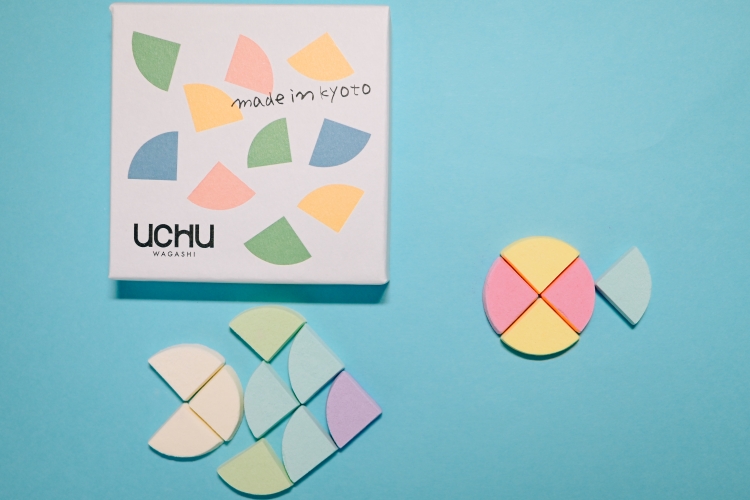
"Drawing" - a type of Japanese confectionery that allows you to design by combining pieces, like drawing a picture.
The name "UCHU" reflects our desire for this shop to be a place full of possibilities, like the universe itself.
"We want to continue experimenting and taking on challenges," says Oyama. As his words suggest, the journey of "UCHU wagashi" will continue to branch out in various directions.
UCHU wagashi
電話:075-744-6287
住所:京都府京都市上京区寺町通丸太町上ル信富町307
アクセス:地下鉄烏丸線丸太町駅から徒歩10分/京阪電車神宮丸太町駅から徒歩10分
HP: http://uchu-wagashi.jp/
SNS: https://www.instagram.com/uchuwagashi/
*営業時間や定休日についての詳細は、上記のリンクからご確認ください。