



ReservationSearch and reserve rooms
Click here to confirm, change or cancel your reservation
Flight-Inclusive Packages
Shinkansen-Inclusive Hotel Packages
Corporate Partner Reservations
2026.08.15
"Ota Cloisonné" conveys the brilliance created by the silver wire and glaze unique to cloisonné enamel.
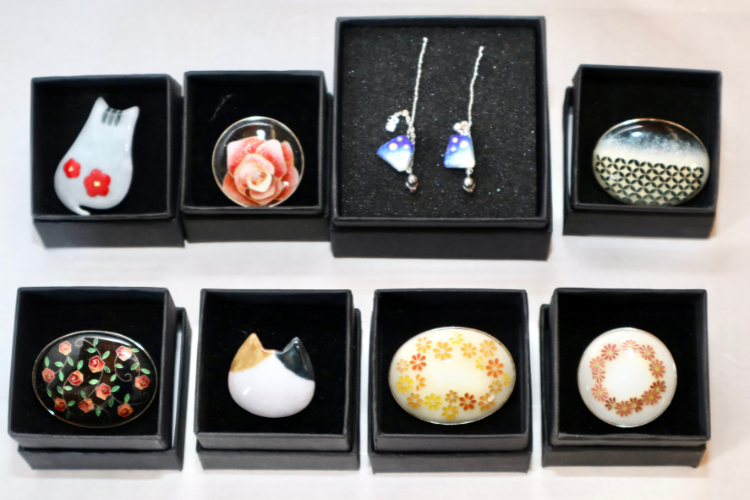
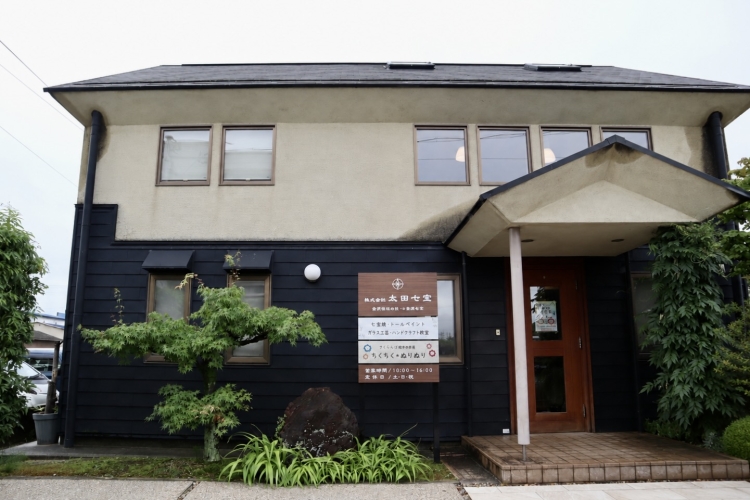
Located in Tsushima City, about 30 minutes by Meitetsu train from Nagoya Station, is the cloisonné enamel pottery studio "Ota Cloisonné." They create patterns using thin silver wires, then apply a translucent glaze and fire the finished piece. The delicate beauty expressed by the expressive glazes and silver wires is captivating, especially up close.
Satsuki Nonaka, the sixth-generation owner, continues to create her works with the desire to leave behind crafts that make people think, "Ah, that's beautiful," the moment they pick them up.
The history of cloisonné enamelware that flourished in Owari
Towards the end of the Edo period, Tsunekichi Kaji of Owari established the method of making "Owari cloisonné," which involves applying glaze to a metal base and firing it. This technique was passed down to the people of present-day Shippo-cho, Ama City, and it became a popular side business for farmers.
Ota Shippo was founded in 1887 (Meiji 20) by Jitsuemon Ota, the second son of a farming family, who honed his skills in cloisonné enamelware.
During the Meiji period, cloisonné enamelware became known worldwide and was actively exported overseas. Large-scale works, some costing as much as a house, were created, and it became popular in the lives of ordinary citizens, with cloisonné enamel vases adorning many homes. However, with the outbreak of World War II, cloisonné enamelware, whose base material is metal, faced the threat of production ceasing altogether.
While many kilns went out of business one after another, the second generation, after much trial and error, mastered a technique called "jitai shippo" (porcelain-based cloisonné), which uses porcelain as the base material. By continuing to make small items such as cufflinks and badges, they preserved the technique, and as the third generation focused on creating school emblems, company emblems, and accessories, cloisonné enamel once again spread throughout people's lives.
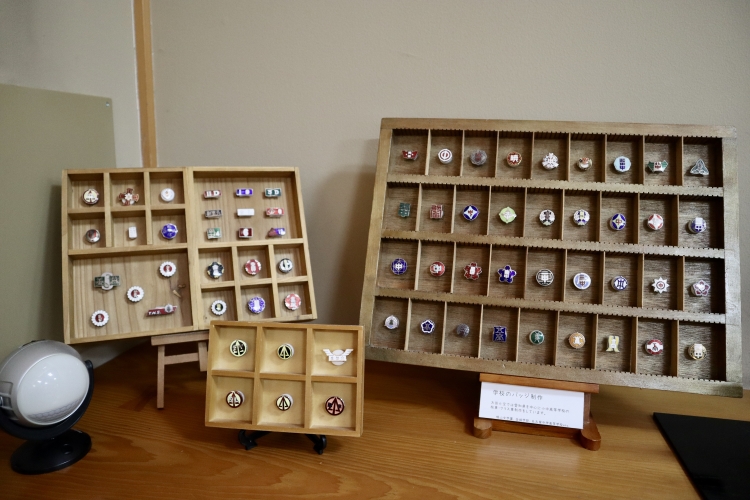
School and company emblems produced by "Ota Shippo"
"Ota Shippo" - a type of cloisonné passed down from Shippo Town to Tsushima.
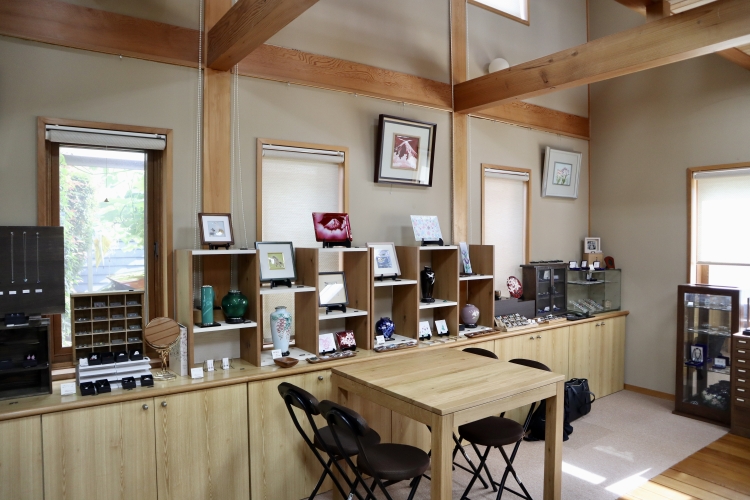
The store features accessories that are easy to wear every day, as well as highly artistic crafts.
Following the sudden death of the third generation, the fourth generation took over and created accessories with soft colors that gained popularity and expanded sales channels. However, the succession was interrupted when the fourth generation fell ill.
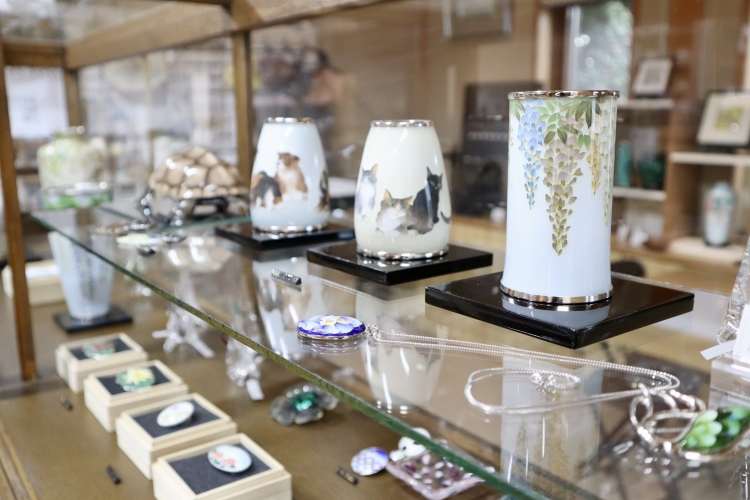
A variety of cloisonné enamelware displayed in the shop's showcase.
Driven by a sense of mission to prevent this technique from dying out, the fifth-generation owner, Atsuko Hirano, sought the cooperation of her cousin, Sumiyo Nonaka, who lives in Tsushima City, Aichi Prefecture. Through this connection, the workshop moved to its current location in Tsushima. The techniques cultivated in Shippo-cho continue to thrive in Tsushima today.
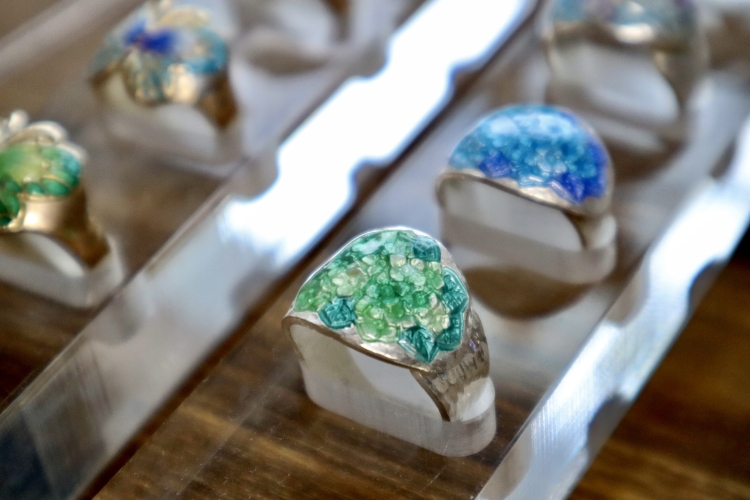
Accessories designed by the 5th generation Atsuko Hirano
We will convey the charm of cloisonné enamel in our workshops.
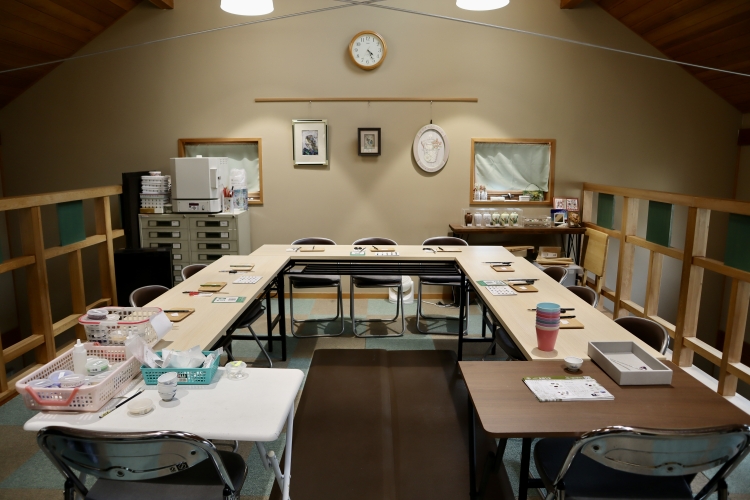
The workshop is located on the second floor of the shop. A kiln is also set up, and the finished product is completed on the same day.
And so, in this new location, we started a "cloisonné enamel experience class" for local residents.
The experience involves applying your favorite colored glaze to a base piece and firing it in a kiln, all within about two hours. The unique appeal of cloisonné enamelware lies in witnessing firsthand the transformation as the powdered glaze melts in the kiln and then shines like a jewel after firing. Most pieces are completed on the same day, making them a perfect souvenir for visitors from afar.
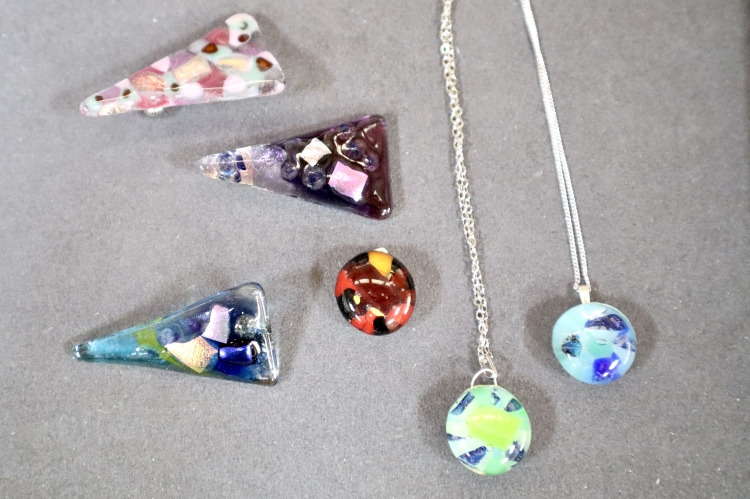
Examples of works that can be created in the workshop
Unexpected encounters also arose from that classroom. Satsuki, the eldest daughter of Junyo Nonaka and the sixth generation to run the business, originally worked as an engineer at an IT company, but as a break from her busy job, she visited the fifth generation's workshop, where her talent was discovered, leading her down the path of a craftswoman.
Satsuki says she was drawn to the beauty of the "transparent glaze," which is as clear as glass. Currently, she mainly creates easy-to-use accessories and small items that complement everyday life, and has gained a high reputation as an Owari cloisonné maker.
Towards the next 100 years—a masterpiece to leave for the future.
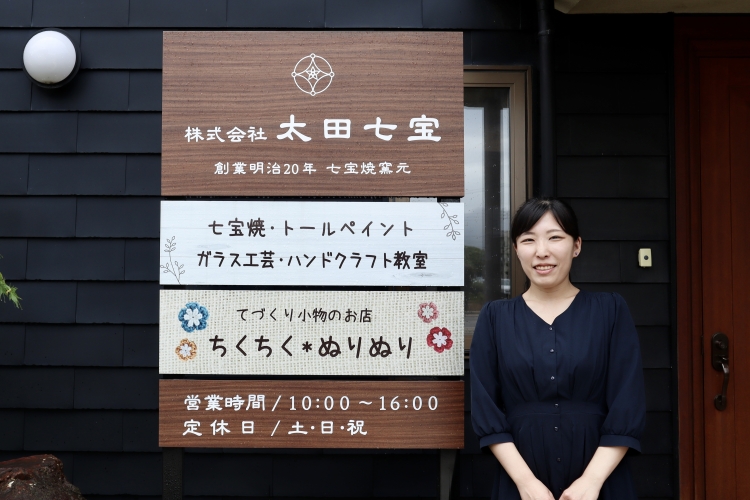
6th generation, Satsuki Nonaka
Of the many Owari cloisonné kilns that once existed, only a few remain today.
Satsuki says, "I feel proud to be able to experience the wisdom and techniques left behind by my ancestors." To preserve that charm for the future, she spends one to two years creating large-scale works that incorporate the techniques of her predecessors. After finishing her regular job, she spends late nights working on her pieces. These large-scale works won't be immediately available to the public. Nevertheless, she pours her heart and soul into each and every piece for the sake of future generations.
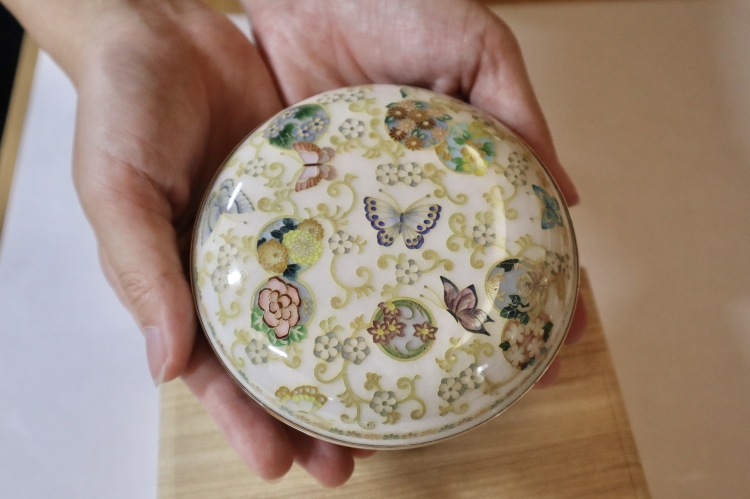
A masterpiece that Satsuki spent over a year creating.
On the other hand, Satsuki says to those who pick up her work, "You don't need to think about anything complicated. Just feel that it's beautiful." Today, she continues to work with silver wire, conveying the beauty of Owari cloisonné.
株式会社太田七宝
電話:0567-25-8771
住所:愛知県津島市立込町2丁目3
アクセス:名古屋鉄道津島線 津島駅から徒歩15分
HP:https://ota-shippo.com/
SNS:https://www.instagram.com/otashippo/
*営業時間や定休日についての詳細は、上記のリンクからご確認ください。

HOTEL RESOL NAGOYAHOTEL RESOL NAGOYA
3-25-6 Meieki, Nakamura-ku, Nagoya-shi, Aichi 450-0002
TEL.052-563-9269
4-minute walk from JR Nagoya Station.
From Nagoya Subway Station, walk through the underground shopping mall, Unimall, and it's just outside Exit U8.