ReservationSearch and reserve rooms
Click here to confirm, change or cancel your reservation
Flight-Inclusive Packages
Corporate Partner Reservations
2026.02.25
A journey as a Hakata papier-mâché craftsman carrying on tradition
NEIGHBORS
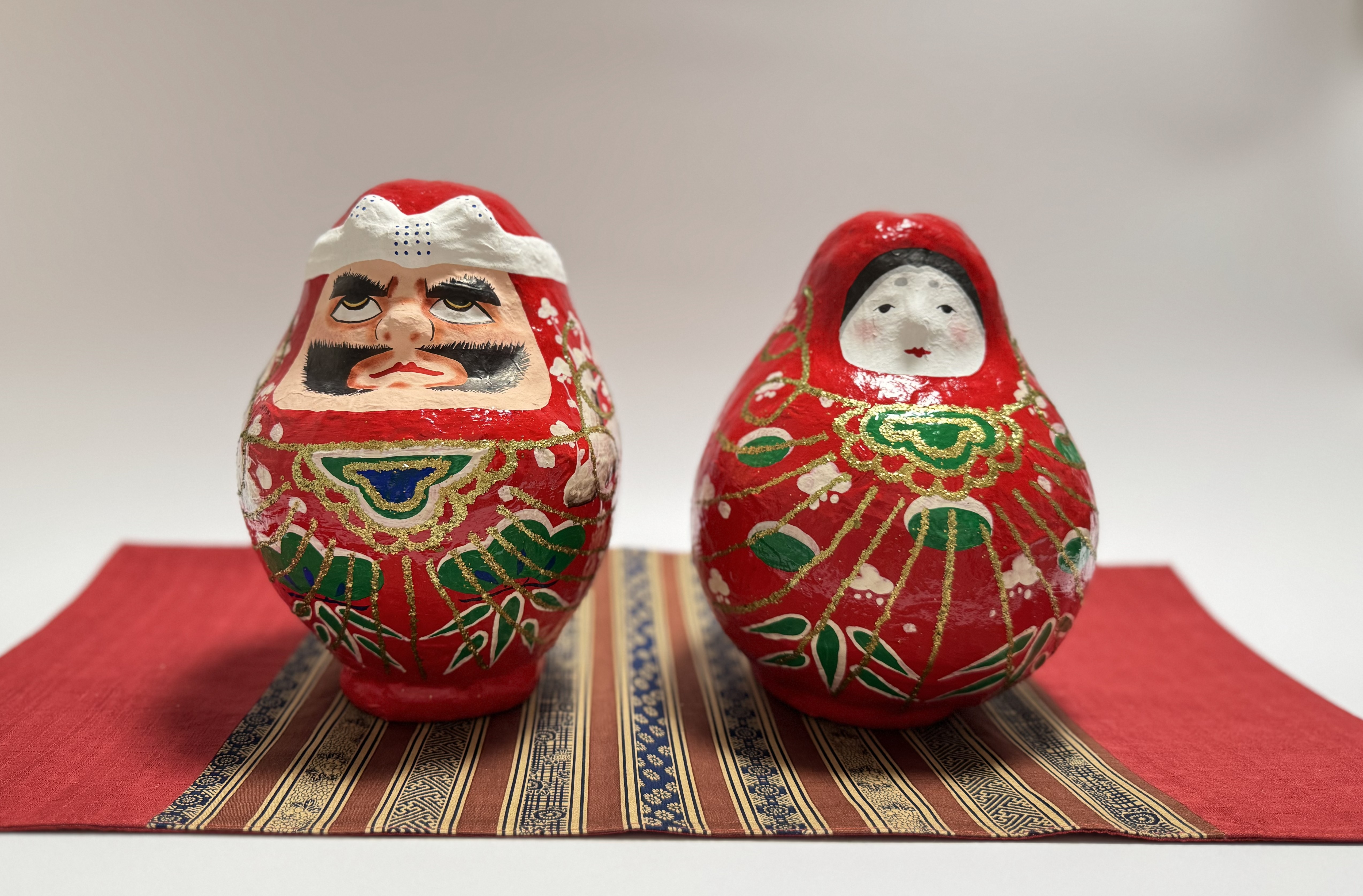
Hakata Hariko, a traditional folk toy deeply ingrained in the lives of people in Fukuoka, has been passed down through generations as a craft imbued with prayers and wishes. Now, there is a person dedicated to carrying on this tradition to the next generation: Hakata Hariko craftsman Tomoko Miura. Let's follow her journey.
Traditional crafts that are an integral part of life in Hakata
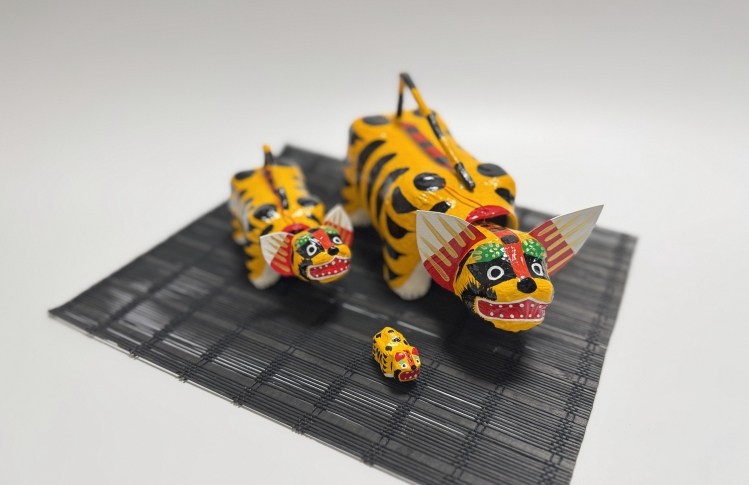
A bobblehead tiger and a palm-sized miniature tiger to adorn the Boys' Festival.
The city of Fukuoka is home to many traditional crafts that have been quietly but surely passed down through generations. One of them is Hakata papier-mâché, a representative folk toy of Hakata. It has been designated as a "Specialty Craft Product Designated by the Governor of Fukuoka Prefecture," and can truly be said to be the very essence of "Hakata culture."
Its history dates back to the mid-Edo period, when a merchant from Hakata learned the art of papier-mâché in Osaka and brought it back to this region. Since then, papier-mâché dolls, including the "Okiagari-koboshi," have been deeply cherished in the lives of ordinary people.
Even as times change, some things remain that evoke a sense of warmth. The "Niwaka masks" of Hakata Dontaku. The "decorative sea bream" of Toka Ebisu. The "tigers" that adorn the Boys' Festival. And the "Daruma dolls" that bring good fortune.
Even though opportunities to see them in everyday life have decreased, Hakata papier-mâché continues to watch over people's life milestones.
Driven by a determination to support his family, he embarked on the path of a craftsman.
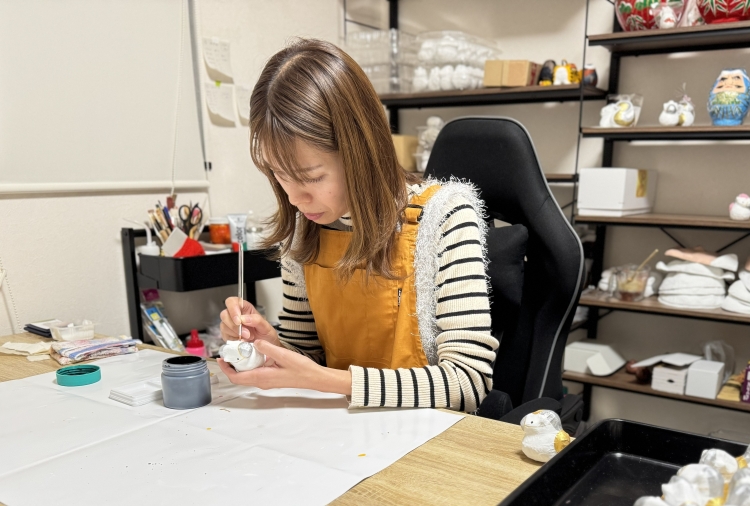
Tomoko Miura working diligently.
The opportunity for Tomoko to engage with Hakata papier-mâché came unexpectedly.
In 2021, his mother-in-law, Kazuko Miura, fell ill and was no longer able to help his father-in-law, Takashi Miura, a Hakata papier-mâché craftsman. Takashi, as the fifth generation, had inherited the Hakata papier-mâché techniques passed down in the Miura family and was supporting the tradition of Hakata.
"I wanted to support my mother-in-law's wishes and my father-in-law's work," with that simple thought, Tomoko opened the workshop door. At first, she only intended to help out a little, but what unfolded before her was a world of handcraftsmanship far beyond her imagination.
"I didn't realize it took so much effort to make."
Having entered the place with the intention of supporting her family, Tomoko became captivated by the traditional art of papier-mâché.
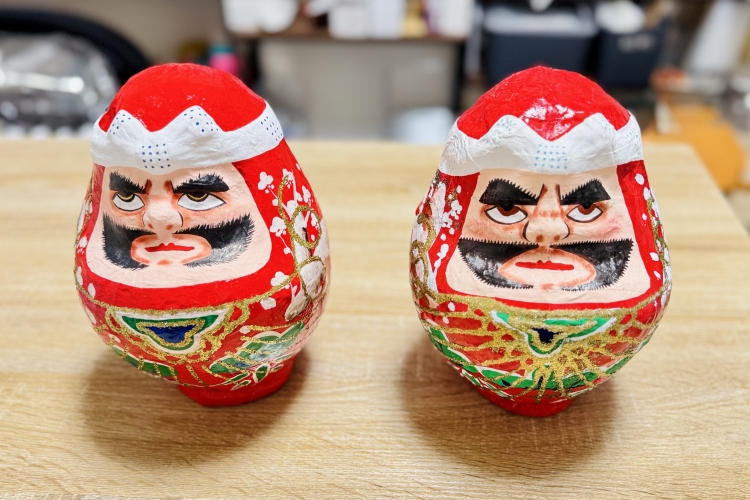
The piece on the left was made by Tomoko, the 6th generation, and the piece on the right was made by Takashi, the 5th generation. The texture differs depending on the craftsman.
Hariko (papier-mâché) is made through several processes. First, strips of "awasegami" (layered paper made by pasting Japanese paper and newspaper together with flour paste) are torn by hand and pasted onto a wooden or clay mold. After drying, it is removed from the mold, shaped, and a base coat is applied. Finally, paint is applied with a brush, and each piece is carefully colored.
"The drying time varies depending on the humidity and temperature. Even the way the paper is layered can change the look, and the coloring determines the quality of the artwork, so it requires a lot of concentration," says Tomoko.
Every step of the process requires "manual touch," and it's a meticulous job that can never be replaced by machines. I was captivated by this profound culture of papier-mâché, and gradually began to consider a career as a craftsman.
"Kanau Yume Hariko" - Wishes for the future
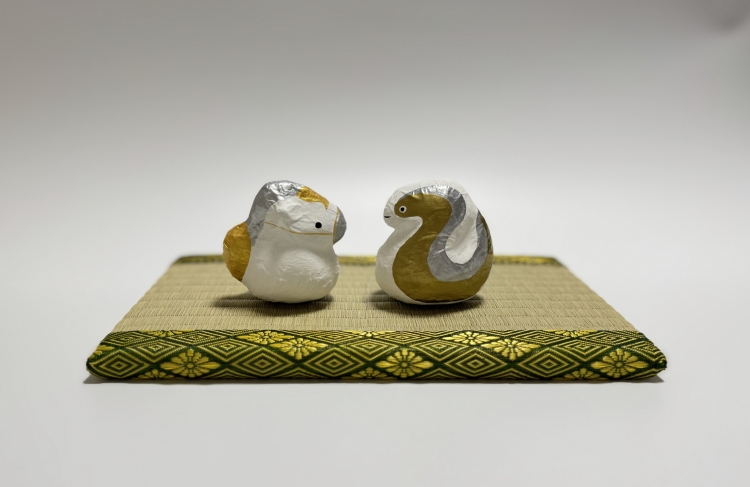
Zodiac figurines of the horse for 2025 and the snake for 2026
Hakata papier-mâché is known for being cherished as a lucky charm to which people entrust their prayers and wishes, but through the painstaking work that relies on the sense of touch, the artist has come to reflect on the "time of prayer" that lies beyond the finished product.
Then, Tomoko, who had truly begun her career as a craftswoman, established her own shop name, "Tomuhariko," on November 11, 2024.
I want this papier-mâché to fulfill the dreams of many people. I want it to be a presence that accompanies the wishes of those who hold it in their hands. The name reflects Tomoko's strong conviction, and also represents her own new beginning.
"Papier-mâché figures have been displayed at important milestones in life and have been passed down as symbols of wishes for the health, growth, and happiness of the family. The word 'Kanau Yume' (meaning 'to fulfill a wish') embodies my own determination to be someone who receives prayers and passes them on to the future," Tomoko explained.
A gentle world unfolds in the palm of your hand.
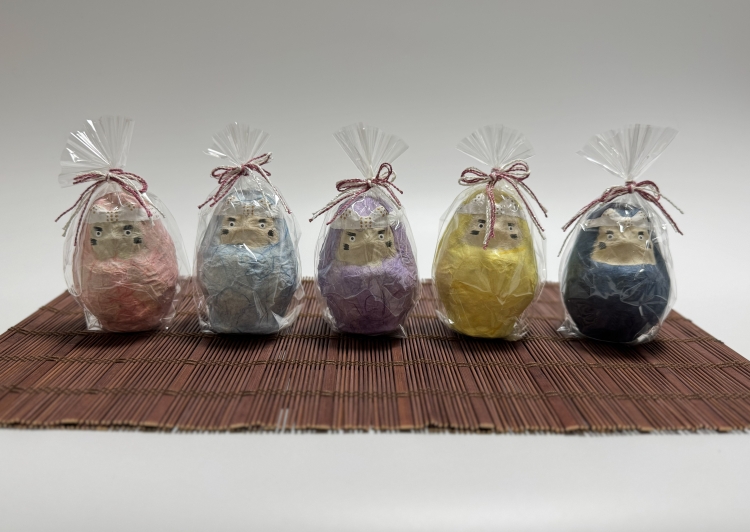
Cute "colored washi daruma dolls" made with Yame washi paper.
Tomoko's works possess an irresistible charm that makes you want to pick them up. Their small, palm-sized forms and bright, rich colors soothe the soul just by looking at them. Their approachable expressions blend naturally into the lives of those who display them, creating a soft and inviting atmosphere.
Particularly striking is the "Colored Washi Daruma" made with Yame washi paper. The unique fibrous texture of Yame washi, made using long-fiber kozo (mulberry) fibers, combined with the rounded shape of the papier-mâché, enhances the gentle feel of the artwork.
"With the catchphrase 'From Cute!! to the World of Traditional Crafts,' I would be happy if we could play a role in bridging the gap and allowing people to experience traditional culture," Tomoko says.
While preserving traditional forms, her papier-mâché creations possess a light and airy presence that suits modern living spaces. New yet somehow nostalgic—this exquisite balance is the charm of Tomoko's papier-mâché.
To preserve, we must change.
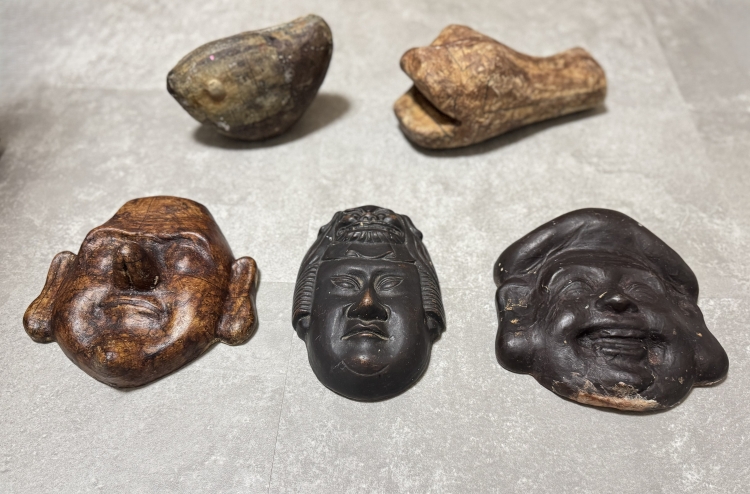
Papier-mâché molds inherited from ancestors
The reality surrounding traditional crafts is far from easy. While the increasing number of requests is a source of joy, it also means working tirelessly, sacrificing sleep to dedicate oneself to production. There's the difficulty of setting prices that reflect the amount of work involved, and the heavy responsibility of preserving the molds that someone must bear. Yet, Tomoko doesn't stop.
"The molds are the lifeblood of Hakata papier-mâché. To protect their value, we have partnered with universities and have also taken steps towards digital preservation. I believe that preserving the forms is also about connecting the techniques and memories to the future."
Her family has gradually come to understand Tomoko's vision, and now they are indispensable supporters of her creative work. She believes in preserving what needs to be preserved, but also adapting to the times. She believes this choice is the path to connecting tradition to the future.
Within this small papier-mâché figure, which fits in the palm of your hand, lies not only the history of Hakata and the prayers of its people, but also the interwoven time of countless individuals who have connected it to the present day.
The new Hakata papier-mâché creations born from Tomoko Miura's hands will also be quietly and surely passed down to the next generation within the context of life in this town.
Kane Yume Hariko
SNS:
instagram: https://www.instagram.com/tom_halyco/
facebook: https://www.facebook.com/tomhalyco
*For more details about our activities and product purchases, please check the link above.
[Stores that carry Kana Yume Hariko]
「博多町家」ふるさと館
電話:092-281-7761
住所:福岡県福岡市博多区冷泉町6-10
アクセス:地下鉄空港線「祇園駅」より徒歩8分程度
HP: https://hakatamachiya.com/
*営業時間や定休日についての詳細は、上記のリンク先からご確認ください。
はかた伝統工芸館
電話: 092-409-5450
住所: 福岡県福岡市博多区博多駅前1-23-2
アクセス:地下鉄空港線・七隈線「博多駅」より徒歩6分程度
HP: https://hakata-dentou-kougeikan.jp/
*営業時間や定休日についての詳細は、上記のリンク先からご確認ください。