



ReservationSearch and reserve rooms
Click here to confirm, change or cancel your reservation
Flight-Inclusive Packages
Shinkansen-Inclusive Hotel Packages
Corporate Partner Reservations
2026.02.10
A Long-Standing Shop Showcasing Chinese Culture Through Fun Panda-Themed Goods
NEIGHBORS
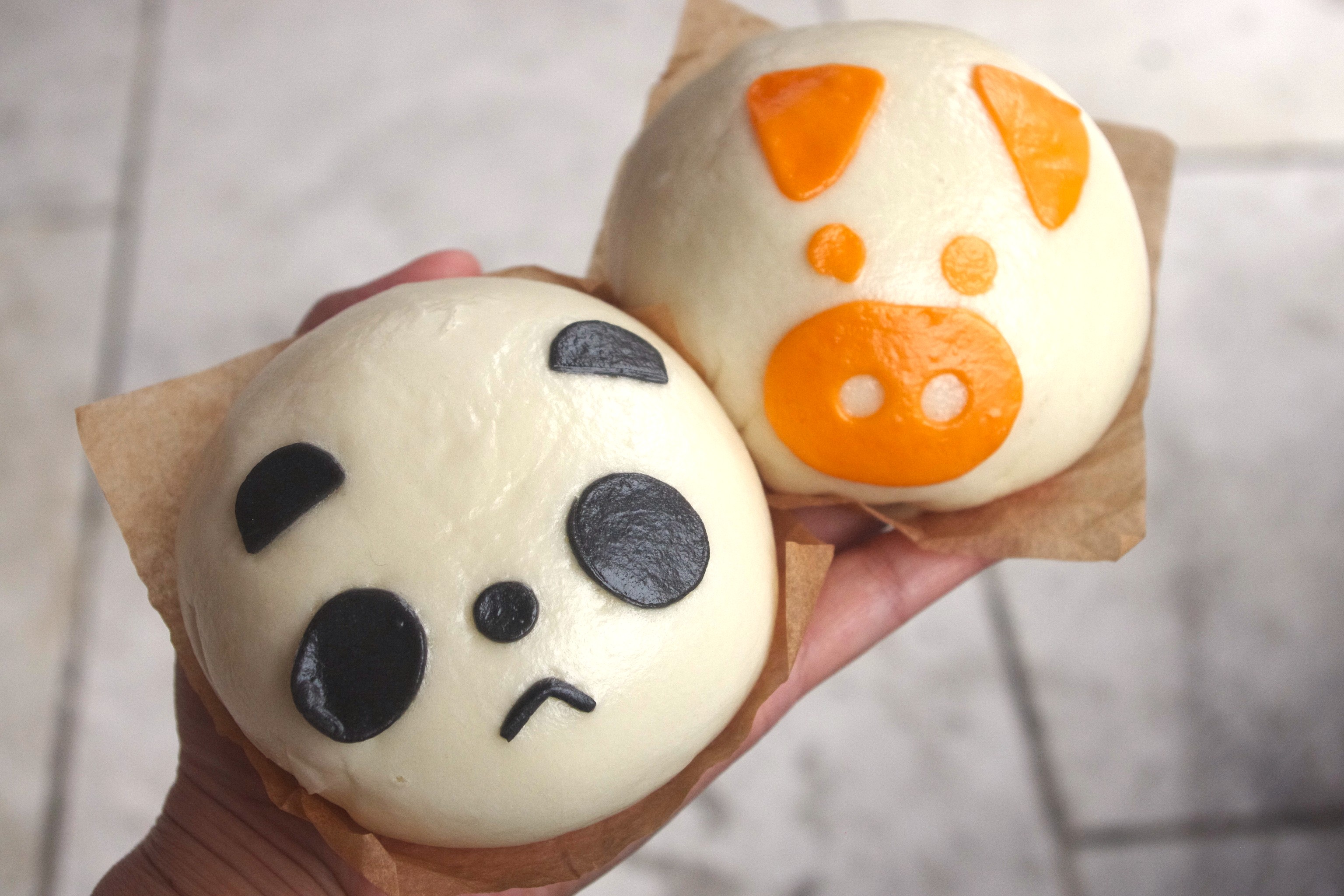
Yokohama Chinatown is said to be one of the largest in East Asia, with over 600 stores lined up in an area of about 500 square meters. Did you know that there is a "panda shop" in the middle of Chinatown Boulevard, the main street?
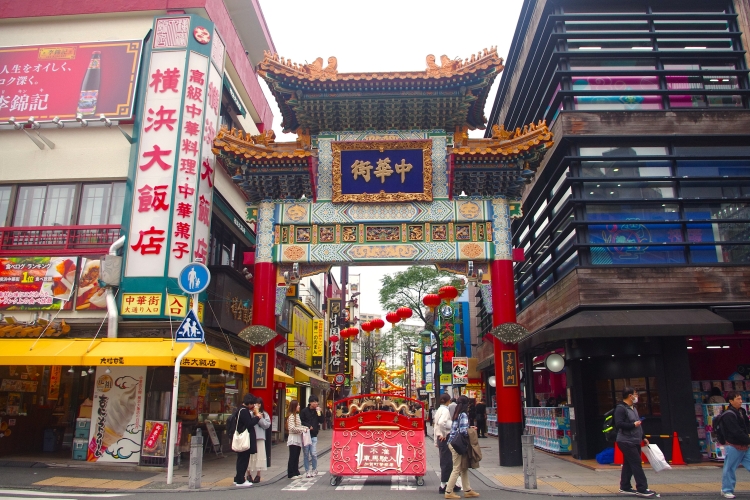
The shop is a 1-minute walk from Zenrinmon Gate, the symbol of Yokohama Chinatown
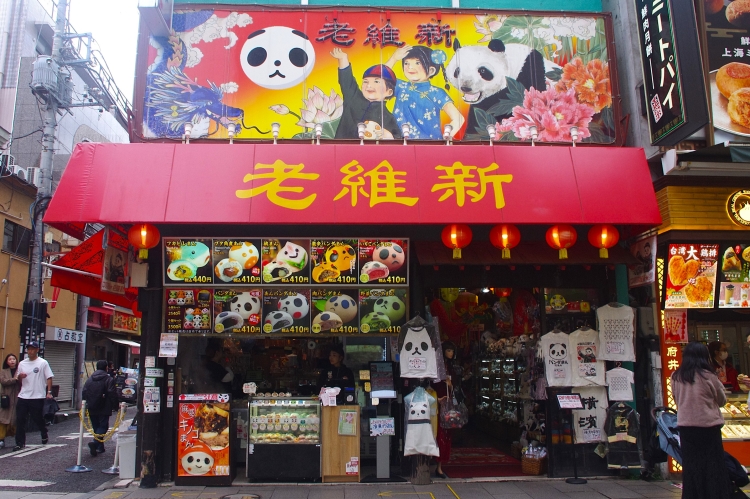
With its bright red facade and flashy illustrations, Rouishin is an eye-catching general store that has been in business for nearly 100 years. Founded in 1930, the first owner, who came to Japan from China, opened a store selling tobacco and daily necessities to Chinese people living in Yokohama Chinatown.
Panda buns were first sold 30 years ago and are still hugely popular today as the original.
After overcoming the damage caused by the war, diplomatic relations between Japan and China were normalized in 1972, and with the arrival of an unprecedented China boom, Yokohama Chinatown became known as a major gourmet town. Over time, Lao Ishin also transformed from a store selling daily necessities for Chinese people into a store selling Chinese goods and steamed buns aimed at tourists.
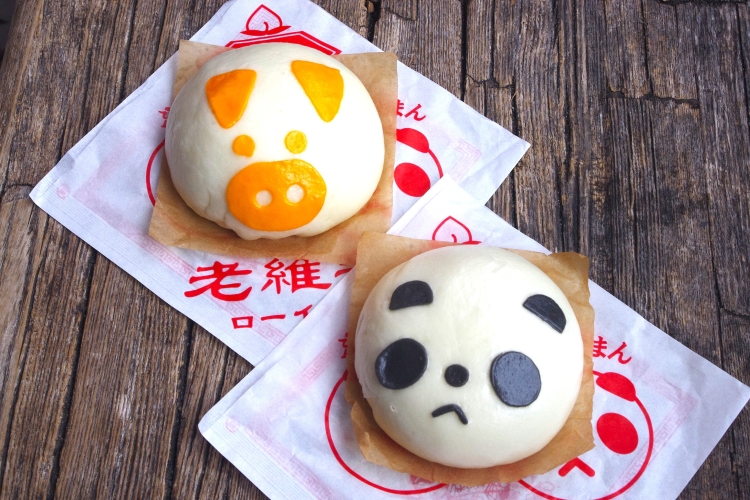
A major turning point came in 1995 (Heisei 7) when the business was taken over by the third generation owner. Oda Tamie, the granddaughter of the first owner, wanted to make a steamed bun that was a little different from other shops, so she came up with the Panda Bun. Using her skills and ideas as a former pastry chef, she created a panda bun with chocolate filling and eyes and ears colored with bamboo charcoal. At the time, steamed buns were mainly filled with meat paste, so a sweet character bun was a rare sight, and it became a huge hit.
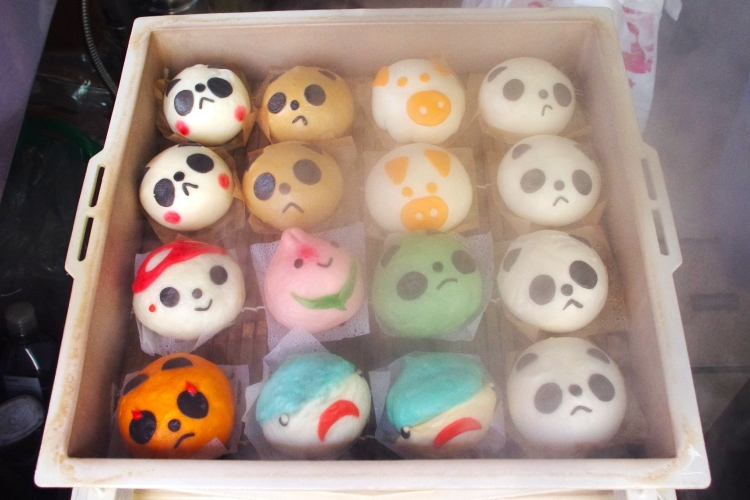
The most popular item is still the Panda Bun. They also sell nine other flavors, including braised pork belly, spicy, strawberry, and vegetable, plus one flavor that changes monthly. You can buy freshly steamed buns in store, or you can purchase frozen buns and have them shipped.
Why are we so particular about panda buns and panda goods?
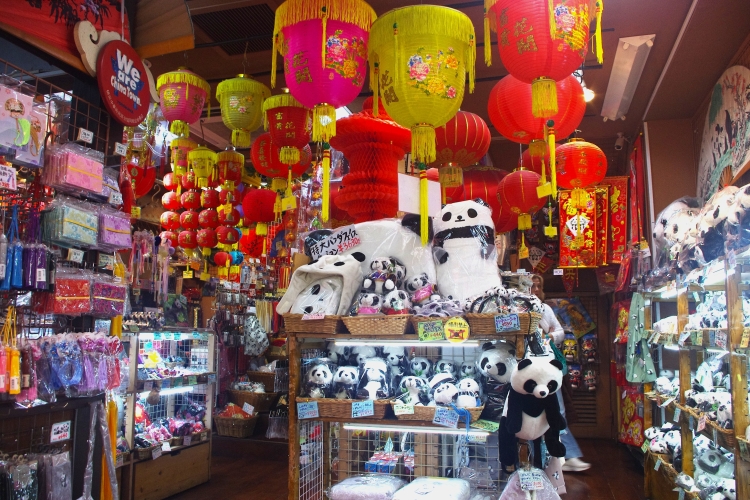
Chinese lanterns hang from the ceiling inside the store, and it's packed to the brim with panda goods, including stuffed animals of all sizes, bags, key chains, T-shirts, stationery, tableware, and more!
Pandas are a symbol of friendship between Japan and China. The third-generation owner, who has Chinese roots, has a desire to "convey Chinese culture," and this is reflected in the product lineup. The shop's motto is to add a Chinese essence to its 10 character buns, such as turning braised pork belly into the Chinese dish tong po lou, and creating a peach bun inspired by the peach eaten by Sun Wukong in Journey to the West.
Direct imports mean reasonable prices and a selection not found in other stores
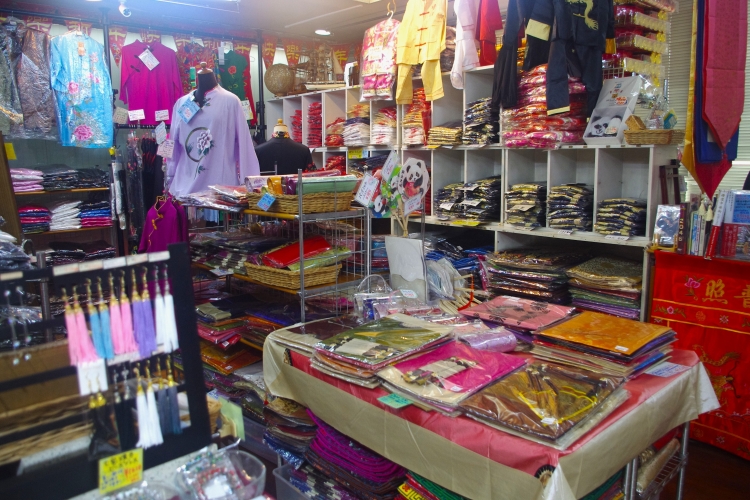
The second floor is lined with Feng Shui-related products, Chinese dresses, kung fu wear, and more, with a total of 1,500 to 2,000 items on the first and second floors. Because they are imported directly from China, there are many items at reasonable prices that are not available in other stores.
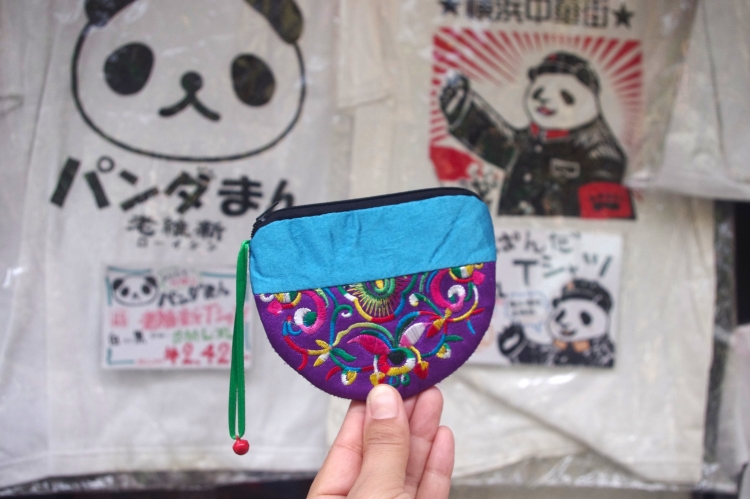
Satin pouch with ethnic embroidery
We will continue to create a store where customers can enjoy shopping.
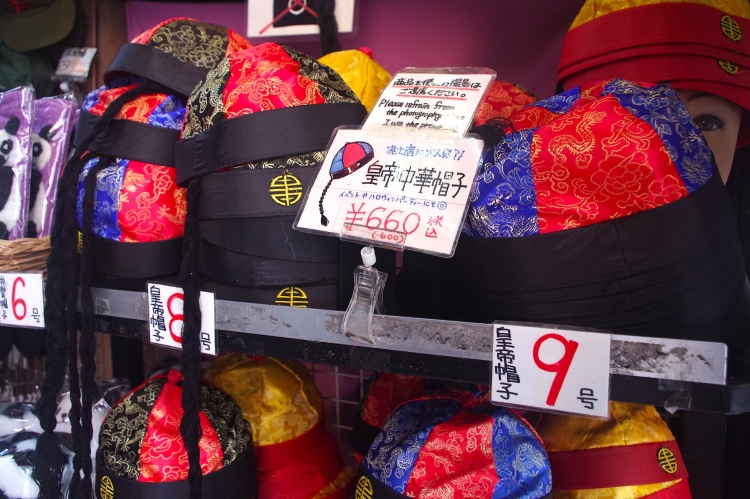
Handwritten posters are a great way to create a fun atmosphere
The shop is bustling with customers who are attracted by the panda buns and panda goods and are looking for souvenirs that are unique to Yokohama Chinatown. In addition to tourists, it is also frequented by Chinese restaurant owners and people who enjoy feng shui and dance. Rather than changing their product lineup to keep up with the latest trends, the "Lao Ishin" style has remained true to its core mission of conveying Chinese culture. Today, the shop remains unchanged, offering the joy of finding your favorite from a wide variety of items to choose from.
Old Meiji Restoration
電話:045-681-6811
住所:神奈川県横浜市中区山下町145
アクセス:元町・中華街駅から徒歩6分/石川町駅から徒歩8分
HP:https://www.rouishin.com/
SNS:https://www.instagram.com/rouishin/
*For details on opening hours and closing days, please check the link above.
